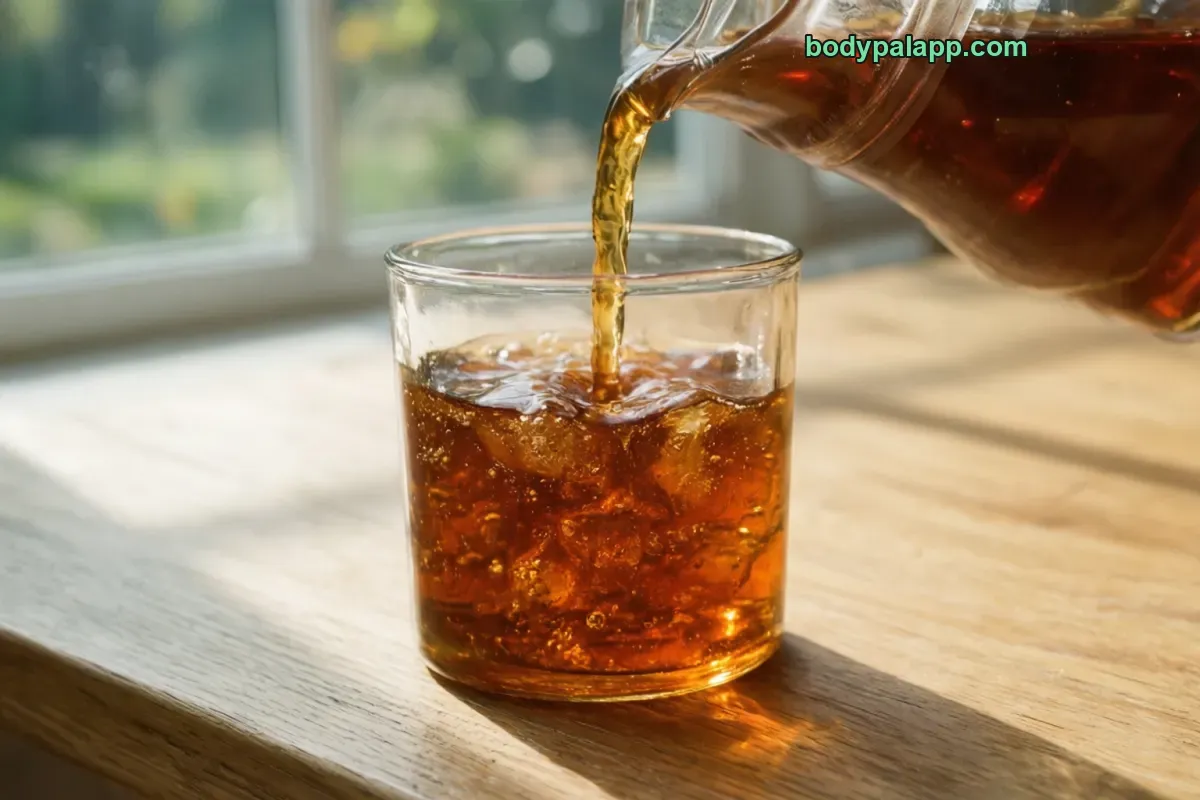
Pancake syrup calories come to 47 for one tablespoon (20 g) and 234 per 100 g. Nothing in it is protein or fat: 100% of those calories come from carbohydrate, so the only lever you control is the pour. A heavy hand of three tablespoons reaches 140 calories before the pancakes even count.
47kcal
1 tablespoon · 20 g, pancake table blend
0%protein
0 gProtein
12 gCarbs
0 gFat
How to burn off 47 kcal
—Walking, brisk
—Jogging
—Cycling, moderate
—Swimming
Skip the math. BodyPal counts these calories from your steps and workouts automatically.
Nutrition facts
Pancake table blend · per 20 g
Calories
47 kcal
Protein
0 g
Carbohydrate
12.3 g
Fat
0 g
Saturated fat
0 g
Cholesterol
0 mg
Sodium
16 mg
Potassium
3 mg
Iron
0 mg
Source: USDA FoodData Central
🛡️
Verified nutrition data
Numbers on this page come from USDA FoodData Central, the U.S. Department of Agriculture’s food composition database, and from manufacturer labels where a branded product is named. Last verified September 2026. How we verify our data →
Pancake syrup: calories, protein and sodium by serving
Percent of daily value uses the FDA reference of 2,000 kcal a day.
Serving
kcal
Protein
Carbs
Fat
Sodium
% DV kcal
1 tbsp (20 g)
47
0 g
12.3 g
0 g
16 mg
2%
Reduced-calorie tbsp (15 g)
25
0 g
6.7 g
0 g
27 mg
1%
100 g
234
0 g
61.5 g
0 g
82 mg
12%
1 cup (314 g)
735
0 g
193 g
0 g
257 mg
37%
3 × 1 tbsp (20 g)
140
0 g
49 mg
5 × 1 tbsp (20 g)
234
0 g
82 mg
Three tablespoons is a 140-calorie pour
A tablespoon of pancake syrup weighs 20 g and carries 47 calories, about 2% of the daily calorie value. Few people stop at one. Two tablespoons come to 94 calories, three reach 140, and five tablespoons, which is 100 g, land at 234.
The bottle makes measuring hard. Syrup spreads across a stack and soaks in, so the plate never shows how much went on. A full cup (314 g), the kind of amount that disappears over a family breakfast, holds 735 calories and 193 g of carbohydrate, which is 37% of the daily calorie value.
If you track, pour into a tablespoon or a small ramekin first, then drizzle. Dipping each bite instead of flooding the plate tends to keep the total nearer one or two tablespoons than five. BodyPal can log the food from a photo, which helps when the pour was a guess.
Every calorie in pancake syrup is carbohydrate
The calorie split is as simple as food labels get: 0% protein, 0% fat, 100% carbohydrate. Per 100 g there are 61.5 g of carbs and 0 g of fiber, saturated fat or cholesterol. A tablespoon delivers 12.3 g of carbohydrate and nothing else of note.
The USDA row for table-blend pancake syrup lists 21.5 g of sugars per 100 g, or 4.3 g per tablespoon. That figure sits well below the total carbohydrate of 61.5 g, so the carbs number is the one to use if you count carbs rather than sugars. Either way, the syrup adds carbohydrate and nothing that builds out the rest of the plate.
Sodium is not a concern here. A tablespoon has 16 mg, 1% of the 2300 mg daily value, and even 100 g adds only 82 mg, or 4%. Potassium is a trace at 15 mg per 100 g.
Reduced-calorie syrup trims the tablespoon to 25
Lite and reduced-calorie syrups, such as Aunt Jemima Original Lite Syrup, are the one swap the numbers clearly reward. A reduced-calorie tablespoon of 15 g has 25 calories and 6.7 g of carbohydrate, compared with 47 calories and 12.3 g for a regular 20 g tablespoon.
Read the fine print, though. Part of the saving comes from the smaller 15 g serving, and the light version actually lists more sugar per tablespoon, 4.9 g against 4.3 g. Sodium also climbs, from 16 mg to 27 mg, though both stay at 1% of the daily value.
If the goal is fewer calories on the plate, light syrup does the job, provided you pour the same amount. Lite syrups tend to be thinner, which nudges some people to pour more, so measure the first few times. Using two light tablespoons where you once used one regular one wipes out most of the gain.
Syrup brings only carbs, so build the rest of the plate
Syrup contributes 0 g of protein at any serving, so whatever keeps you satisfied at breakfast has to come from elsewhere. Pancakes, waffles and French toast are mostly carbohydrate too, which makes the whole plate lean one way.
Eggs, Greek yogurt, cottage cheese or a side of turkey sausage add protein without changing how much syrup you need. Fresh berries or sliced banana add sweetness of their own, which can let a single tablespoon of syrup go further across the stack.
If you count carbs, keep the scale in view: a regular tablespoon is 12.3 g, while the cup-sized pour reaches 193 g against a 275 g daily value for carbohydrate. Log the syrup and the pancakes as separate items so neither hides inside the other. That small habit makes the syrup visible, and visible portions are the ones that stay small.
How does pancake syrup compare?
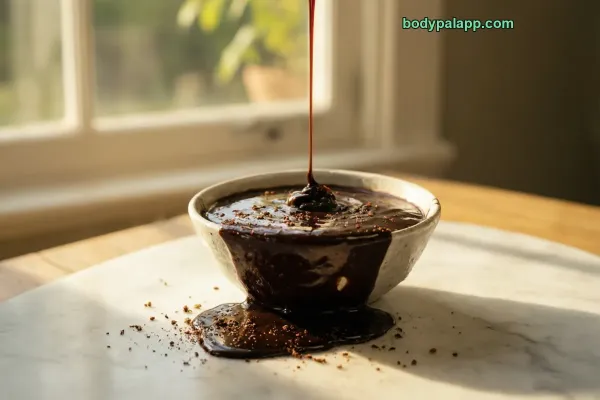
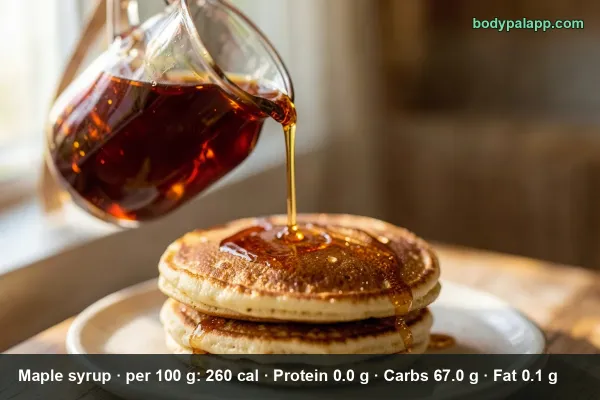
Here is how pancake syrup stacks up against chocolate syrup, maple syrup and light mayonnaise, per 100 g and per usual serving.
Verdict: If calories decide it, pancake syrup wins at 234 per 100 g against 260 for maple syrup and 279 for chocolate syrup. Pick maple syrup if you watch sodium, with 12 mg per 100 g versus 82 mg here, and note that light mayonnaise matches on calories at 238 but gets them from fat, not sugar.
Most popular pancake syrup brands in the United States
Ranked by popularity in the BodyPal database
# Productkcal / 100 g
1Aunt Jemima Original Syrup2 tbsp · 30 ml333 kcal
2Aunt Maple's Original Syrup2 tbsp · 30 ml333 kcal
3Aunt Jemima Original Lite Syrup2 tbsp · 30 ml167 kcal
6Aunt Jemima Country Rich Lite Syrup1/4 cup · 60 ml167 kcal
7Shady Maple Farms Maple Syrup60 ml350 kcal
Bottle labels are measured by volume rather than weight, so they read higher than the per 100 g numbers above, while the lite versions read about half. Source: manufacturer labels / USDA FoodData Central.
Pancake syrup FAQs
How many calories are in a tablespoon of pancake syrup?
One tablespoon (20 g) has 47 calories, so the usual 2 tablespoon pour comes to 94. A full cup of 314 g works out to 735 calories.
Is pancake syrup good for weight loss?
A tablespoon adds 47 calories and 12.3 g of carbs with no protein and no fat, so it lands in the day as added sugar. The reduced-calorie version is 25 calories per 15 g tablespoon.
Pancake syrup vs maple syrup: which has more calories?
Maple syrup has 260 calories per 100 g against 234 for pancake syrup, so a 20 g tablespoon is 52 calories versus 47.
How much sugar is in pancake syrup?
Per 100 g there are 21.5 g of sugars inside 61.5 g of total carbs, which is 4.3 g of sugars in a 20 g tablespoon.
How many calories are in 2 tablespoons of pancake syrup?
Two tablespoons of pancake syrup (40 g) have 94 calories, all from carbohydrate. That pour also adds 33 mg of sodium and 0 g of protein. Three tablespoons bring the total to 140 calories.
How many carbs are in syrup?
A tablespoon of pancake syrup has 12.3 g of carbohydrate, and 100 g has 61.5 g. A full cup (314 g) holds 193 g, measured against a 275 g daily value for carbohydrate.
Does pancake syrup have calories, and where do they come from?
Yes. Pancake syrup has 47 calories per tablespoon and 234 per 100 g. All of it comes from carbohydrate: the calorie split is 100% carbs, 0% protein and 0% fat.
What are the nutrition facts for pancake syrup?
Per 100 g, pancake syrup has 234 calories, 61.5 g of carbohydrate, 21.5 g of sugars, 82 mg of sodium and 15 mg of potassium. Protein, fat, saturated fat, fiber and cholesterol are all 0.
Is pancake syrup high in calories?
Per 100 g, pancake syrup has 234 calories, 12% of the daily calorie value, which is dense. A single tablespoon is a modest 47, so the answer depends on the pour: a cup (314 g) reaches 735 calories.