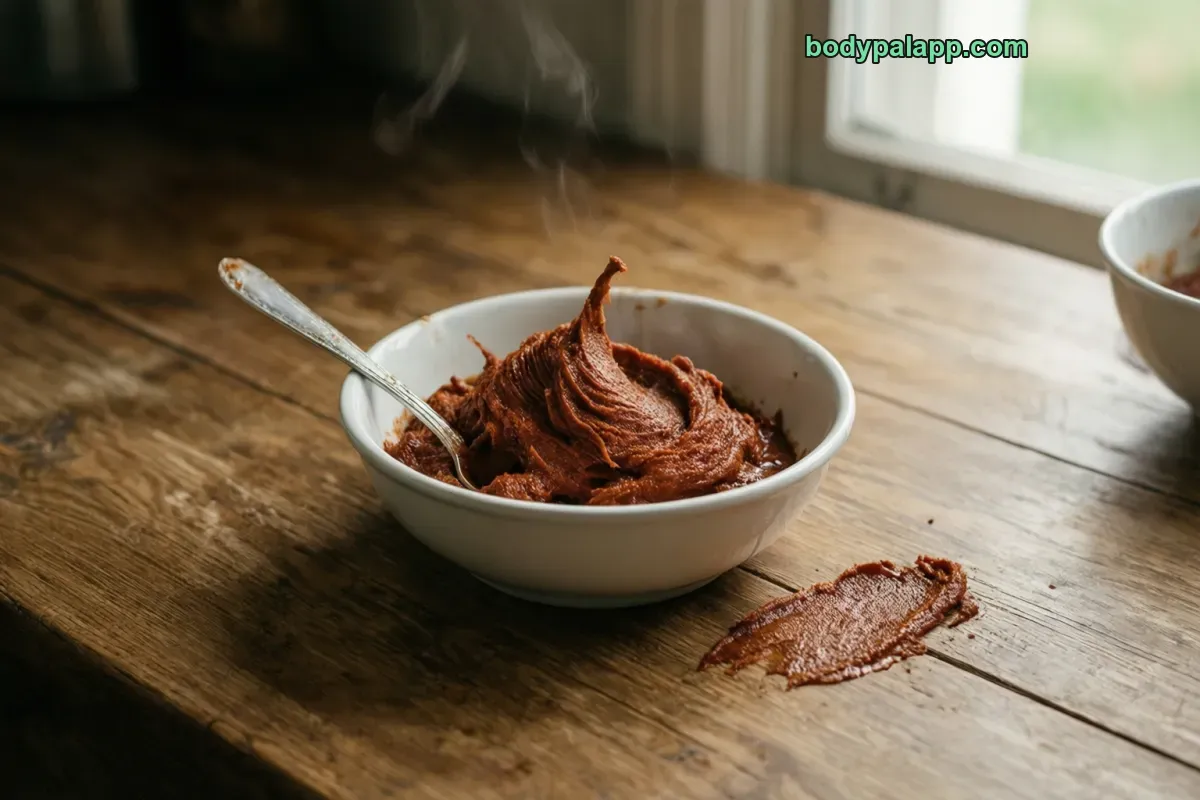
Tomato paste calories come to 13 for one tablespoon (16 g) and 82 per 100 g, based on canned paste with no salt added. The useful detail is how small the cost stays: even a whole small can is 139 calories, and nearly all of that energy comes from carbs, not fat.
13kcal
1 tablespoon · 16 g, canned, no salt added
18%protein
0.7 gProtein
3 gCarbs
0.1 gFat
How to burn off 13 kcal
—Walking, brisk
—Jogging
—Cycling, moderate
—Swimming
Skip the math. BodyPal counts these calories from your steps and workouts automatically.
Nutrition facts
Canned, no salt added · per 16 g
Calories
13 kcal
Protein
0.7 g
Carbohydrate
3 g
Fat
0.1 g
Saturated fat
0 g
Cholesterol
0 mg
Sodium
9 mg
Potassium
162 mg
Iron
0.5 mg
Source: USDA FoodData Central
🛡️
Verified nutrition data
Numbers on this page come from USDA FoodData Central, the U.S. Department of Agriculture’s food composition database, and from manufacturer labels where a branded product is named. Last verified September 2026. How we verify our data →
Tomato paste: calories, protein and sodium by serving
Percent of daily value uses the FDA reference of 2,000 kcal a day.
Serving
kcal
Protein
Carbs
Fat
Sodium
% DV kcal
1 tbsp (16 g)
13
0.7 g
3 g
0.1 g
9 mg
1%
1/4 cup (66 g)
54
2.9 g
12.5 g
0.3 g
39 mg
3%
Small can (170 g)
139
7.3 g
32.1 g
0.8 g
100 mg
7%
100 g
82
4.3 g
18.9 g
0.5 g
59 mg
4%
3 × 1 tbsp (16 g)
39
2.1 g
28 mg
5 × 1 tbsp (16 g)
66
3.5 g
47 mg
A whole small can is only 139 calories
Most recipes call for a spoonful or two, and at that scale tomato paste barely registers. One tablespoon (16 g) is 13 calories, about 1% of a day's calories on the label's reference. Two tablespoons come to 26 calories, three to 39, and five to 66. You would need a lot of sauce before the paste itself became the number that matters.
Bigger amounts show up in batch cooking. A 1/4 cup (66 g) adds 54 calories, and a small can (170 g) dumped into a pot of chili or ragu adds 139 calories, roughly 7% of the daily reference. Split across several servings, that is a small share per bowl.
The portion that actually moves the total is rarely the paste. It is the oil you brown it in, the meat it coats, or the pasta under it. If you log a sauce, log the paste separately and the fat separately; the paste line will almost always be the smaller of the two.
Carbs supply 78% of the calories
Tomato paste is concentrated tomato, so its macros look like a vegetable with the water squeezed out. Per 100 g it has 18.9 g of carbs, 4.3 g of protein and just 0.5 g of fat. In calorie terms, carbs make up 78%, protein 18% and fat 4%.
Of those carbs, 12.2 g per 100 g are sugars that come from the tomatoes themselves, and 4.1 g are fiber. Per tablespoon that is 1.9 g of sugars and 0.7 g of fiber. A small can carries 20.7 g of sugars along with 7 g of fiber, which is worth knowing if you track sugar closely and use paste by the can.
The protein share is higher than you might expect for a condiment. A small can gives 7.3 g of protein, 15% of the daily value. Nobody eats paste for protein, but it does mean tomato paste is not just sugar and water, and saturated fat sits at a negligible 0.1 g per 100 g.
No-salt-added paste is low in sodium
The numbers on this page are for canned paste without salt added, and that version is genuinely low in sodium: 59 mg per 100 g, 9 mg per tablespoon and 100 mg for a small can, which is 4% of the daily value. For a tomato product that is a modest figure.
Compare that with ketchup, which lists 907 mg of sodium per 100 g. Paste gives the same tomato depth to a sauce with a small fraction of the salt, so you control the seasoning yourself. If you watch sodium, that is a practical reason to build sauces from paste rather than bottled condiments.
Labels vary between products, so check the can if sodium matters to you. Brands such as Mutti, Hunt's and Great Value all sell tomato paste, and some versions add salt. Potassium is the other mineral that stands out in the card, at 1,014 mg per 100 g.
Paste adds flavor without adding much to the day
Because a tablespoon is 13 calories, tomato paste is one of the cheapest ways to make a dish taste richer. Stirred into soups, stews, chili or a pan sauce, it brings savory depth that might otherwise come from extra cheese, cream or oil.
Pair it with foods that bring what paste lacks. Lean meat, beans or lentils add protein, and vegetables add volume, so a tomato-based sauce can be filling without being heavy. If you want a lighter pasta night, a paste-based sauce is a far smaller line on the log than a cream sauce like alfredo.
When you snap a photo of your plate, BodyPal can log the dish, but a quick separate entry for the spoonfuls of paste keeps the numbers honest in recipes you cook often.
How does tomato paste compare?
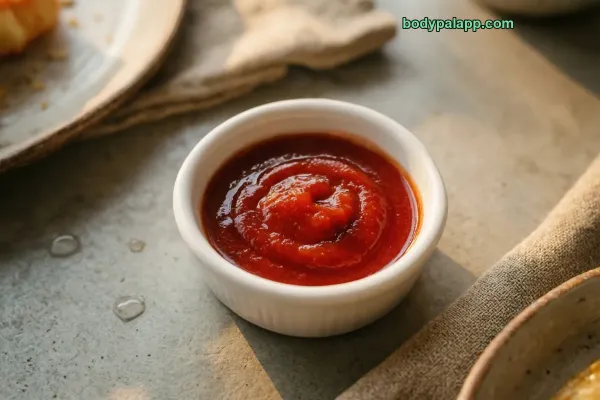
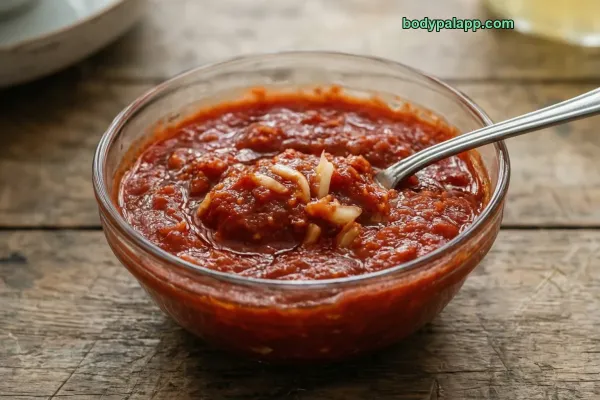
Here is how tomato paste stacks up against ketchup, cocktail sauce and alfredo sauce, per 100 g and per usual serving.
Verdict: For the fewest calories and the least sodium, tomato paste wins at 82 per 100 g, against 101 for ketchup and 1,262 mg of sodium per 100 g in cocktail sauce. Alfredo sauce is the one to portion carefully, at 390 calories for 1 cup and 15 g of fat per 100 g.
Most popular tomato paste brands in the United States
Ranked by popularity in the BodyPal database
# Productkcal / 100 g
1Mutti Tomato Paste2 tbsp · 34 g132 kcal
2365 Everyday Value Tomato Paste2 tbsp · 30 g117 kcal
7Natural Value Organic Tomato Paste2 tbsp · 33 g76 kcal
Label figures run from 76 to 132 calories per 100 g because brands differ in how concentrated the paste is, while the number above is canned paste with no salt added. Source: manufacturer labels / USDA FoodData Central.
Tomato paste FAQs
How many calories are in a tablespoon of tomato paste?
About 13 calories per tablespoon (16 g). A quarter cup (66 g) comes to 54 calories.
How many calories are in a 6 oz can of tomato paste?
A 6 oz can (170 g) is about 139 calories. A full cup (262 g) is about 215 calories.
Is tomato paste good for weight loss?
A tablespoon adds only 13 calories and under 1 g of fat, so recipe amounts stay small. Per 100 g it has 82 calories and 4.1 g of fiber.
How many carbs and how much sugar are in tomato paste?
Per 100 g there are 18.9 g of carbs, including 12.2 g of sugars. One tablespoon (16 g) has about 3 g of carbs and 1.9 g of sugars.
How many calories are in a quarter cup of tomato paste?
A 1/4 cup (66 g) of tomato paste has 54 calories. It also brings 12.5 g of carbs, 2.9 g of protein and 2.7 g of fiber, with only 0.3 g of fat.
How much sodium is in tomato paste?
Tomato paste without salt added has 59 mg of sodium per 100 g, or 9 mg per tablespoon. A small can (170 g) has 100 mg, which is 4% of the daily value. Salted versions will be higher, so check the label.
How much protein is in tomato paste?
Tomato paste has 4.3 g of protein per 100 g. A tablespoon gives 0.7 g, and a small can (170 g) gives 7.3 g, about 15% of the daily value. Protein supplies 18% of its calories.
How much fiber does tomato paste have?
Tomato paste has 4.1 g of fiber per 100 g. That works out to 0.7 g per tablespoon, 2.7 g in a 1/4 cup and 7 g in a small can (170 g).
Does tomato paste have any fat?
Very little. Tomato paste has 0.5 g of fat per 100 g and 0.1 g per tablespoon, with 0.1 g of saturated fat per 100 g. Fat accounts for just 4% of its calories.