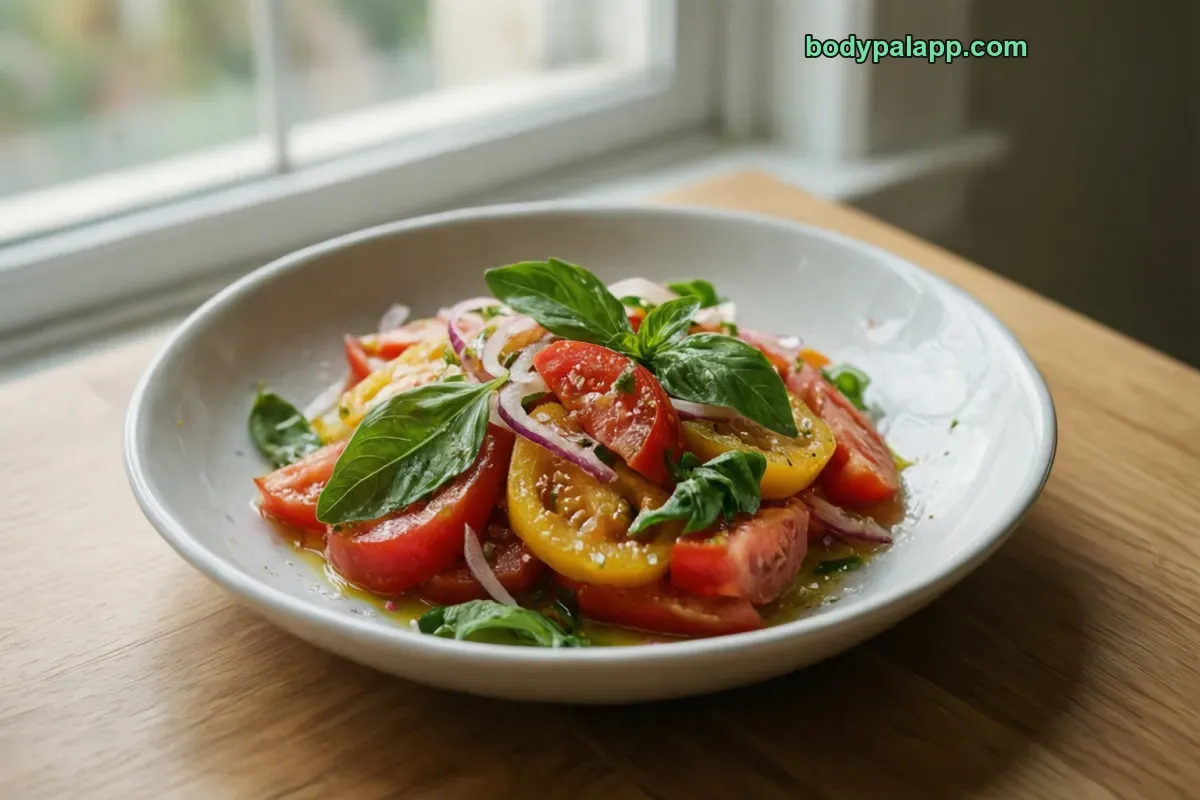
Tomato salad calories come to 194 for 1 cup (159 g) and 122 per 100 g, using the USDA row for tomato and cucumber salad made with oil and vinegar. The thing to notice: 77% of those calories come from fat. The dressing, not the tomatoes, decides how big the number gets.
194kcal
1 cup · 159 g, with oil and vinegar
2%protein
0.8 gProtein
10 gCarbs
16.2 gFat
How to burn off 194 kcal
—Walking, brisk
—Jogging
—Cycling, moderate
—Swimming
Skip the math. BodyPal counts these calories from your steps and workouts automatically.
Nutrition facts
With oil and vinegar · per 159 g
Calories
194 kcal
Protein
0.8 g
Carbohydrate
10.1 g
Fat
16.2 g
Saturated fat
2.2 g
Cholesterol
0 mg
Sodium
337 mg
Potassium
226 mg
Iron
0.3 mg
Source: USDA FoodData Central
🛡️
Verified nutrition data
Numbers on this page come from USDA FoodData Central, the U.S. Department of Agriculture’s food composition database, and from manufacturer labels where a branded product is named. Last verified September 2026. How we verify our data →
Tomato salad: calories, protein and sodium by serving
Percent of daily value uses the FDA reference of 2,000 kcal a day.
Serving
kcal
Protein
Carbs
Fat
Sodium
% DV kcal
1 cup (159 g)
194
0.8 g
10.1 g
16.2 g
337 mg
10%
Small serving (80 g)
98
0.4 g
5.1 g
8.1 g
170 mg
5%
100 g
122
0.5 g
6.4 g
10.2 g
212 mg
6%
3 × 1 cup (159 g)
582
2.5 g
1,011 mg
5 × 1 cup (159 g)
970
4.1 g
1,685 mg
A cup is a 194-calorie side, a bowl is a meal
The standard 1 cup (159 g) serving lands at 194 calories, which is 10% of the daily value for energy. A small serving of 80 g comes to 98 calories, about 5% of the day. That smaller scoop is the realistic size when the salad sits next to a main dish as a fresh side.
Bigger helpings climb fast. Two cups (318 g) reach 388 calories, three cups (477 g) reach 582, and a generous bowl of five cups (795 g) hits 970. That last figure is a full meal's worth of energy from what most people file under light vegetables. Protein barely moves along the way: even the 795 g bowl gives you only 4.1 g.
If you serve yourself from a shared bowl at a cookout, think in cups rather than in vague spoonfuls. The gap between 98 and 388 calories is a portion question, not a recipe question, and it is the easiest lever you have on this dish.
Fat supplies 77% of the calories
Per 100 g, tomato salad carries 10.2 g of fat, 6.4 g of carbs and just 0.5 g of protein. Translate that into calories and the split is 77% fat, 21% carbs and 2% protein. Tomatoes and cucumber are mostly water, so the oil in the dressing does nearly all of the caloric heavy lifting.
A full cup holds 16.2 g of fat, of which saturated fat is a modest share at 1.4 g per 100 g. Carbs reach 10.1 g per cup, with 8 g of that as sugars, and fiber is thin at 1 g per cup. Cholesterol is 0. This is not a dish that fills you up through fiber or protein; it is a flavorful, oil-dressed vegetable side.
The practical takeaway is simple. Every extra pour of oil pushes the total up, while extra tomato and cucumber dilute it. If you make it at home, a lighter hand with the oil and a sharper splash of vinegar keeps the taste bright and the calorie count closer to the small-serving end of the range.
Sodium adds up by the cup
Tomato salad has 212 mg of sodium per 100 g. One cup delivers 337 mg, or 15% of the daily value, and the small 80 g serving carries 170 mg, about 7%. For a vegetable side that is a noticeable amount, and it comes from the salt in the dressing rather than from the produce.
Larger portions stack it up. Two cups bring 674 mg, three cups 1,011 mg, and a five-cup bowl 1,685 mg. If you watch sodium, the portion advice from above doubles as sodium advice: keep it to a cup and the number stays moderate.
Homemade versions give you the most control. Season lightly in the bowl and let people add salt at the table. On the plus side, the salad also brings 142 mg of potassium per 100 g, which is a small contribution rather than a headline.
Pair it with protein to make it a meal
With 0.8 g of protein per cup, only 2% of the daily value, tomato salad will not carry a meal on its own. It works best as the bright, acidic side next to something more filling: grilled chicken or fish, eggs, beans, or a slice of cheese. That pairing covers the protein the salad lacks and keeps the plate balanced.
Store-bought tubs vary more than you might expect. Products like Garden Fresh Gourmet Bruschetta Tomato Salad or Signature Cafe Mozzarella Tomato Salad use different recipes, and add-ins such as cheese or extra oil change the totals, so read the label before assuming the USDA figures apply.
If you want to track it without measuring, BodyPal can log tomato salad from a photo. Either way, the rule of thumb holds: watch the oil, watch the portion, and add protein on the side.
How does tomato salad compare?
Here is how tomato salad stacks up against cabbage, carrot and broccoli salads, per 100 g and per usual serving.
Verdict: For the fewest calories pick cabbage salad, at 45 per 100 g and 99 per cup it runs about 0.4 times tomato salad. Tomato salad at 122 per 100 g still beats carrot salad at 212 and broccoli salad at 270, though broccoli salad brings the most protein at 5.8 g per 100 g.
Most popular tomato salad brands in the United States
Ranked by popularity in the BodyPal database
# Productkcal / 100 g
1Summer Is Inside Tomato Salad1/2 cup · 110 g73 kcal
Packaged tomato salads differ mainly in how much oil dressing they carry, so their labels run from 20 to 117 calories per 100 g. Source: manufacturer labels / USDA FoodData Central.
Tomato salad FAQs
How many calories are in tomato salad?
One cup (159 g) of tomato salad dressed with oil and vinegar is 194 calories, or 122 calories per 100 g.
Is tomato salad good for weight loss?
A cup is 194 calories, and 16.2 g of it is fat from the oil dressing. The same vegetables with no dressing come to 24 calories per 100 g instead of 122.
Tomato salad or broccoli salad: which has fewer calories?
Tomato salad has 122 calories per 100 g and broccoli salad 270, so tomato salad is under half the calories for the same weight.
How many carbs are in tomato salad?
A 159 g cup has 10.1 g of carbohydrate, including 8.0 g sugars and 1.0 g fiber, plus 0.8 g protein.
How many calories are in a small serving of tomato salad?
A small 80 g serving of tomato salad has 98 calories, about 5% of the daily value. It also carries 8.1 g of fat and 170 mg of sodium, which makes it a light side next to a main dish.
How many calories are in two cups of tomato salad?
Two cups (318 g) of tomato salad come to 388 calories. Three cups reach 582, and a five-cup bowl climbs to 970, so the portion matters more than the recipe for your total.
How much fat is in a cup of tomato salad?
One cup (159 g) of tomato salad contains 16.2 g of fat. Fat supplies 77% of the dish's calories, almost all of it from the oil in the dressing rather than from the tomatoes.
How much sodium is in tomato salad?
Tomato salad has 337 mg of sodium per cup, which is 15% of the daily value, and 212 mg per 100 g. Two cups push it to 674 mg, so portion size drives the total.
Is tomato salad a good source of protein?
No. A cup of tomato salad provides only 0.8 g of protein, 2% of the daily value, and protein makes up just 2% of its calories. Pair it with chicken, fish, eggs or beans.