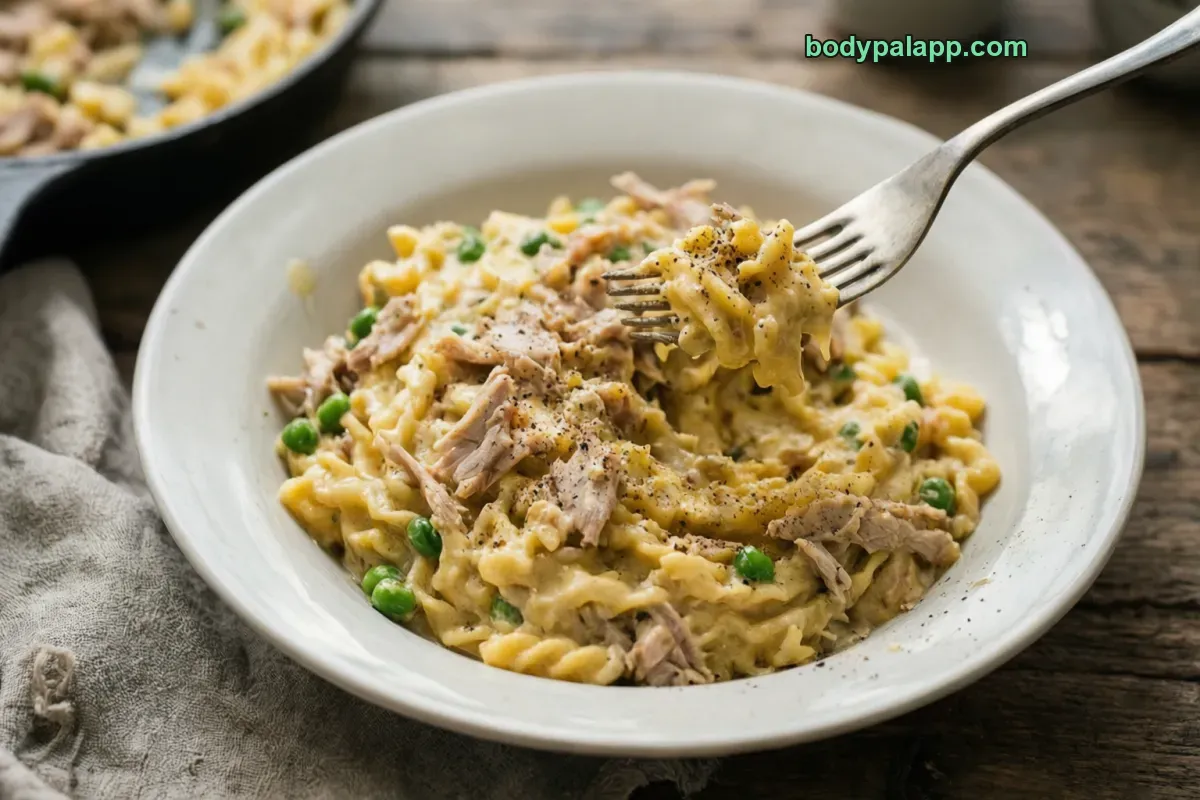
Tuna Helper calories come to 141 for 1/2 cup of dry mix (40 g) and 352 per 100 g. Those figures cover the dry mix only, as printed on the label, so the tuna and anything else you stir into the pan adds to them. The row to notice is sodium: 460 mg per 1/2 cup, already 20% of the daily value.
141kcal
1 1/2 cup of dry mix · 40 g, packaged, per label
14%protein
5 gProtein
28 gCarbs
1 gFat
How to burn off 141 kcal
—Walking, brisk
—Jogging
—Cycling, moderate
—Swimming
Skip the math. BodyPal counts these calories from your steps and workouts automatically.
Nutrition facts
Packaged, per label · per 40 g
Calories
141 kcal
Protein
5 g
Carbohydrate
28 g
Fat
1 g
Saturated fat
0 g
Cholesterol
0 mg
Sodium
460 mg
Source: USDA FoodData Central
🛡️
Verified nutrition data
Numbers on this page come from USDA FoodData Central, the U.S. Department of Agriculture’s food composition database, and from manufacturer labels where a branded product is named. Last verified September 2026. How we verify our data →
Tuna helper: calories, protein and sodium by serving
Percent of daily value uses the FDA reference of 2,000 kcal a day.
Serving
kcal
Protein
Carbs
Fat
Sodium
% DV kcal
1/2 cup dry mix (40 g)
141
5 g
28 g
1 g
460 mg
7%
100 g
352
12.5 g
70 g
2.5 g
1,150 mg
18%
3 × 1/2 cup dry mix (40 g)
422
15 g
1,380 mg
5 × 1/2 cup dry mix (40 g)
704
25 g
2,300 mg
Half a cup of dry mix is a 141-calorie base
The label measures Tuna Helper as dry mix, and the reference serving is 1/2 cup weighing 40 g. That half cup brings 141 calories, 5 g of protein, 28 g of carbs and 1 g of fat. On its own it covers 7% of a 2,000-calorie day, which sounds modest until you remember it is the starting point, not the finished plate.
Portions climb quickly once the pasta is cooked and spooned out generously. Two half-cup measures of mix (80 g) come to 282 calories with 920 mg of sodium and 10 g of protein. Three measures (120 g) reach 422 calories and 1,380 mg of sodium. At 200 g of dry mix, five measures, the total hits 704 calories, 2,300 mg of sodium and 25 g of protein.
The practical move is to decide how many half-cup measures of mix end up on your plate, then add the tuna and other ingredients separately. If you cook the whole box and split it by eye, the bowl you call one serving can easily hold two or three of these measures.
Nearly four in five calories come from carbs
The calorie split is lopsided: 79% carbs, 14% protein and 6% fat. Per 100 g of dry mix that means 70 g of carbohydrate, 12.5 g of protein and 2.5 g of fat. This is a pasta and sauce-powder product first, and the macros look like it.
The fat side is lean in the mix itself. The label lists 0 g of saturated fat and 0 mg of cholesterol per 100 g, so whatever fat the finished dish carries comes mostly from what you add in the pan. Sugars sit at 5 g per 100 g, or 2 g per half cup, which is low for a boxed meal. Fiber is thin at 2.5 g per 100 g and just 1 g per half cup.
Protein in the mix is real but limited: 5 g per half cup, 10% of the daily value. The tuna is what turns this into a protein meal, so a skimpy can makes the plate mostly pasta with a fish accent.
Sodium is the row to watch
At 1,150 mg per 100 g, the dry mix delivers 50% of the 2,300 mg daily value in that weight. One half-cup measure carries 460 mg, or 20%. Those numbers come before any salted butter, canned tuna in brine or cheese goes in.
The multiples show how fast it adds up. Two measures reach 920 mg, three reach 1,380 mg, and five measures (200 g of mix) hit 2,300 mg, a full day's sodium value from the mix alone. Compared with the calories, sodium is the number that runs ahead: five measures are 704 calories, well under half of a 2,000-calorie day, yet they use up the entire sodium allowance.
If you watch sodium, portion is your main lever. Keep the dry mix to one or two half-cup measures per plate, choose tuna packed in water with no added salt, and skip extra salt at the table. Low-sodium sides make the rest of the meal easier to balance.
Bulk the plate with vegetables, not more mix
Because the mix is mostly carbs with little fiber, the easiest upgrade is volume from vegetables. Peas, broccoli or spinach folded into the pan stretch the dish so a single half-cup measure of mix feels like a fuller bowl. The Tuna Helper Tuna Creamy Broccoli variety leans that way already, though adding fresh or frozen vegetables does more.
The flavors on shelves include Tuna Helper Tuna Cheesy Pasta, Tuna Helper Tuna Fettuccine Alfredo, Tuna Helper Tetrazzini and Tuna Helper Creamy Pasta. The figures on this page are for the Tetrazzini mix, so treat them as a guide for the others and check the box you buy.
For the full meal count, log the dry mix by measure, then the tuna, milk and butter as separate entries. BodyPal can log the finished dish from a photo, which helps when the portion came straight out of a shared pan.
How does tuna helper compare?
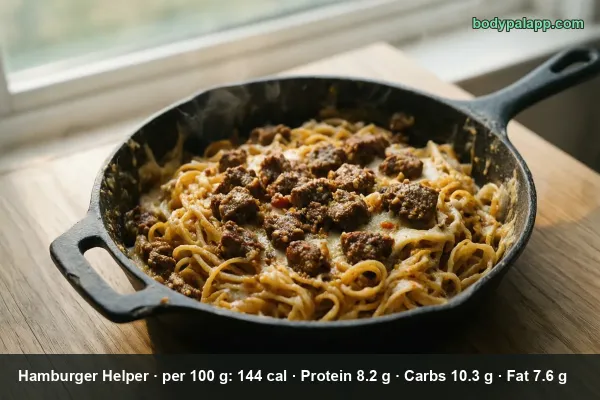
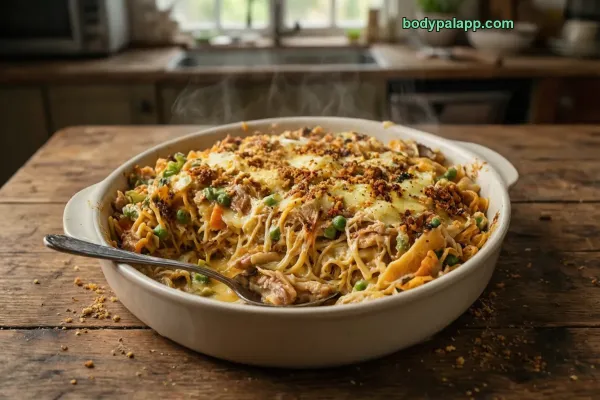
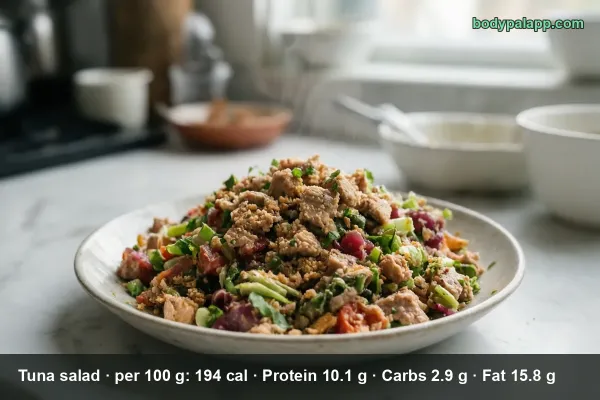
Here is how Tuna Helper dry mix stacks up against hamburger helper, tuna casserole and tuna salad, per 100 g and per usual serving.
Verdict: Tuna Helper's 352 per 100 g is dry mix, so on a plate the fair rivals are tuna casserole at 139 and hamburger helper at 144 per 100 g, and both are reasonable picks if you keep the portion in check. If you want the most protein per calorie with the fewest carbs, tuna salad at 10.1 g protein and 2.9 g carbs per 100 g wins, though its 15.8 g of fat makes it the richest at 194.
Most popular tuna helper brands in the United States
Ranked by popularity in the BodyPal database
# Productkcal / 100 g
1Tuna Helper Tuna Cheesy Pasta1/3 cup · 33 g351 kcal
2Tuna Helper Tuna Fettuccine Alfredo1/3 cup · 37 g360 kcal
3Tuna Helper Tetrazzini1/2 cup · 41 g356 kcal
4Tuna Helper Creamy Pasta1/2 cup · 27 g357 kcal
5Tuna Helper Tuna Creamy Broccoli1/3 cup · 39 g354 kcal
One 1/2 cup serving of the dry mix (40 g) is 141 calories. Per 100 g the mix is 352 calories.
Is Tuna Helper good for weight loss?
A 40 g serving of the mix is 141 calories before the tuna, milk and butter the box asks for, and it carries 460 mg sodium.
Tuna Helper vs Hamburger Helper: which has more calories?
Hamburger Helper is listed at 144 calories per 100 g as a finished dish, while the 352 calories per 100 g here are for the dry Tuna Helper mix.
How much protein and carbs are in Tuna Helper?
The dry mix has 12.5 g protein and 70 g carbs per 100 g, so a 40 g serving gives 5 g protein and 28 g carbs.
Do Tuna Helper calories include the tuna?
No. The 141 calories per 1/2 cup (40 g) are for the dry mix only, as listed on the label. The tuna, milk, butter or anything else you add in the pan counts on top of that.
How much sodium is in Tuna Helper?
One 1/2 cup of dry mix has 460 mg of sodium, 20% of the daily value. Per 100 g the mix carries 1,150 mg, which is 50% of the 2,300 mg daily value.
How many calories are in two servings of Tuna Helper?
Two half-cup measures of dry mix (80 g) come to 282 calories, with 920 mg of sodium and 10 g of protein. Whatever you add while cooking increases those totals.
How much sugar and fiber does Tuna Helper have?
A 1/2 cup of dry mix has 2 g of sugars and 1 g of fiber. Per 100 g that is 5 g of sugars and 2.5 g of fiber, so the mix is low in both.
Does Tuna Helper contain saturated fat or cholesterol?
The dry mix lists 0 g of saturated fat and 0 mg of cholesterol per 100 g, with 2.5 g of total fat. Butter, cheese or oil added during cooking can change that.