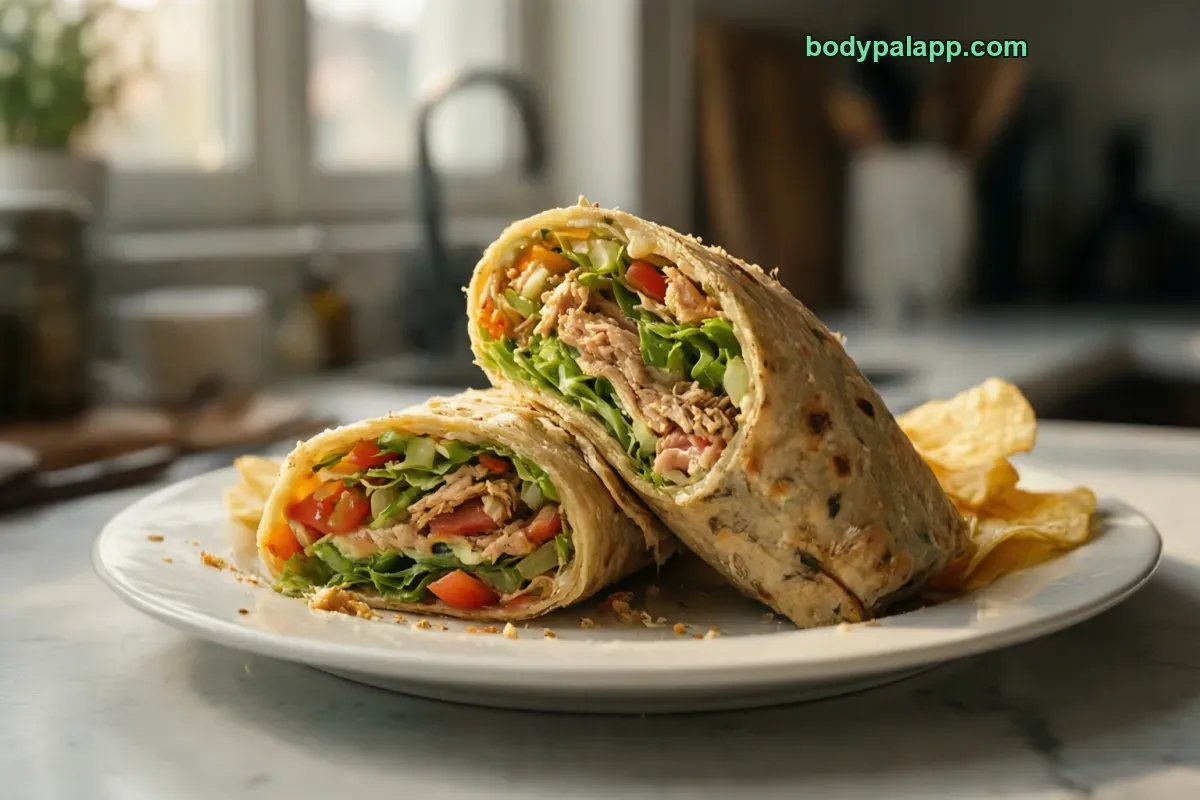
Tuna salad wrap calories come to 488 for one wrap (200 g), or 244 per 100 g. Look past the tuna, though. Fat supplies 55% of those calories, and one wrap carries 1,128 mg of sodium, which is 49% of the daily value. That makes it a heavier lunch than the fish suggests.
488kcal
1 wrap · 200 g, ready-to-eat, any size
17%protein
21 gProtein
34 gCarbs
30 gFat
How to burn off 488 kcal
—Walking, brisk
—Jogging
—Cycling, moderate
—Swimming
Skip the math. BodyPal counts these calories from your steps and workouts automatically.
Nutrition facts
Ready-to-eat, any size · per 200 g
Calories
488 kcal
Protein
21 g
Carbohydrate
34 g
Fat
30 g
Saturated fat
8.2 g
Cholesterol
50 mg
Sodium
1128 mg
Potassium
292 mg
Iron
3.4 mg
Source: USDA FoodData Central
🛡️
Verified nutrition data
Numbers on this page come from USDA FoodData Central, the U.S. Department of Agriculture’s food composition database, and from manufacturer labels where a branded product is named. Last verified September 2026. How we verify our data →
Tuna salad wrap: calories, protein and sodium by serving
Percent of daily value uses the FDA reference of 2,000 kcal a day.
Serving
kcal
Protein
Carbs
Fat
Sodium
% DV kcal
1 wrap (200 g)
488
21.2 g
34 g
29.6 g
1,128 mg
24%
100 g
244
10.6 g
17 g
14.8 g
564 mg
12%
3 × 1 wrap (200 g)
1,464
63.5 g
3,384 mg
5 × 1 wrap (200 g)
2,440
105.9 g
5,640 mg
One 488-calorie wrap is already a full lunch
A standard tuna salad wrap weighs about 200 g and lands at 488 calories. That is 24% of a 2000-calorie daily value in a single item, before any chips, soda or cookie join the tray. It also brings 21.2 g of protein, 34 g of carbs and 29.6 g of fat.
The total climbs fast if the wrap is not a solo meal. Two wraps reach 976 calories and 2,256 mg of sodium, which is past the daily value for sodium on its own. Three wraps hit 1,464 calories. Shared platters at parties and office lunches make that second wrap easy to eat without noticing.
If you want a lighter plate, eat half a wrap and fill the rest with something low in calories and high in volume. Weighing a deli wrap once is worth the effort, because sizes vary a lot from shop to shop and our numbers assume 200 g.
Fat, not tuna, supplies most of the calories
The calorie split is 55% fat, 28% carbs and only 17% protein. Per 100 g that works out to 14.8 g of fat, 17 g of carbs and 10.6 g of protein. The tuna is the protein source, but the mayonnaise-style dressing and the tortilla carry most of the energy.
Saturated fat sits at 4.1 g per 100 g, so a full wrap holds roughly double that. Cholesterol is modest at 25 mg per 100 g against a 300 mg daily value. Sugar stays low at 2.6 g per 100 g, so this is not a sweet food in disguise.
The protein is still useful. One wrap gives 42% of the 50 g protein daily value, which is a solid share for lunch. The catch is the price in calories: you pay about 488 calories for 21.2 g of protein, a ratio that lean grilled fish or plain canned tuna beats easily.
Sodium is the row to watch
At 564 mg per 100 g, sodium is the number that stands out on this label. One 200 g wrap supplies 1,128 mg, or 49% of the daily value. Half a day's allowance in one sandwich leaves little room for soup, pickles or salty snacks later.
The salt comes from several layers at once: canned tuna, dressing, the flour tortilla and often cheese or pickles. None of them looks salty on its own, which is why wraps tend to surprise people who track sodium.
If you watch sodium, treat this wrap as the salty item of the day and keep the other meals simple. Potassium is low at 146 mg per 100 g, so the wrap does little to balance that sodium load on its own. Fresh fruit or vegetables on the side add potassium without adding much salt.
Pair it with fiber, not more bread
Fiber is thin here: 1.3 g per 100 g, or 2.6 g for the whole wrap, against a 28 g daily value. That is a small share for a full meal, and it partly explains why a wrap can feel less filling than its calories suggest.
The easy fix is a side that adds bulk and fiber without much fat. A crunchy salad, raw carrots and cucumbers, an apple or a bowl of berries all fit. Skip fries or a second carb-heavy item, since the tortilla already covers the starch.
Making it at home gives you the most control. Lighter dressing, more chopped celery and onion, and a smaller tortilla all pull the numbers down. BodyPal can log a tuna salad wrap from a photo, which helps when you are eating a deli version, such as the Whole Foods Market Tuna Salad Wrap, and cannot weigh it.
How does tuna salad wrap compare?
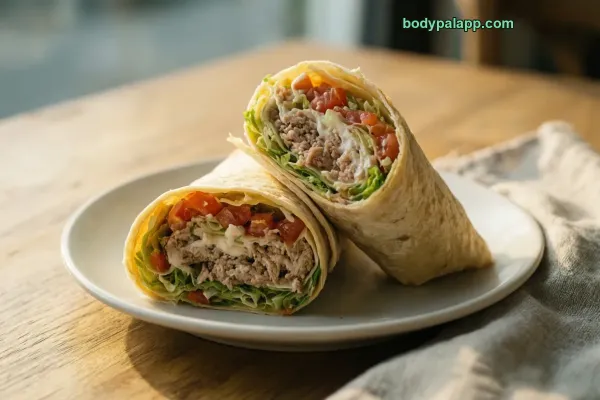
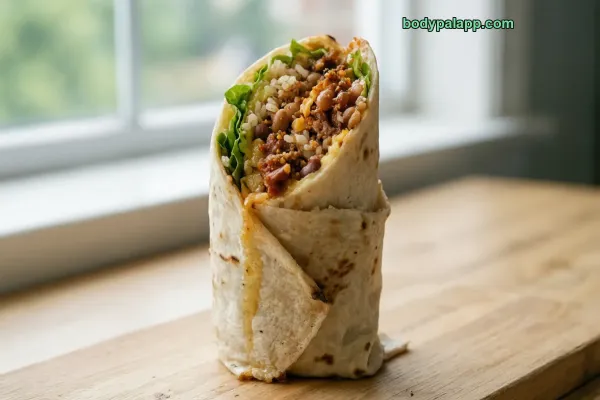
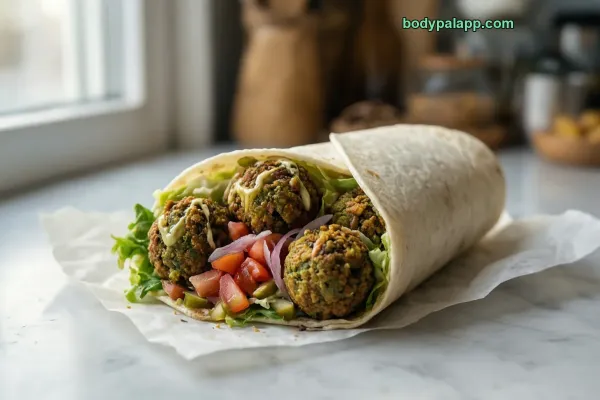
Here is how a tuna salad wrap compares with a plain tuna wrap, a burrito wrap and a falafel wrap, per 100 g and per usual serving.
Verdict: For fewer calories and less fat, the burrito wrap wins with 482 calories per serving and 8.5 g of fat per 100 g, against 14.8 g in the tuna salad wrap. For protein the tuna salad wrap beats the falafel wrap at 10.6 g versus 6.2 g per 100 g, but the falafel wrap is lower in sodium at 359 mg.
Most popular tuna salad wrap brands in the United States
About 488 calories in one 200 g wrap, or 244 per 100 g.
Is a tuna salad wrap good for weight loss?
One wrap has 488 calories with 21.2 g protein and 29.6 g fat. Tuna salad made with light mayonnaise is 106 calories per 100 g versus 194 with regular mayonnaise.
Tuna salad wrap vs falafel wrap: which has fewer calories?
A tuna salad wrap has 244 calories per 100 g, a falafel wrap 265.
How much protein is in a tuna salad wrap?
About 21.2 g of protein in one 200 g wrap, or 10.6 g per 100 g, with 34 g of carbs per wrap.
How much sodium is in a tuna salad wrap?
One tuna salad wrap (200 g) has 1,128 mg of sodium, which is 49% of the daily value. Per 100 g it is 564 mg, so this is a salty lunch even though it tastes mild.
How many calories are in two tuna salad wraps?
Two tuna salad wraps (400 g) come to 976 calories, with 2,256 mg of sodium and 42.4 g of protein. That sodium figure is already above the daily value for a single day.
How much fat is in a tuna salad wrap?
A 200 g tuna salad wrap has 29.6 g of fat, and fat supplies 55% of its calories. Per 100 g there are 14.8 g of fat, including 4.1 g of saturated fat.
How many carbs are in a tuna salad wrap?
One tuna salad wrap has 34 g of carbs, including 2.6 g of fiber and 5.3 g of sugars. Carbs supply 28% of the calories, mostly from the tortilla.