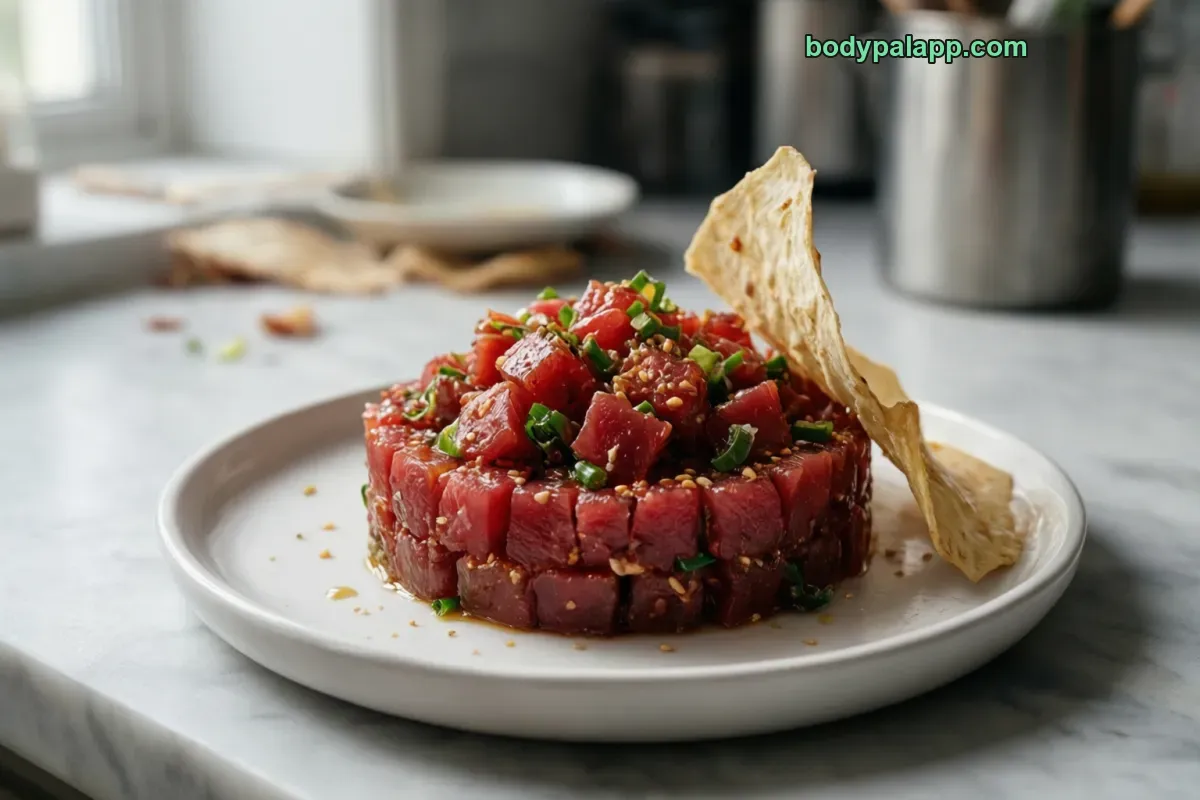
Tuna tartare calories come to 93 for a 3 oz portion (85 g) and 109 per 100 g, based on raw yellowfin. What stands out is how lean it is: 96% of those calories come from protein, so a 3 oz serving delivers 20.7 g of protein, 41% of the daily value, for just 5% of daily calories.
93kcal
1 3 oz portion · 85 g, yellowfin, raw
96%protein
21 gProtein
0 gCarbs
0.4 gFat
How to burn off 93 kcal
—Walking, brisk
—Jogging
—Cycling, moderate
—Swimming
Skip the math. BodyPal counts these calories from your steps and workouts automatically.
Nutrition facts
Yellowfin, raw · per 85 g
Calories
93 kcal
Protein
21 g
Carbohydrate
0 g
Fat
0.4 g
Saturated fat
0.1 g
Cholesterol
33 mg
Sodium
38 mg
Potassium
375 mg
Iron
0.7 mg
Source: USDA FoodData Central
🛡️
Verified nutrition data
Numbers on this page come from USDA FoodData Central, the U.S. Department of Agriculture’s food composition database, and from manufacturer labels where a branded product is named. Last verified September 2026. How we verify our data →
Tuna tartare: calories, protein and sodium by serving
Percent of daily value uses the FDA reference of 2,000 kcal a day.
Serving
kcal
Protein
Carbs
Fat
Sodium
% DV kcal
3 oz portion (85 g)
93
20.7 g
0 g
0.4 g
38 mg
5%
4 oz appetizer (113 g)
123
27.6 g
0 g
0.6 g
51 mg
6%
Bluefin, 3 oz (85 g)
122
19.8 g
0 g
4.2 g
33 mg
6%
100 g
109
24.4 g
0 g
0.5 g
45 mg
5%
3 × 3 oz portion (85 g)
278
62.2 g
115 mg
5 × 3 oz portion (85 g)
463
103.7 g
191 mg
A 4 oz appetizer is 123 calories
Restaurant tartare usually lands somewhere between the 3 oz portion and the 4 oz appetizer. The 3 oz (85 g) portion is 93 calories; the 4 oz appetizer (113 g) is 123 calories with 27.6 g of protein. On the daily value scale, that appetizer is 6% of calories and 55% of protein. The gap between the two plates is small, so portion size matters less here than it would with a fattier fish.
Scaling up stays predictable because the fish is almost pure protein. Two 3 oz portions (170 g) come to 185 calories and 41.5 g of protein. Three portions (255 g) reach 278 calories, and even five portions, 425 g of raw fish, total 463 calories with 103.7 g of protein.
In practice, the fish rarely decides the total. The sauce, the oil, the avocado and the crisps on the side do, and none of them are counted in these numbers. If you track closely, log those as separate items and keep the tuna entry clean.
Nearly every calorie is protein
The calorie split for raw yellowfin is 96% protein, 4% fat and 0% carbs. Per 100 g that works out to 24.4 g of protein, 0.5 g of fat and 0 g of carbs, sugars or fiber. Few foods on any menu are this lopsided.
Fat is close to a rounding error. A 3 oz portion has 0.4 g of fat, and saturated fat sits at 0.2 g per 100 g. Cholesterol is 39 mg per 100 g, measured against a daily value of 300 mg, and potassium reaches 441 mg per 100 g.
That profile is why tartare reads as light on paper while still carrying a serious protein load. The fish does the protein work, so the rest of the plate decides everything else. If you want more volume without much extra energy, add crunchy vegetables rather than more oil.
Bluefin adds fat and about a third more calories
The numbers on this page use yellowfin, the most common tuna for tartare. Bluefin behaves differently on the plate: a 3 oz (85 g) portion is 122 calories against 93 for yellowfin, about a third more.
The difference is almost entirely fat. Bluefin carries 4.2 g of fat per 3 oz, compared with 0.4 g for yellowfin, while protein barely moves: 19.8 g versus 20.7 g. Sodium is similar too, at 33 mg for bluefin and 38 mg for yellowfin. Bluefin still covers 40% of the protein daily value in that portion, so you give up little protein for the richer texture.
If a menu names bluefin, use the bluefin row when you log it. If it just says tuna, yellowfin is the safer assumption. Either way, the gap is smaller than what a heavy hand with sesame oil or mayo-based sauce adds.
The dressing decides the sodium and the total
On its own, raw tuna is low in sodium: 38 mg for a 3 oz portion, just 2% of the daily value. Even five portions only reach 191 mg. Tartare as served is a different story, because soy sauce, ponzu and salted seasonings go in before it reaches the table.
The same goes for calories. Sesame oil, creamy sauces, avocado and fried wonton crisps all add energy that the fish itself does not have. These figures count only the tuna, so the dressed plate will always land higher than the number on this page.
If you watch sodium, ask for the sauce on the side or a lighter pour of soy. If you want a fuller meal, pair the tartare with cucumber, greens or a side of rice, and count the rice separately. BodyPal can log the plate from a photo, and you can then adjust the amount of fish to match what you ate.
How does tuna tartare compare?
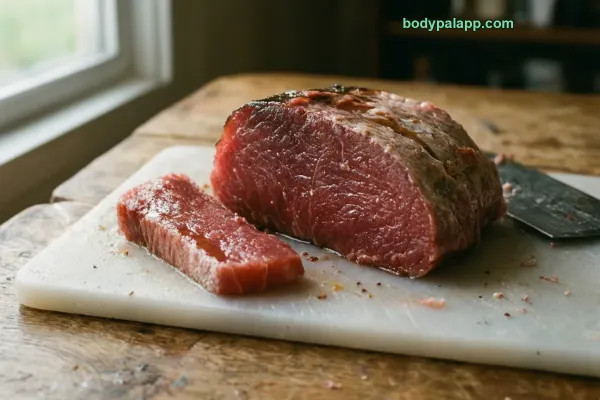
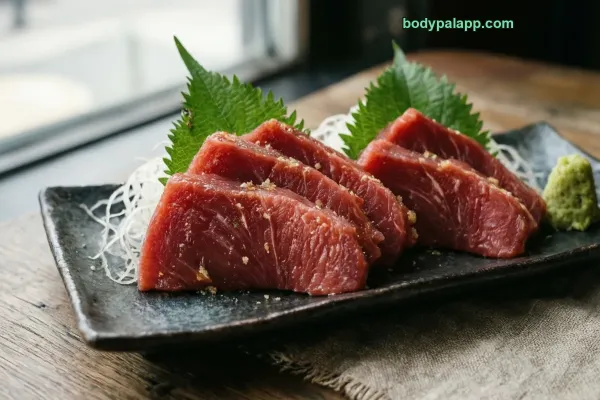
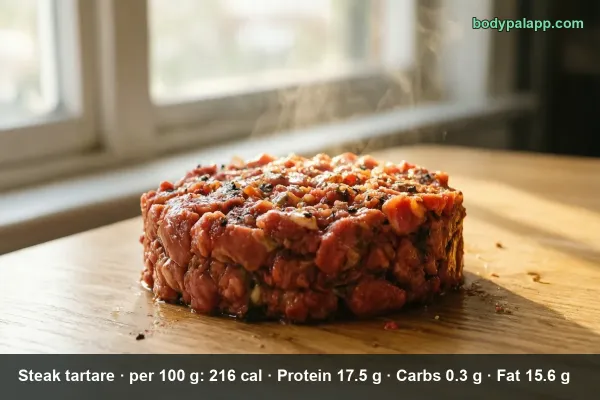
Here is how tuna tartare stacks up against raw tuna, tuna sashimi and steak tartare, per 100 g and per usual serving.
Verdict: Tuna tartare, raw tuna and tuna sashimi are the same fish at 109 calories per 100 g, so choose by portion size, not by name. If you are picking a tartare for weight loss, tuna wins clearly: steak tartare has 216 calories, 15.6 g of fat and 370 mg of sodium per 100 g, roughly 2 times the calories.
Tuna tartare FAQs
How many calories are in tuna tartare?
A 3 oz portion is about 93 calories, and a larger 4 oz appetizer portion is about 123 calories. Raw yellowfin tuna is 109 calories per 100 g.
Is tuna tartare good for weight loss?
A 3 oz portion has 93 calories, 20.7 g of protein and 0.4 g of fat, with 0 g of carbs, so it is light for the amount of protein it gives.
Tuna tartare or tuna sashimi: which has fewer calories?
Both are raw tuna at 109 calories per 100 g, so a 3 oz portion of either is about 93 calories. Any oil or mayonnaise mixed into the tartare adds on top of that.
How much protein is in tuna tartare?
About 20.7 g of protein in a 3 oz portion, or 24.4 g per 100 g of raw yellowfin tuna.
What is tuna tartare?
Tuna tartare is raw tuna, usually yellowfin, chopped and dressed. The plain fish has 109 calories per 100 g, with 24.4 g of protein and 0.5 g of fat; dressings and sides add to that.
What are the nutrition facts for tuna tartare?
Per 100 g, tuna tartare has 109 calories, 24.4 g of protein, 0.5 g of fat, 0 g of carbs, 45 mg of sodium, 39 mg of cholesterol and 441 mg of potassium. It has no sugar or fiber.
How many calories are in a 4 oz tuna tartare appetizer?
A 4 oz (113 g) appetizer of yellowfin tartare has 123 calories and 27.6 g of protein. That covers 6% of daily calories and 55% of the protein daily value, before any dressing is added.
Does bluefin tuna tartare have more calories?
Yes. A 3 oz (85 g) bluefin portion has 122 calories versus 93 for yellowfin. Most of the difference is fat: 4.2 g in bluefin against 0.4 g in yellowfin, while protein stays close.
Does tuna tartare have any carbs?
The tuna itself has 0 g of carbs, sugars and fiber per 100 g. Any carbs on the plate come from sauces, avocado, crisps or rice served alongside it, so log those separately.