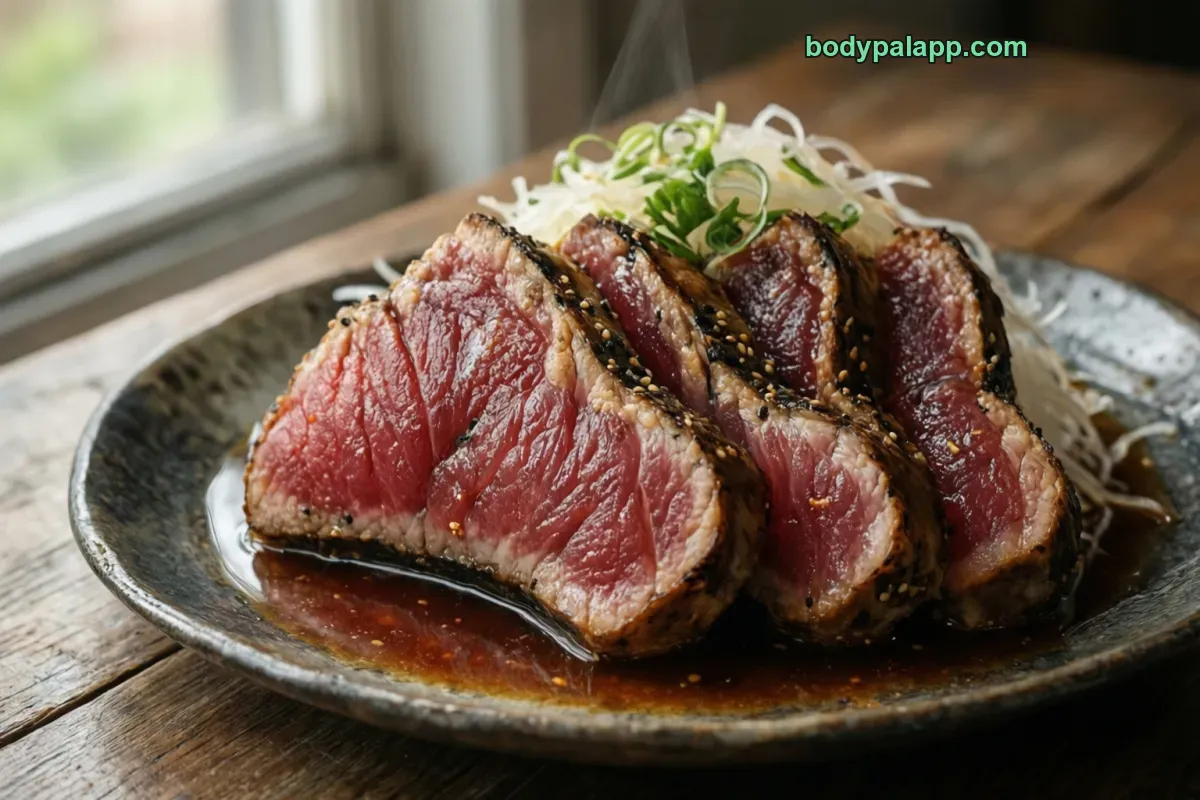
Tuna tataki calories come to 123 for a 4 oz serving (113 g) and 109 per 100 g of yellowfin seared rare. The number to notice is protein: that serving carries 27.6 g, or 55% of the daily value, while fat stays under a gram. Almost every calorie on the plate is protein.
123kcal
1 serving · 113 g, yellowfin, seared rare
96%protein
28 gProtein
0 gCarbs
0.6 gFat
How to burn off 123 kcal
—Walking, brisk
—Jogging
—Cycling, moderate
—Swimming
Skip the math. BodyPal counts these calories from your steps and workouts automatically.
Nutrition facts
Yellowfin, seared rare · per 113 g
Calories
123 kcal
Protein
28 g
Carbohydrate
0 g
Fat
0.6 g
Saturated fat
0.2 g
Cholesterol
44 mg
Sodium
51 mg
Potassium
498 mg
Iron
0.9 mg
Source: USDA FoodData Central
🛡️
Verified nutrition data
Numbers on this page come from USDA FoodData Central, the U.S. Department of Agriculture’s food composition database, and from manufacturer labels where a branded product is named. Last verified September 2026. How we verify our data →
Tuna tataki: calories, protein and sodium by serving
Percent of daily value uses the FDA reference of 2,000 kcal a day.
Serving
kcal
Protein
Carbs
Fat
Sodium
% DV kcal
4 oz serving (113 g)
123
27.6 g
0 g
0.6 g
51 mg
6%
3 oz portion (85 g)
93
20.7 g
0 g
0.4 g
38 mg
5%
100 g
109
24.4 g
0 g
0.5 g
45 mg
5%
Cooked through (85 g)
111
24.8 g
0 g
0.5 g
46 mg
6%
3 × 4 oz serving (113 g)
370
82.7 g
153 mg
5 × 4 oz serving (113 g)
616
137.9 g
254 mg
A 4 oz plate is a 123-calorie main
Tuna tataki is usually served as thin slices fanned across a plate, which makes the portion hard to judge by eye. Weight is the better guide. A 3 oz portion (85 g) comes to 93 calories, 100 g lands at 109, and a 4 oz serving (113 g) reaches 123. Even the larger of those is only about 6% of the daily calorie value.
The total climbs in a straight line because nothing else in the fish shifts. Two 4 oz servings (226 g) make 246 calories with 55.1 g of protein. Three servings (339 g) reach 370 calories and 82.7 g of protein. A generous five-serving share for the table (565 g) totals 616 calories.
That steady scaling is useful when you split a platter. Weigh or estimate your share in ounces, pick the closest row, and you have a reliable number. The fish itself rarely blows up a calorie budget; what sits next to it is a different story, covered below.
Nearly every calorie is protein
The calorie split for yellowfin tuna is 96% protein, 4% fat and 0% carbs. Per 100 g that works out to 24.4 g of protein, 0.5 g of fat and no carbohydrate, sugar or fiber at all. Few foods on a menu are this lopsided toward protein.
Fat is barely a rounding error. A 4 oz serving holds 0.6 g of fat, and saturated fat sits at 0.2 g per 100 g. Searing the outside briefly does not change that picture much, because the recipe adds little beyond a thin coating of oil in the pan.
In practice this makes tuna tataki one of the leanest ways to hit a protein target at dinner. A 3 oz portion already covers 41% of the protein daily value, and 100 g covers 49%. If you want the meal to keep you full longer, the protein is doing that work, and you can build the rest of the plate around vegetables or a modest scoop of rice.
The fish is low in sodium; the sauce is not counted
Plain yellowfin carries 45 mg of sodium per 100 g, and a 4 oz serving comes to 51 mg. That is only 2% of the daily value, low enough that the fish alone barely registers on the sodium line.
The catch is how tataki is served. It usually arrives with ponzu, soy-based dressing or a sesame glaze, and none of those are included in the numbers on this page. If you watch sodium, the dipping bowl matters far more than the tuna. Spoon the sauce over lightly rather than dunking each slice, and log it as its own item.
Two other rows are worth a glance. Cholesterol is 39 mg per 100 g against a daily value of 300 mg, and potassium is 441 mg per 100 g against 4700 mg. Neither is extreme. Packaged versions such as Yummi Sushi Tuna Tataki With Ponzu Sauce come with the sauce in the pack, so check the label for the combined totals.
Cooking it through raises calories per bite
Tataki is seared rare, so the numbers here follow the USDA row for raw yellowfin. If you ask for it cooked through, the same 85 g on the plate carries 111 calories and 24.8 g of protein, compared with 93 calories and 20.7 g of protein for 85 g of rare tuna.
Nothing is added to explain the jump. Cooking drives water out, so the fish shrinks and each gram of what remains holds more protein and more calories. A cooked-through piece that looks the same size as a rare one is a denser serving.
The practical takeaway: log by the state the tuna is in when you eat it. For classic tataki with a pink or red center, the raw values are the right match. For a steak cooked all the way, use the cooked-through row. BodyPal can log the plate from a photo, but the doneness choice is worth checking either way.
How does tuna tataki compare?
Here is how tuna tataki stacks up against tuna sashimi, raw tuna and tuna steak, per 100 g and per usual serving.
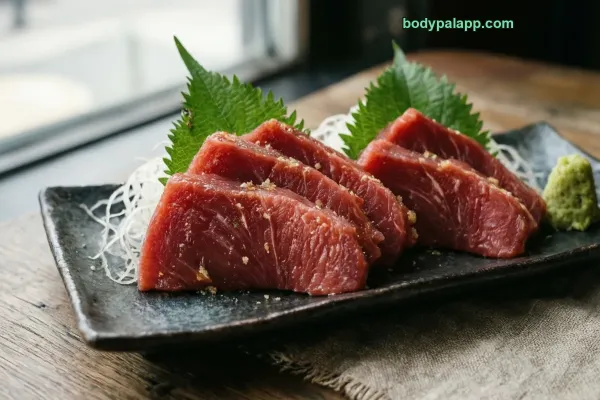
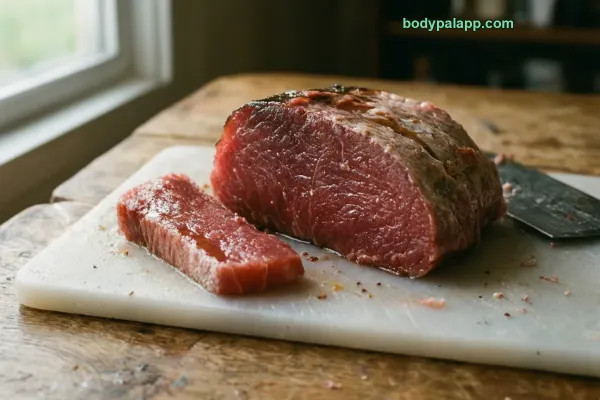
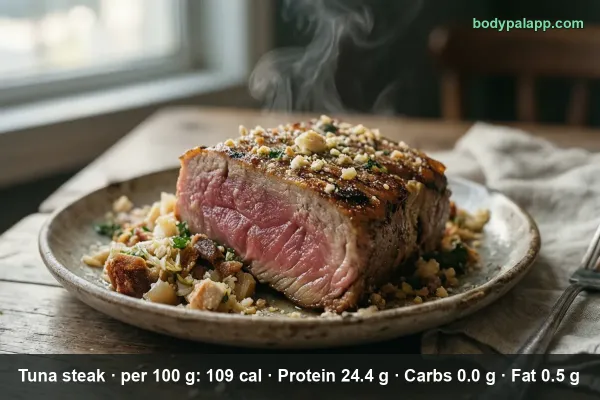
Verdict: All four share the same 109 calories and 24.4 g of protein per 100 g, so the cut or presentation does not change the fish; only portion size does. For the tightest calorie control pick sashimi at 31 calories per piece, and for a filling main pick a 4 oz tataki plate at 123 calories.
Most popular tuna tataki brands in the United States
Ranked by popularity in the BodyPal database
# Productkcal / 100 g
1Yummi Sushi Tuna Tataki With Ponzu Sauce227 g110 kcal
Packaged tataki trays include the ponzu sauce and garnish in the labeled weight, so their numbers cover more than the fish alone. Source: manufacturer labels / USDA FoodData Central.
Tuna tataki FAQs
How many calories are in tuna tataki?
A 113 g serving of seared tuna tataki is about 123 calories, and a smaller 3 oz (85 g) portion is 93 calories.
Is tuna tataki good for weight loss?
A 113 g serving has 123 calories, 27.6 g protein and 0.6 g fat, with no carbs.
Tuna tataki vs tuna sashimi: which has fewer calories?
They match at 109 calories per 100 g, because tataki is the same raw tuna with a quick seared crust.
How much protein is in tuna tataki?
Seared tuna has 24.4 g protein per 100 g, so a 113 g serving gives about 27.6 g.
What are the macros in tuna tataki?
Per 100 g, tuna tataki has 24.4 g of protein, 0.5 g of fat and 0 g of carbs for 109 calories. That makes the calorie split 96% protein and 4% fat.
How many net carbs are in tuna tataki?
Tuna tataki has 0 g of carbs, 0 g of sugar and 0 g of fiber, so net carbs are zero. Any carbs on the plate come from the sauce or sides, not the fish.
Is tuna tataki high in fat?
No. A 4 oz serving has 0.6 g of fat, and 100 g has 0.5 g, with 0.2 g of that saturated. Fat supplies only 4% of the calories.
Is tuna tataki a low-calorie dish?
Yes. A 3 oz portion is 93 calories and a 4 oz serving is 123, about 5% to 6% of the daily calorie value. Sauces and rice served alongside add more.
How much sodium is in tuna tataki?
The fish has 45 mg of sodium per 100 g and 51 mg in a 4 oz serving, only 2% of the daily value. Ponzu or soy-based sauces are not included and add considerably more.