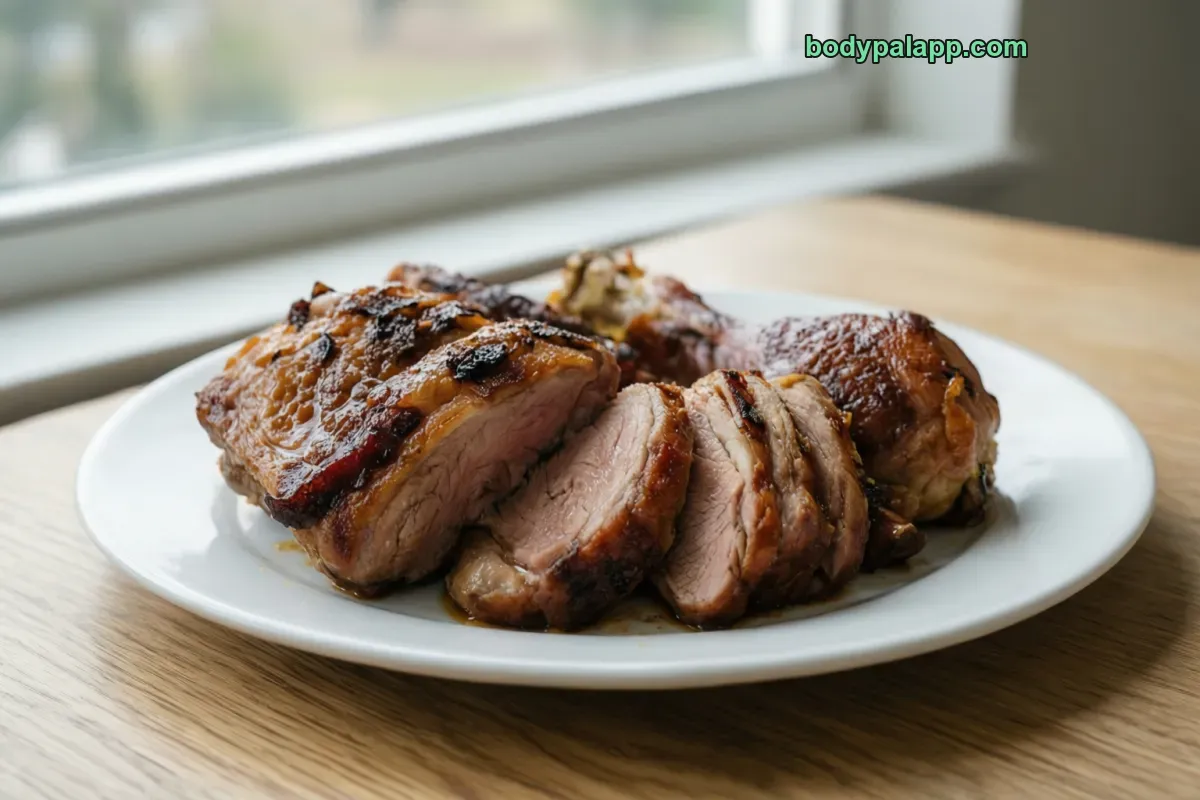
Turkey dark meat calories come to 147 for a 3 oz portion (85 g) of roasted meat without skin, or 173 per 100 g. Protein carries 67% of those calories and there are no carbs at all, so the number that really moves is fat: keep the skin on and the same 3 oz rises to 175.
147kcal
1 3 oz portion · 85 g, roasted, meat only
67%protein
24 gProtein
0 gCarbs
5.1 gFat
How to burn off 147 kcal
—Walking, brisk
—Jogging
—Cycling, moderate
—Swimming
Skip the math. BodyPal counts these calories from your steps and workouts automatically.
Nutrition facts
Roasted, meat only · per 85 g
Calories
147 kcal
Protein
24 g
Carbohydrate
0 g
Fat
5.1 g
Saturated fat
1.5 g
Cholesterol
109 mg
Sodium
88 mg
Potassium
193 mg
Iron
1.2 mg
Source: USDA FoodData Central
🛡️
Verified nutrition data
Numbers on this page come from USDA FoodData Central, the U.S. Department of Agriculture’s food composition database, and from manufacturer labels where a branded product is named. Last verified September 2026. How we verify our data →
Turkey dark meat: calories, protein and sodium by serving
Percent of daily value uses the FDA reference of 2,000 kcal a day.
Serving
kcal
Protein
Carbs
Fat
Sodium
% DV kcal
3 oz portion (85 g)
147
23.6 g
0 g
5.1 g
88 mg
7%
With skin, 3 oz (85 g)
175
23.2 g
0.1 g
8.5 g
89 mg
9%
4 oz portion (113 g)
195
31.3 g
0 g
6.8 g
118 mg
10%
100 g
173
27.7 g
0 g
6 g
104 mg
9%
3 × 3 oz portion (85 g)
441
70.7 g
265 mg
5 × 3 oz portion (85 g)
735
117.8 g
442 mg
A 3 oz serving is a 147-calorie plate
The standard 3 oz portion (85 g) of roasted dark meat without skin has 147 calories, 23.6 g protein and 5.1 g fat. That is 7% of the daily calorie value and 47% of the protein value, a lopsided trade in your favor. A 4 oz portion (113 g), closer to what a restaurant or a generous home cook serves, lands at 195 calories with 31.3 g protein.
Portions drift fast at holiday tables. Two 3 oz portions (170 g) total 294 calories, and three (255 g) reach 441 calories with 70.7 g protein. A heaped plate of five portions, 425 g of meat, adds up to 735 calories before stuffing, gravy or rolls touch it.
The practical move is to weigh once. Thigh and drumstick meat shreds and spreads across a plate, so a pile looks smaller than it is. If you log by eye, BodyPal can log the food from a photo, but putting the first serving on a kitchen scale calibrates your eye for the rest of the season.
Two thirds of the calories are protein
Per 100 g, roasted dark meat has 27.7 g protein, 6 g fat and no carbohydrates, sugar or fiber. The calorie split is 67% protein and 33% fat. Nothing else is in the mix, which makes this one of the simplest foods to track.
Dark meat has a reputation as the rich cut, but the gap is smaller than the name suggests. Saturated fat is 1.8 g per 100 g, under a third of the total fat. Thighs and drumsticks taste fuller because of that fat and their connective tissue, not because they are loaded with calories.
The skin is where the math changes. The same 3 oz with skin carries 8.5 g fat instead of 5.1 g, pushing calories from 147 to 175 while protein barely moves, 23.2 g versus 23.6 g. If you want the flavor, eat a strip of crisp skin rather than the whole piece and the total stays close to the skinless number.
Sodium is low; cholesterol is the row to notice
Plain roasted dark meat is a low-sodium protein. It has 104 mg per 100 g, and a 3 oz portion has 88 mg, just 4% of the daily value. Even a 4 oz portion stays at 118 mg, or 5%. Potassium sits at 227 mg per 100 g, a modest contribution rather than a headline.
Cholesterol is the number that stands out: 128 mg per 100 g, against a daily value of 300 mg. If you track that row, the second and third helpings are where it climbs, since cholesterol scales with every extra ounce just like calories do.
The sodium picture flips once turkey is cured, brined or sliced for the deli counter. Turkey breast lunch meat has 898 mg per 100 g, many times the roasted bird. Salty rubs and gravy also add sodium that the meat itself does not have, so count them separately if that row matters to you.
Dark meat needs a fiber partner on the plate
Because dark meat has zero carbs and zero fiber, it covers only part of a meal. Roasted vegetables, a salad, beans or a whole grain fill the gap and add bulk for few calories. A 3 oz portion next to a big pile of green beans or roasted squash makes a plate that looks generous without stacking up calories.
The extras decide the total more than the turkey does. Gravy, buttery stuffing and sweet sides can easily outweigh the 147 calories in the meat itself. If you are watching your intake, serve the turkey first, measure it, then build the rest of the plate around it.
Leftovers are where dark meat shines. Shredded thigh meat stays moist in soups, grain bowls, tacos and salads, where breast meat can turn dry. A 3 oz portion brings 23.6 g protein to any of them, enough to make a light lunch hold you through the afternoon.
How does turkey dark meat compare?
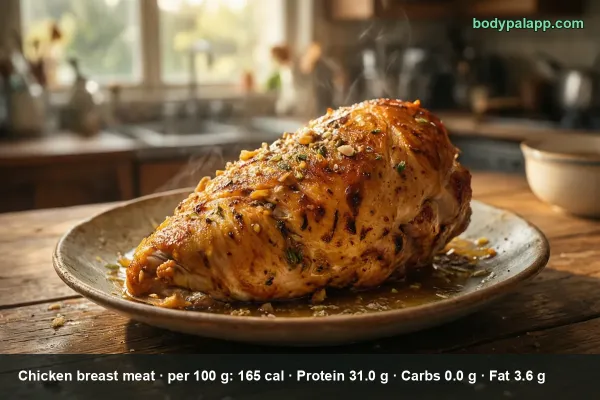
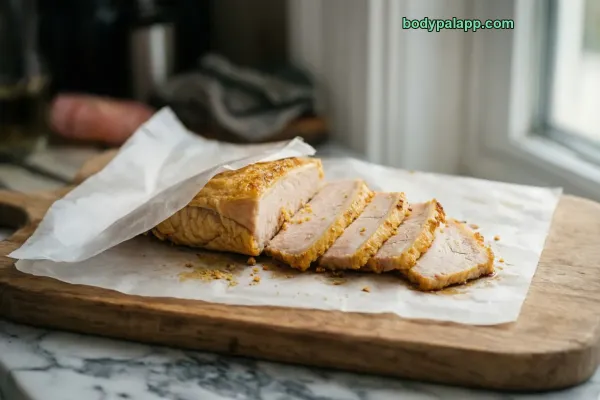
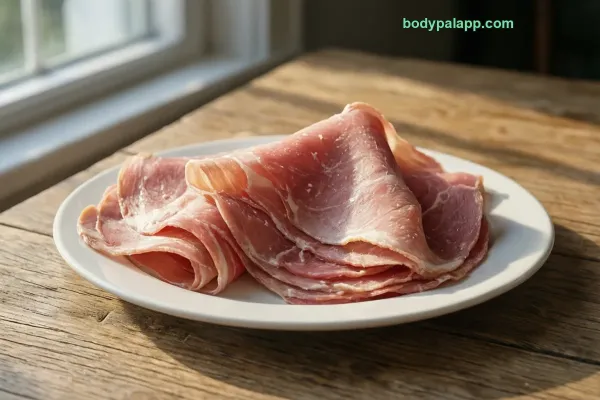
Here is how roasted turkey dark meat stacks up against chicken breast and two popular deli meats, per 100 g and per usual serving.
Verdict: For the most protein per calorie, chicken breast wins with 31 g protein at 165 calories per 100 g, though turkey dark meat at 173 calories is close and more flavorful. If you watch sodium, choose a fresh roast over deli slices: turkey breast lunch meat has 898 mg and ham deli meat 945 mg per 100 g, against 104 mg for roasted dark meat.
Turkey dark meat FAQs
How many calories are in 3 oz of turkey dark meat?
About 147 calories roasted without skin (85 g), or 175 calories with the skin left on.
Is turkey dark meat good for weight loss?
A 3 oz portion has 147 calories, 23.6 g protein and 0 g carbs. Eating the skin adds 28 calories and raises fat from 5.1 g to 8.5 g.
Turkey dark meat vs chicken breast: which has fewer calories?
Roasted chicken breast has 165 calories per 100 g versus 173 for turkey dark meat. Chicken breast also has more protein, 31 g versus 27.7 g per 100 g.
How much protein is in turkey dark meat?
Roasted turkey dark meat has 27.7 g protein per 100 g, or 23.6 g in a 3 oz portion.
How many calories are in turkey dark meat with skin?
A 3 oz portion (85 g) of roasted dark meat with skin has 175 calories, compared with 147 without skin. The skin raises fat from 5.1 g to 8.5 g, while protein stays almost the same at 23.2 g.
How many calories are in 4 oz of turkey dark meat?
A 4 oz portion (113 g) of roasted dark meat without skin has 195 calories. It also gives you 31.3 g protein and 6.8 g fat, with no carbs, which is 10% of the daily calorie value.
How many calories are in 100 g of turkey dark meat?
There are 173 calories in 100 g of roasted turkey dark meat without skin. That weight brings 27.7 g protein, 6 g fat and 0 g carbs, so protein supplies 67% of the calories.
Does turkey dark meat have carbs?
No. Roasted turkey dark meat has 0 g carbohydrates, 0 g sugar and 0 g fiber per 100 g. All of its calories come from protein and fat, split 67% and 33%.
How much fat is in turkey dark meat?
A 3 oz portion of roasted dark meat without skin has 5.1 g fat. Per 100 g it has 6 g fat, of which 1.8 g is saturated. Leaving the skin on raises a 3 oz portion to 8.5 g.