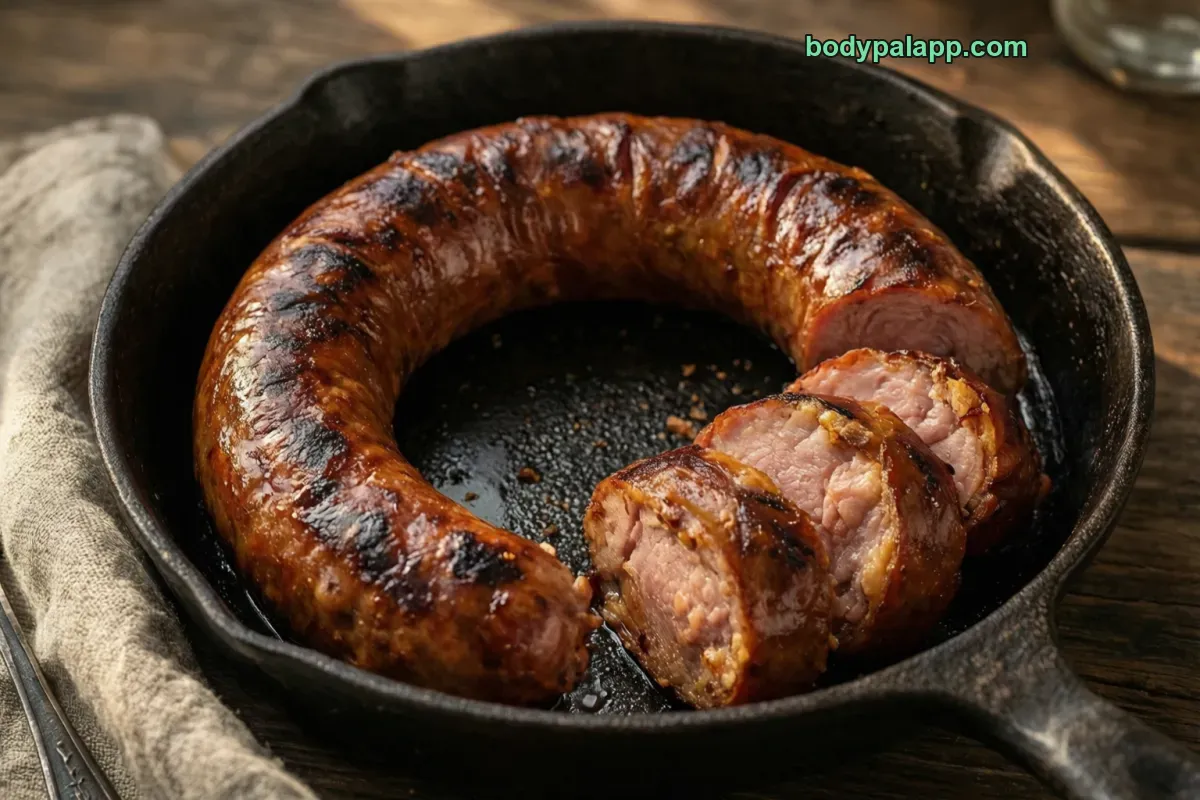
Turkey smoked sausage calories come to 90 for a 2 oz serving (56 g) and 161 per 100 g. The calorie count is modest, but sodium is the number to watch. That same small serving carries 500 mg, or 22% of the daily value, and the sodium climbs quickly with every extra serving you slice into the pan.
90kcal
1 2 oz serving · 56 g, packaged, per label
39%protein
9 gProtein
3 gCarbs
5 gFat
How to burn off 90 kcal
—Walking, brisk
—Jogging
—Cycling, moderate
—Swimming
Skip the math. BodyPal counts these calories from your steps and workouts automatically.
Nutrition facts
Packaged, per label · per 56 g
Calories
90 kcal
Protein
9 g
Carbohydrate
3 g
Fat
5 g
Saturated fat
1.5 g
Cholesterol
30 mg
Sodium
500 mg
Source: USDA FoodData Central
🛡️
Verified nutrition data
Numbers on this page come from USDA FoodData Central, the U.S. Department of Agriculture’s food composition database, and from manufacturer labels where a branded product is named. Last verified September 2026. How we verify our data →
Turkey smoked sausage: calories, protein and sodium by serving
Percent of daily value uses the FDA reference of 2,000 kcal a day.
Serving
kcal
Protein
Carbs
Fat
Sodium
% DV kcal
2 oz serving (56 g)
90
9 g
3 g
5 g
500 mg
5%
3 oz portion (85 g)
137
13.7 g
4.6 g
7.6 g
759 mg
7%
100 g
161
16.1 g
5.4 g
8.9 g
893 mg
8%
3 × 2 oz serving (56 g)
270
27 g
1,500 mg
5 × 2 oz serving (56 g)
451
45 g
2,500 mg
Portions take it from 90 to 451 calories fast
The label serving is 2 oz (56 g), and it lands at 90 calories with 9 g of protein. That is a light, reasonable portion. The catch is that smoked sausage rarely gets eaten by the label. It gets sliced into a skillet, tossed with peppers and onions, and served by the scoopful.
A 3 oz portion (85 g), closer to what many people actually plate, brings 137 calories and 13.7 g of protein. Two label servings (112 g) come to 180 calories. Three servings (168 g) reach 270 calories with 27 g of protein. Five servings (280 g), roughly what you might eat if a whole skillet is split between two hungry people, total 451 calories.
None of those totals is extreme for a main protein. The point is that the number on the package describes a small piece. If you track intake, weigh the sausage once so you know what your usual portion really looks like, then log that figure instead of guessing.
Fat edges out protein as the calorie source
Per 100 g, turkey smoked sausage has 16.1 g of protein, 8.9 g of fat and 5.4 g of carbs. Because fat packs more energy per gram, it ends up supplying 48% of the calories. Protein supplies 39% and carbs the remaining 13%. So this is a protein food, but not a lean one in the way plain turkey breast would be.
Saturated fat sits at 2.7 g per 100 g, out of a daily value of 20 g. Cholesterol is 54 mg per 100 g against a daily value of 300 mg. Neither number is high for a processed meat, and both are easy to keep in check at a 2 oz or 3 oz portion.
The carbs are small and come partly from added ingredients used in curing and binding. Sugars are 1.8 g per 100 g, and fiber is also 1.8 g. That means the sausage barely moves your carb total, which makes it easy to fit into lower-carb meals.
Sodium is the row to watch
Smoked, cured meats lean on salt, and this one is no exception. There are 893 mg of sodium per 100 g, which is 39% of the 2300 mg daily value. The 2 oz serving holds 500 mg (22%), and the 3 oz portion holds 759 mg (33%). Calories stay in single-digit percentages of the daily value while sodium runs several times higher.
Scale the portion and the sodium scales with it. Two servings carry 1,000 mg. Three carry 1,500 mg. Five servings reach 2,500 mg, which is more than the full daily value in one dish, before you count any seasoning, broth or bread on the side.
If you watch sodium, treat the sausage as the salty element of the meal and leave everything else plain. Skip extra salt in the pan, choose unsalted beans or rice, and go easy on sauces. Varieties differ by maker, so comparing labels across brands such as Hillshire Farm, Johnsonville or Meijer is worth the extra few seconds.
Let the sausage flavor a bigger plate
Turkey smoked sausage works best as a flavor driver rather than the whole meal. A 2 oz serving gives 18% of the daily value for protein for only 5% of a 2000-calorie day. Stretch it with vegetables, beans or a grain and a small amount goes a long way on the plate.
Fiber is the obvious gap. At 1.8 g per 100 g, the sausage contributes little toward the 28 g daily value, so pair it with foods that bring it: peppers, cabbage, greens, lentils or beans. Those additions also add volume, which helps a modest portion feel like a full meal.
Classic uses include sheet-pan sausage and vegetables, red beans and rice, breakfast scrambles and pasta with greens. In each case, sizing the sausage to one or two label servings keeps the calories controlled and the sodium manageable. If you cook it often, BodyPal can log the dish from a photo so the portion you actually ate ends up in your diary.
How does turkey smoked sausage compare?
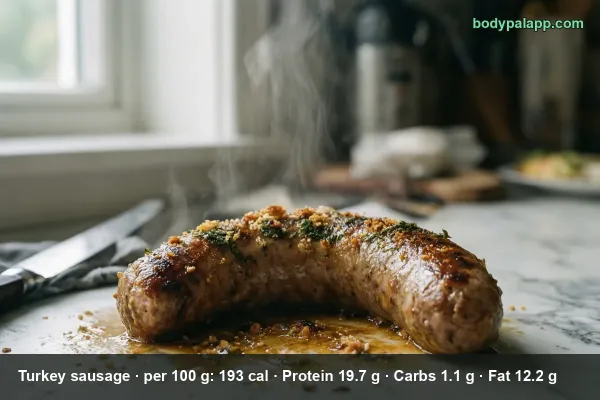
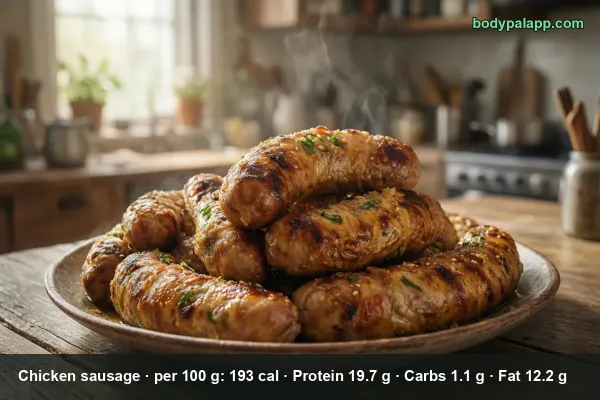
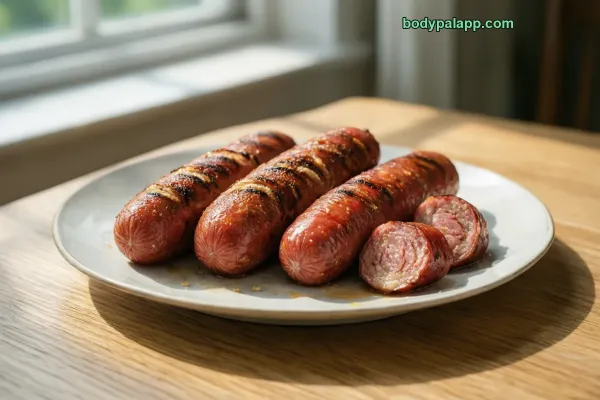
Here is how turkey smoked sausage stacks up against turkey sausage, chicken sausage and a hot dog sausage, per 100 g and per usual serving.
Verdict: For the fewest calories, turkey smoked sausage wins at 161 per 100 g, against 193 for turkey or chicken sausage and 322 for a hot dog sausage, which is about 2 times as much. If protein per bite matters most, turkey or chicken sausage gives 19.7 g per 100 g with less sodium at 705 mg, so pick those when you want more protein and less salt.
Most popular turkey smoked sausage brands in the United States
Ranked by popularity in the BodyPal database
# Productkcal / 100 g
1Hillshire Farm Turkey Smoked Sausage2 oz · 56 g179 kcal
About 90 calories in a 2 oz (56 g) serving, or 161 calories per 100 g.
Is turkey smoked sausage good for weight loss?
A 2 oz serving has 90 calories, 9.0 g protein and 5.0 g fat. Per 100 g it has 161 calories and 8.9 g fat.
Turkey smoked sausage vs turkey sausage: which has fewer calories?
Turkey smoked sausage has 161 calories per 100 g, while turkey sausage has 193 calories per 100 g.
How much protein is in turkey smoked sausage?
About 9.0 g of protein per 2 oz serving, or 16.1 g per 100 g. The same 2 oz serving has 500 mg of sodium.
How much sodium is in turkey smoked sausage?
A 2 oz serving (56 g) has 500 mg of sodium, which is 22% of the daily value. Per 100 g it rises to 893 mg, or 39%, so larger portions add up quickly.
How many calories are in 3 oz of turkey smoked sausage?
A 3 oz portion (85 g) has 137 calories. It also brings 13.7 g of protein, 7.6 g of fat and 4.6 g of carbs, plus 759 mg of sodium.
Does turkey smoked sausage have carbs?
Only a few. A 2 oz serving has 3 g of carbs, with 1 g of sugars and 1 g of fiber. Per 100 g it is 5.4 g of carbs, so it fits easily into lower-carb meals.
How much fat is in turkey smoked sausage?
A 2 oz serving has 5 g of fat. Per 100 g there are 8.9 g of fat, including 2.7 g of saturated fat, and fat supplies 48% of the calories.
How many calories are in two servings of turkey smoked sausage?
Two 2 oz servings (112 g) come to 180 calories with 18 g of protein. They also carry 1,000 mg of sodium, so the salt rises faster than the calories.