Venison calories come to 134 for a 3 oz portion (85 g) of roasted deer meat and 158 per 100 g. Look at the protein first. That small portion delivers 25.7 g, 51% of the daily value, with only 2.7 g of fat and no carbs at all. Few meats give you this much protein for so few calories.
134kcal
1 3 oz portion · 85 g, roasted
81%protein
26 gProtein
0 gCarbs
2.7 gFat
How to burn off 134 kcal
—Walking, brisk
—Jogging
—Cycling, moderate
—Swimming
Skip the math. BodyPal counts these calories from your steps and workouts automatically.
Nutrition facts
Roasted · per 85 g
Calories
134 kcal
Protein
26 g
Carbohydrate
0 g
Fat
2.7 g
Saturated fat
1.1 g
Cholesterol
95 mg
Sodium
46 mg
Potassium
285 mg
Iron
3.8 mg
Source: USDA FoodData Central
🛡️
Verified nutrition data
Numbers on this page come from USDA FoodData Central, the U.S. Department of Agriculture’s food composition database, and from manufacturer labels where a branded product is named. Last verified October 2026. How we verify our data →
Venison: calories, protein and sodium by serving
Percent of daily value uses the FDA reference of 2,000 kcal a day.
Serving
kcal
Protein
Carbs
Fat
Sodium
% DV kcal
3 oz portion (85 g)
134
25.7 g
0 g
2.7 g
46 mg
7%
4 oz portion (113 g)
179
34.1 g
0 g
3.6 g
61 mg
9%
100 g
158
30.2 g
0 g
3.2 g
54 mg
8%
3 × 3 oz portion (85 g)
403
77 g
138 mg
5 × 3 oz portion (85 g)
672
128.4 g
230 mg
A 3 oz portion is a 134-calorie plate
The standard 3 oz portion (85 g) of roasted venison comes to 134 calories and 25.7 g of protein. That is 7% of the daily calorie value and 51% of the daily protein value in a piece about the size of a deck of cards. Step up to a 4 oz portion (113 g) and you get 179 calories and 34.1 g of protein, 68% of the daily protein value.
Venison is lean, so the total climbs slowly as the plate grows. Two 3 oz portions (170 g) add up to 269 calories and 51.4 g of protein. Three portions (255 g) reach 403 calories and 77 g of protein, which is a big dinner by any measure.
Even five portions (425 g), enough to feed a small group from one roast, come to 672 calories, 128.4 g of protein and just 230 mg of sodium. The meat is rarely what makes a venison dinner heavy. The sides, sauces and cooking fat usually do.
Protein supplies 81% of the calories
Per 100 g, roasted venison carries 30.2 g of protein, 3.2 g of fat and 0 g of carbs. Turned into calories, that is 81% from protein and 19% from fat. There is no sugar, no starch and no fiber, so every calorie comes from those two macros.
The fat is low by red meat standards. Saturated fat sits at 1.3 g per 100 g, well under half of the total fat. That profile puts venison closer to skinless poultry than to a marbled beef cut, which is why hunters and lifters alike treat it as a lean staple.
The practical upshot is simple. If you track protein, venison is one of the most efficient foods you can log. If you track carbs, it counts as zero, and anything you add on the plate decides the carb total.
Cholesterol is the row to watch, not sodium
Sodium is not a concern in plain roasted venison. There are 54 mg per 100 g, just 2% of the daily value, and 46 mg in a 3 oz portion. The numbers here are for unseasoned meat, so salt, rubs and marinades you add will raise that row quickly.
Cholesterol is the number that stands out. Roasted venison has 112 mg per 100 g, against a daily value of 300 mg. If you watch dietary cholesterol, portion size matters more here than fat does, because the meat is lean but the cholesterol stays.
Potassium is a quiet plus at 335 mg per 100 g, measured against a daily value of 4700 mg. Processed venison is a different story. Seasoned snacks like the Epic Venison Sea Salt + Pepper Bar or the Shaffer Smoked Venison Snack Stick are cured products, so check their own labels for sodium.
Lean meat that leaves room on the plate
Because a portion is low in calories and has no carbs or fiber, venison pairs well with foods that fill those gaps. Roasted vegetables, beans, potatoes or whole grains add fiber and bulk without crowding out the protein. A pan sauce or butter baste is where calories add up, so measure the fat you cook with.
Ground venison deserves a note. The values on this page come from the USDA row for roasted deer meat, not from ground products. Ground venison from brands like Durham Ranch, Firstlight or Force Of Nature can be blended with added fat or beef, so its numbers follow the package rather than this table.
Venison also dries out fast because it is so lean. Cooking it to a lower doneness or braising it keeps it tender without adding much. If you want a quick record of what you ate, BodyPal can log venison from a photo of your plate.
How does venison compare?
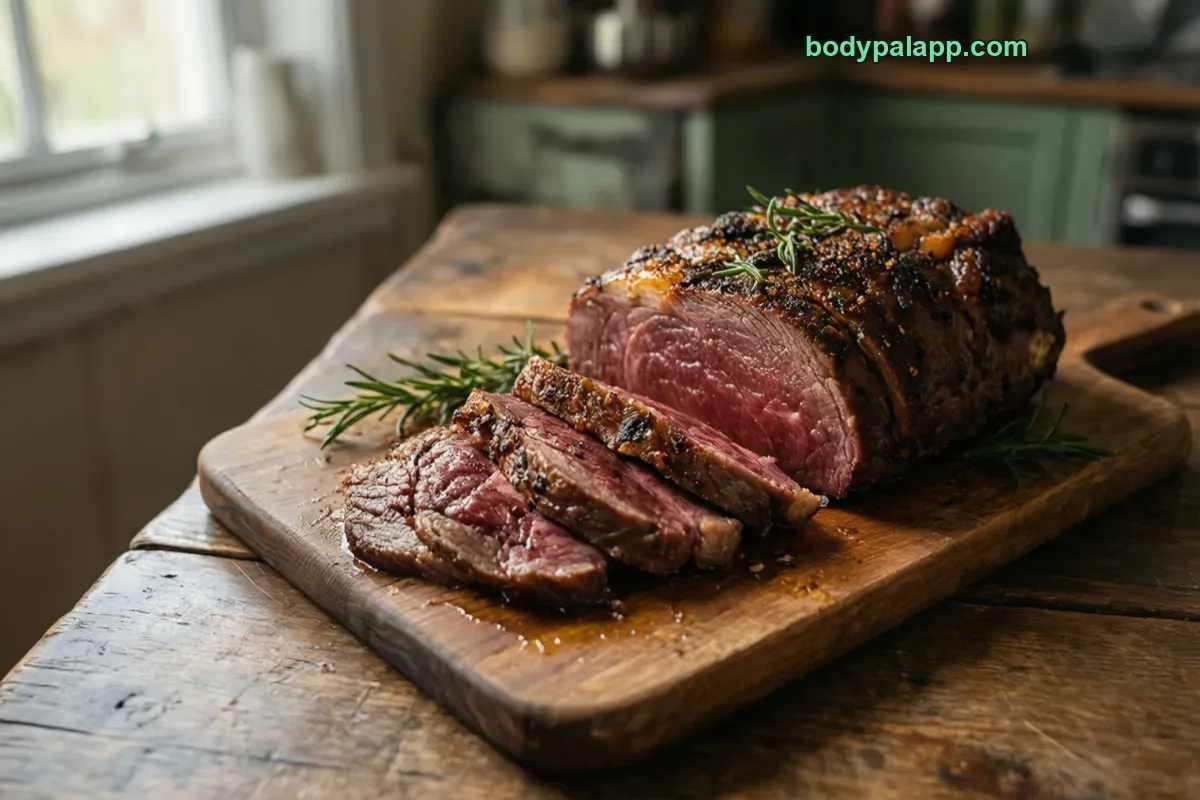
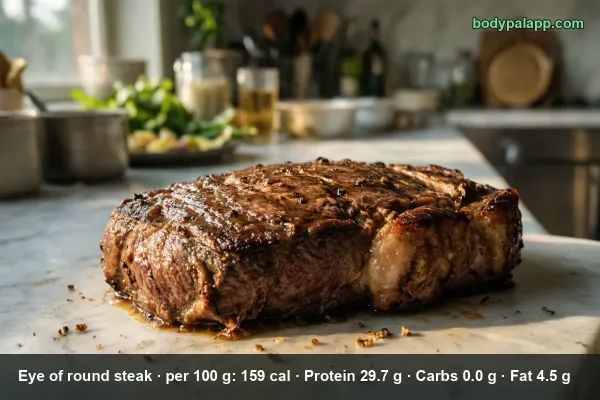
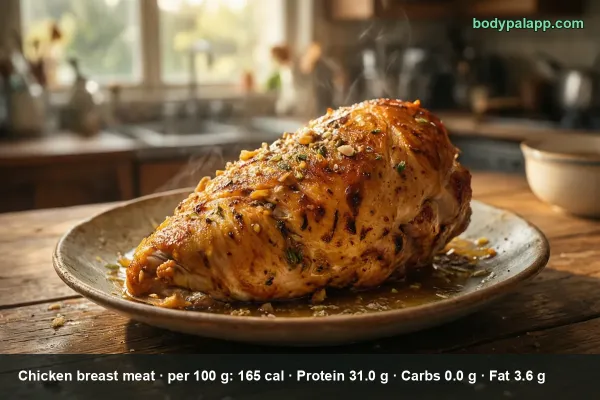
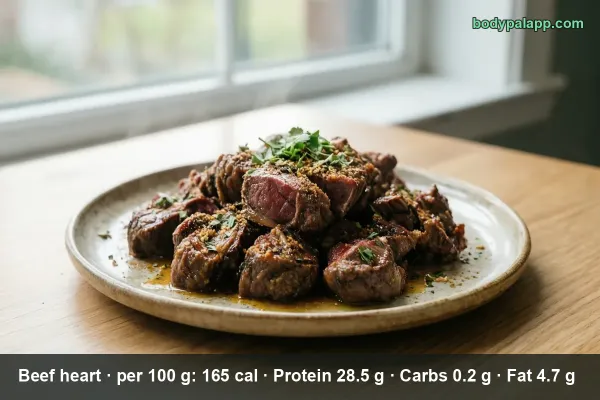
Here is how roasted venison stacks up against three other lean meats, per 100 g and per usual serving.
Verdict: Venison edges out the field on calories at 158 per 100 g, against 159 for eye of round steak and 165 for both chicken breast meat and beef heart, and it has the least sodium of the four at 54 mg. Pick chicken breast meat only if you want the most protein at 31 g per 100 g, because venison's 30.2 g is close enough that it is the better choice for lean, low-sodium eating.
Most popular venison brands in the United States
Ranked by popularity in the BodyPal database
# Productkcal / 100 g
1Force Of Nature Ancestral Blend Venison4 oz · 112 g152 kcal
2Durham Ranch Ground Venison4 oz · 113 g124 kcal
3Firstlight Ground Venison4 oz · 113 g115 kcal
4Durham Ranch Ground Venison With 3% Beef4 oz · 112 g170 kcal
5Epic Venison Sea Salt + Pepper Bar1 bar · 43 g279 kcal
6Shaffer Smoked Venison Snack Stick1 oz · 28 g179 kcal
Ground venison is labeled per raw weight, so it reads lower than the roasted numbers above, while dried bars and snack sticks read higher. Source: manufacturer labels / USDA FoodData Central.
Venison FAQs
How many calories are in 3 oz of venison?
A 3 oz (85 g) portion of roasted venison has about 134 calories and 25.7 g protein.
Is venison good for weight loss?
Roasted venison has 158 calories per 100 g with 30.2 g protein and 3.2 g fat, which makes it a very lean meat.
Venison vs eye of round steak: which has fewer calories?
They are almost equal: roasted venison has 158 calories per 100 g and eye of round steak has 159.
How much protein is in venison?
Roasted venison has 30.2 g protein per 100 g, or about 25.7 g in a 3 oz portion and 34.1 g in a 4 oz portion.
How many calories are in ground venison?
The 158 calories per 100 g on this page are for roasted deer meat, not ground venison. Ground products such as Durham Ranch or Firstlight may include added fat or beef, so check the package label for their exact figure.
What is the nutrition in 4 oz of venison?
A 4 oz portion (113 g) of roasted venison has 179 calories, 34.1 g of protein, 3.6 g of fat, 0 g of carbs and 61 mg of sodium. The protein covers 68% of the daily value.
How much fat is in venison?
Roasted venison has 3.2 g of fat per 100 g, of which 1.3 g is saturated. Fat supplies only 19% of its calories, with the other 81% coming from protein.
Is venison high in sodium?
No. Plain roasted venison has 54 mg of sodium per 100 g, just 2% of the daily value, and 46 mg in a 3 oz portion. Salt, rubs and cured venison snacks raise that number.
How much cholesterol is in venison?
Roasted venison has 112 mg of cholesterol per 100 g, measured against a daily value of 300 mg. It is the most notable row on the label for this otherwise lean meat.