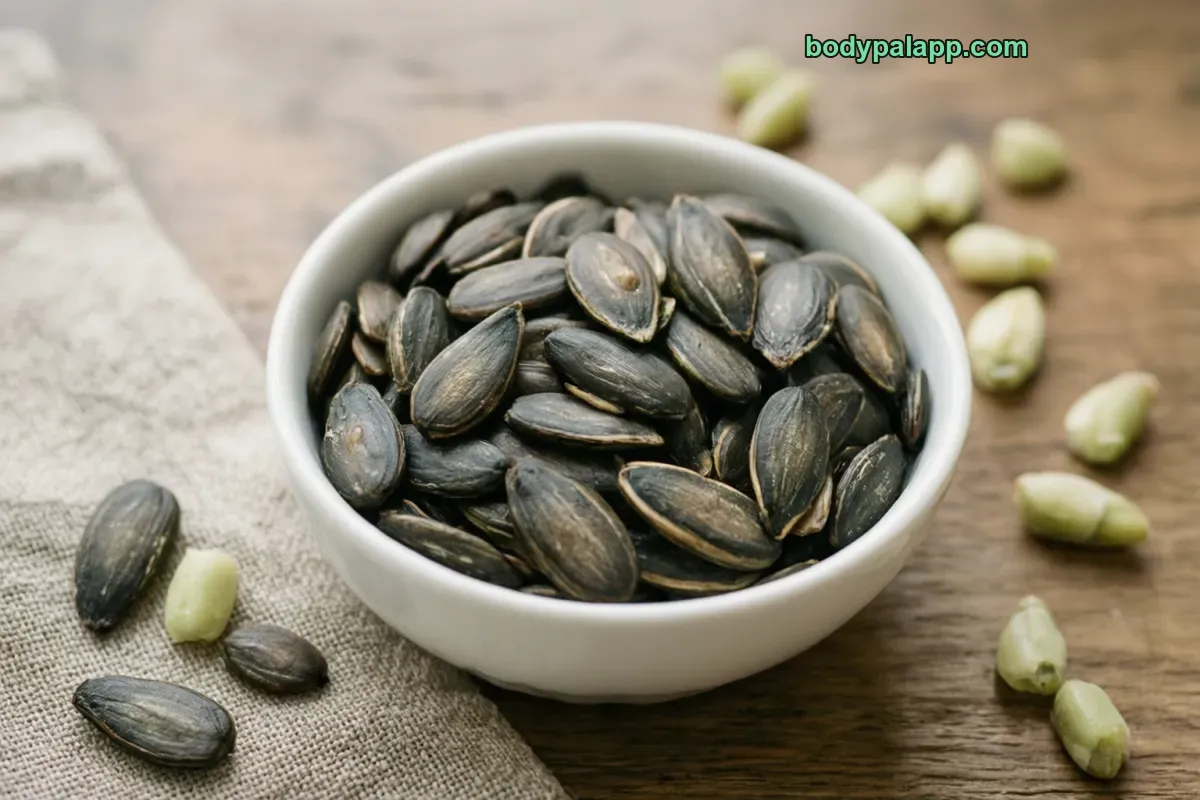
Watermelon seed calories come to 156 for a 1 oz (28 g) serving of dried kernels and 557 per 100 g. Fat supplies 71% of those calories, yet the number worth noticing is protein: 7.9 g per ounce, or 16% of the daily value, which is a lot for a small handful of seeds.
156kcal
1 ounce · 28 g, kernels, dried
19%protein
7.9 gProtein
4 gCarbs
13.3 gFat
How to burn off 156 kcal
—Walking, brisk
—Jogging
—Cycling, moderate
—Swimming
Skip the math. BodyPal counts these calories from your steps and workouts automatically.
Nutrition facts
Kernels, dried · per 28 g
Calories
156 kcal
Protein
7.9 g
Carbohydrate
4.3 g
Fat
13.3 g
Saturated fat
2.7 g
Cholesterol
0 mg
Sodium
28 mg
Potassium
181 mg
Iron
2 mg
Source: USDA FoodData Central
🛡️
Verified nutrition data
Numbers on this page come from USDA FoodData Central, the U.S. Department of Agriculture’s food composition database, and from manufacturer labels where a branded product is named. Last verified September 2026. How we verify our data →
Watermelon seed: calories, protein and sodium by serving
Percent of daily value uses the FDA reference of 2,000 kcal a day.
Serving
kcal
Protein
Carbs
Fat
Sodium
% DV kcal
1 oz (28 g)
156
7.9 g
4.3 g
13.3 g
28 mg
8%
1 cup (108 g)
602
30.6 g
16.5 g
51.2 g
107 mg
30%
100 g
557
28.3 g
15.3 g
47.4 g
99 mg
28%
3 × 1 oz (28 g)
468
23.8 g
83 mg
5 × 1 oz (28 g)
780
39.7 g
139 mg
An ounce is 156 calories, a cup is 602
The standard serving is 1 oz (28 g) of shelled, dried kernels, and it lands at 156 calories, about 8% of a daily value. That is a modest snack. The trouble is that shelled kernels are small, light and easy to eat by the palmful, so the ounce rarely stays an ounce.
Double it and you are at 312 calories for 56 g. Three ounces, the kind of amount that disappears from an open bag during a movie, comes to 468 calories. Five ounces, or 140 g, reaches 780 calories, close to a full meal for many people.
A full cup (108 g) is 602 calories and 30% of the daily value in one go. That cup also carries 30.6 g of protein and 51.2 g of fat. If you sprinkle seeds over a salad or a bowl of yogurt, weigh the first few times. Eyeballed toppings tend to drift upward, and with a food this dense every extra spoonful counts.
Fat is 71% of every calorie
Per 100 g, watermelon seed kernels hold 47.4 g of fat, 28.3 g of protein and 15.3 g of carbohydrate. Converted to energy, fat accounts for 71% of the calories, protein for 19% and carbs for just 10%. This is a fat food first and a protein food second.
That split explains the calorie density. At 557 calories per 100 g, the seeds sit in the same band as other dried seeds, and you cannot portion them like a vegetable or a fruit. Carbs are low, so the seeds fit eating patterns that keep carbohydrate down, as long as the fat is counted honestly.
Protein is the strong point. One ounce supplies 7.9 g, 16% of the daily value of 50 g. Two ounces give 15.9 g, and a cup gives 30.6 g, or 61% of the daily value. Few snack foods deliver that much protein, but it always arrives with roughly six calories of fat for every one of protein, so treat the seeds as a protein bonus, not a protein source you build a meal around.
Sodium is low until salt is added
Plain dried kernels carry 99 mg of sodium per 100 g. An ounce has 28 mg, just 1% of the 2300 mg daily value, and even a cup stays at 107 mg, or 5%. On their own, watermelon seeds are not a sodium problem.
Packaged versions change that. Roasted and salted bags, or products like Go Raw Sprouted Watermelon Seeds With Celtic Sea Salt, add salt on top of the kernel's own sodium. If you watch sodium, read the label and compare it with the plain figures here.
Saturated fat deserves a glance. The kernels have 9.8 g per 100 g, measured against a daily value of 20 g, so a large portion takes a real share of that limit. Cholesterol is 0, and potassium is 648 mg per 100 g against a daily value of 4700 mg, a respectable amount for a seed.
Use them as a topping, not a bowl
The easiest way to enjoy watermelon seeds without the calories running away is to treat them as an ingredient. An ounce scattered over a salad, oatmeal or roasted vegetables adds crunch, 156 calories and 7.9 g of protein. Eaten straight from the bag, the same seeds tend to become three or five ounces before you notice.
Pair them with foods that bring volume and fiber, such as fruit, vegetables or whole grains. The seeds supply fat and protein, and the bulkier foods supply the fullness, so the combination feels like more food than either alone. Seed butters, such as roasted watermelon seed butter, are even easier to overpour, so measure by the spoon.
If you track your intake, log the weight rather than a guess. BodyPal can log the seeds from a photo, which helps when they are mixed into a dish.
How does watermelon seed compare?
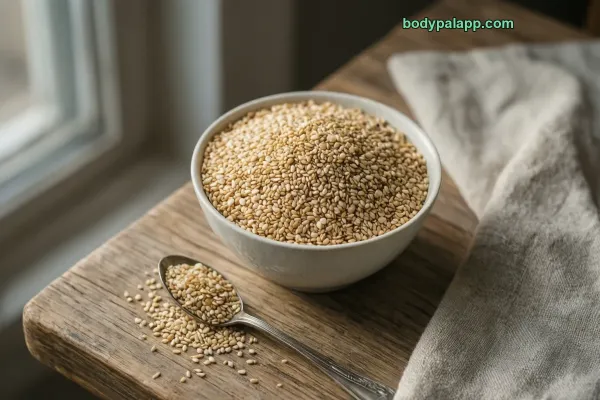
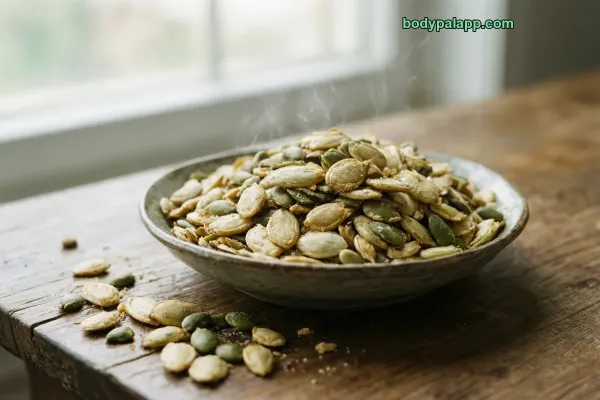
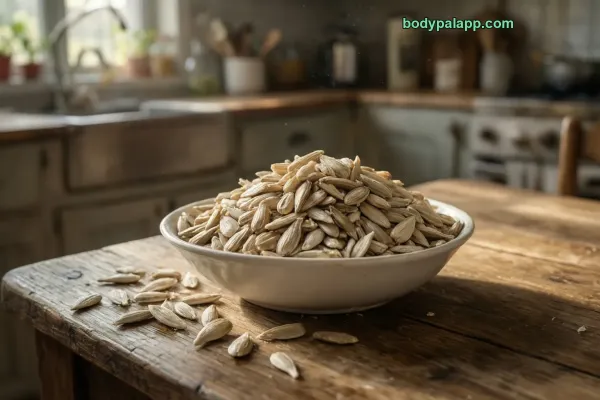
Here is how watermelon seeds stack up against sesame, pumpkin and sunflower seeds, per 100 g and per usual serving.
Verdict: Calories barely separate these seeds: watermelon seeds have 557 per 100 g against 573 for sesame, 574 for pumpkin and 582 for sunflower, so pick on protein instead. For the most protein per calorie choose pumpkin seeds at 29.8 g or watermelon seeds at 28.3 g, and leave sunflower seeds at 19.3 g and sesame at 17.7 g for flavor.
Most popular watermelon seed brands in the United States
Ranked by popularity in the BodyPal database
# Productkcal / 100 g
1Yossef Roasting Co Watermelon Seeds1.1 oz · 31 g516 kcal
2Go Raw Sprouted Watermelon Seeds1 oz · 28 g571 kcal
3Ai Tropics Watermelon Seed30 g500 kcal
4Go Raw Sprouted Watermelon Seeds With Celtic Sea Salt0.7 oz · 20 g550 kcal
Label values run from 500 to 576 calories per 100 g because roasting, sprouting and grinding into seed butter change how much water and oil the seeds hold. Source: manufacturer labels / USDA FoodData Central.
Watermelon seed FAQs
How many calories are in watermelon seeds?
A 1 oz serving of dried kernels is 156 calories. A full cup (108 g) is 602 calories.
Are watermelon seeds good for weight loss?
They are energy dense at 557 calories per 100 g, so portions stay small: 1 oz is 156 calories with 7.9 g protein and 13.3 g fat.
Watermelon seeds or sesame seeds: which has fewer calories?
Watermelon seed kernels have 557 calories per 100 g and sesame seeds 573, a difference of 16 calories.
How much protein is in watermelon seeds?
Dried kernels have 28.3 g of protein per 100 g, which is 7.9 g in a 1 oz serving.
How many calories are in 100 g of watermelon seeds?
100 g of dried watermelon seed kernels has 557 calories, 28% of the daily value. The same amount holds 28.3 g of protein, 47.4 g of fat and 15.3 g of carbohydrate.
What are the macros of watermelon seeds?
Per 1 oz (28 g), watermelon seeds give 156 calories, 13.3 g of fat, 7.9 g of protein and 4.3 g of carbs. By calories, that is 71% fat, 19% protein and 10% carbs.
How many calories are in butong pakwan?
Butong pakwan, the Filipino name for watermelon seeds, has about 156 calories per 1 oz (28 g) of dried kernels and 557 per 100 g. Salted, roasted snack versions may add sodium on top.
How many calories are in roasted watermelon seeds?
The figures here are for dried kernels: 156 calories per 1 oz (28 g) and 557 per 100 g. Roasted seeds land in a similar range, but check the label if oil or salt is added.
Do the calories count watermelon seeds roasted in the shell?
No. The 156 calories per 1 oz (28 g) refer to shelled kernels. Seeds bought in the shell weigh more per handful because of the husk, so an ounce in the shell gives you fewer kernels.