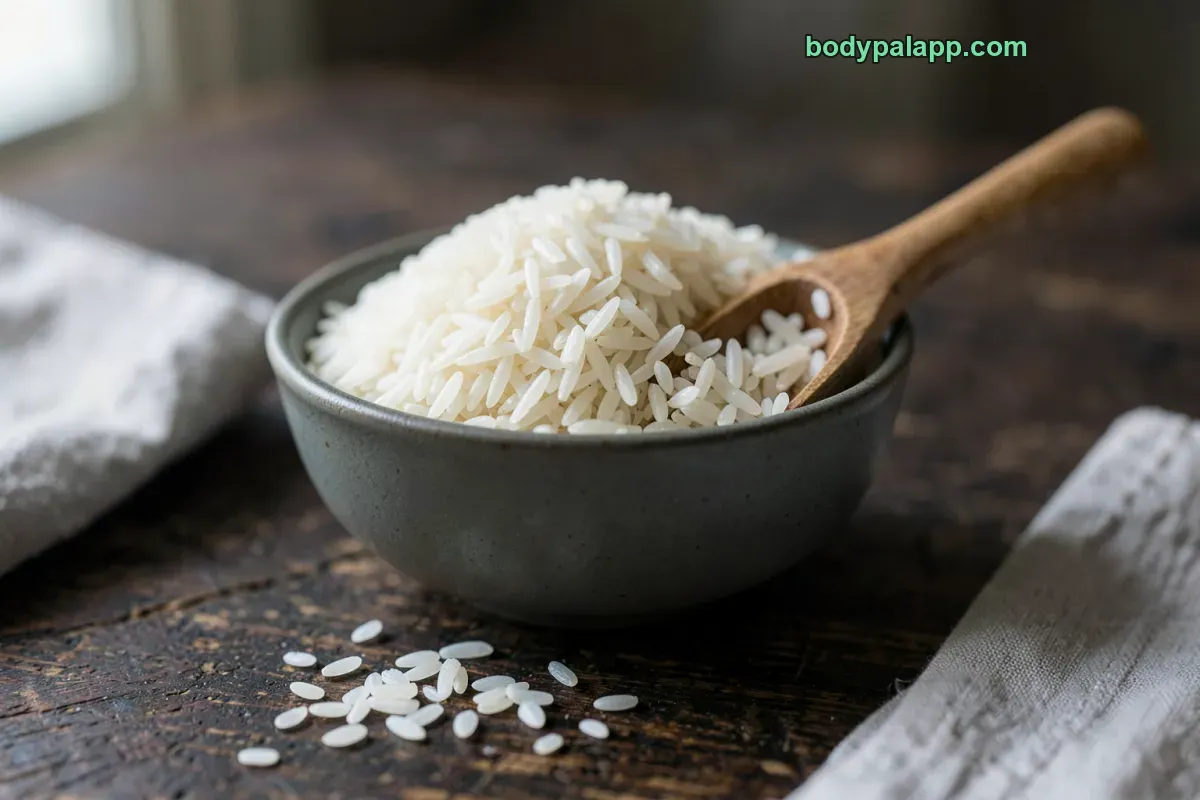
Uncooked white rice calories come to 716 for 1 cup (200 g) of dry grains and 358 per 100 g. The thing to notice is how much cooking changes the math: rice soaks up water, so 1 cup of cooked rice (163 g) holds only 210 calories. Weigh it dry and your log stays honest.
716kcal
1 cup · 200 g, uncooked, short-grain, enriched
7%protein
13 gProtein
158 gCarbs
1 gFat
How to burn off 716 kcal
—Walking, brisk
—Jogging
—Cycling, moderate
—Swimming
Skip the math. BodyPal counts these calories from your steps and workouts automatically.
Nutrition facts
Uncooked, short-grain, enriched · per 200 g
Calories
716 kcal
Protein
13 g
Carbohydrate
158 g
Fat
1 g
Saturated fat
0.3 g
Cholesterol
0 mg
Sodium
2 mg
Potassium
152 mg
Iron
8.5 mg
Source: USDA FoodData Central
🛡️
Verified nutrition data
Numbers on this page come from USDA FoodData Central, the U.S. Department of Agriculture’s food composition database, and from manufacturer labels where a branded product is named. Last verified September 2026. How we verify our data →
Uncooked white rice: calories, protein and sodium by serving
Percent of daily value uses the FDA reference of 2,000 kcal a day.
Serving
kcal
Protein
Carbs
Fat
Sodium
% DV kcal
1 cup (200 g)
716
13 g
158.3 g
1 g
2 mg
36%
100 g
358
6.5 g
79.2 g
0.5 g
1 mg
18%
2 oz portion (57 g)
204
3.7 g
45.1 g
0.3 g
1 mg
10%
Cooked, 1 cup (163 g)
210
4.4 g
45.6 g
0.5 g
398 mg
11%
3 × 1 cup (200 g)
2,148
39 g
6 mg
5 × 1 cup (200 g)
3,580
65 g
10 mg
A dry cup is a 716-calorie commitment
A measuring cup of dry rice looks modest. It is not. At 716 calories, that 200 g cup covers 36% of a 2,000-calorie daily value before you add oil, sauce or anything on top. Most people never eat a dry cup on its own, of course; it usually becomes dinner for a household, and the calories get split across plates.
Smaller amounts are easier to picture. A 2 oz portion (57 g) of dry rice comes to 204 calories, or 10% of the daily value, and 100 g lands at 358. Those are the numbers to use when you cook a single serving and want to log it before the pot goes on.
Batch cooking is where totals run away from you. Two dry cups (400 g) carry 1,432 calories, three cups (600 g) reach 2,148, and 1,000 g of dry rice holds 3,580. If you cook a big pot for the week, weigh the dry rice, note the total, then weigh the cooked pot so you can divide fairly. Guessing from a scoop of cooked rice is where most rice logging goes wrong.
Carbs supply 91% of the calories
White rice is close to a pure carbohydrate food. Of every 100 g dry, 79.2 g is carbs, 6.5 g is protein and just 0.5 g is fat. Translated into calories, carbs provide 91%, protein 7% and fat 1%. Saturated fat sits at 0.1 g per 100 g, and cholesterol is 0.
That profile explains how rice behaves on a plate. It brings fast, easy energy and very little else in the way of fat to slow it down. A full dry cup holds 158.3 g of carbohydrate, which is a big share of the 275 g daily value used on this page.
The protein is not nothing, though. One dry cup gives 13 g, or 26% of the 50 g daily value, which is more than many people expect from a side dish. It is still a supporting player. If you want rice to anchor a filling meal, the protein needs to come from what you serve alongside it.
Dry rice has almost no sodium; the pot can change that
In its raw state, white rice is about as low in sodium as a food gets: 1 mg per 100 g and 2 mg in a full dry cup, both 0% of the daily value. Potassium is modest at 76 mg per 100 g. Nothing in the dry grain is a concern on the sodium row.
The cooked reference row tells a different story. One cup of cooked rice (163 g) lists 398 mg of sodium, 17% of the 2,300 mg daily value, which points to salt in the cooking water rather than anything in the grain. If you watch sodium, cook your rice in unsalted water and season the finished dish instead, where you can taste how much you add.
Cooking also shifts fiber per cup. The dry cup carries 5.6 g of fiber, while the cooked cup lists 0.7 g, because a cooked cup holds far less rice once water takes up the space. Calories follow the same logic: 210 per cooked cup against 716 per dry cup. Same food, very different volume.
Rice works best with protein and vegetables beside it
Because carbs make up 91% of its calories, rice does its best work as one part of a plate rather than the whole thing. Pair it with a protein such as chicken, fish, eggs, tofu or beans, and add vegetables for volume and fiber. That combination fills you up in a way a bowl of plain rice will not.
Portion is the lever that matters most. A cooked cup at 210 calories is a reasonable side for most meals; a heaped restaurant bowl can be much more. Packaged options such as Minute White Rice, Ben's Original Boil-in-Bag Long Grain White Rice or Bibigo Korean-Style Medium Grain Sticky White Rice make portions easier to control, but read each label, since short-grain, long-grain and sticky rice all vary.
If logging feels tedious, BodyPal can log a rice dish from a photo of your plate. For the most accurate number, though, the dry weight before cooking is still the gold standard.
How does uncooked white rice compare?
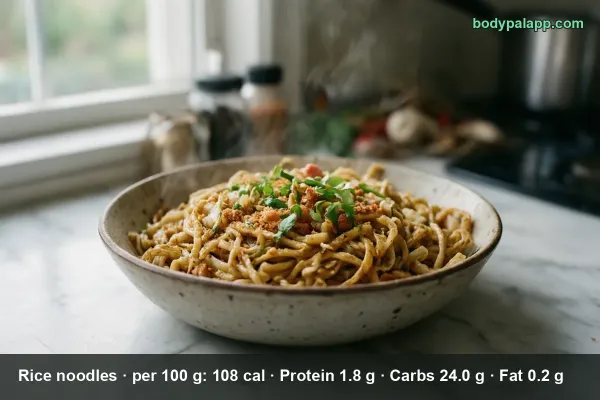
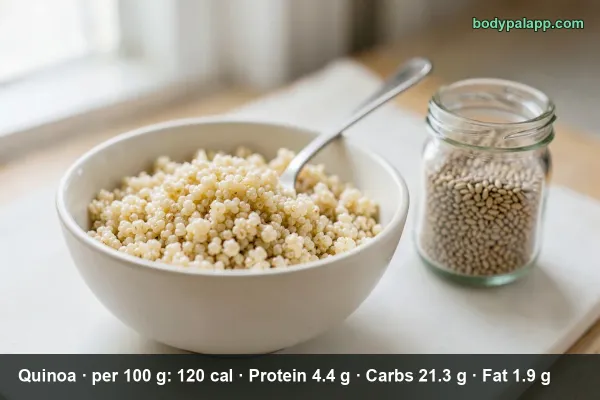
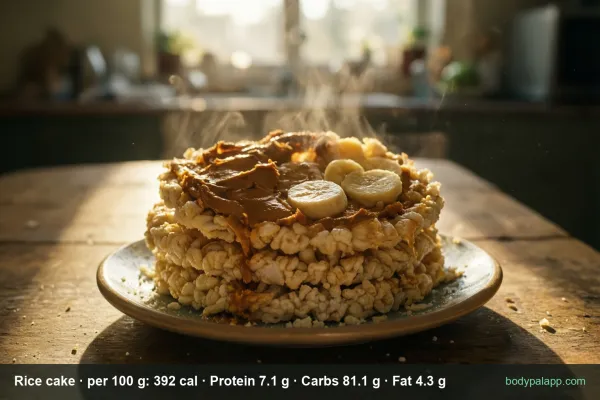
Here is how uncooked white rice stacks up against rice noodle, quinoa and rice cake, per 100 g and per usual serving.
Verdict: For the fewest calories per bite, rice noodle at 108 per 100 g wins, and quinoa at 120 per 100 g with 4.4 g of protein is the better pick for staying full; keep in mind both are far closer to cooked rice at 210 per cup than to dry rice at 358 per 100 g. Rice cake is the one to watch, at 392 per 100 g it is denser than even dry rice, so treat it as a measured snack.
Most popular uncooked white rice brands in the United States
Ranked by popularity in the BodyPal database
# Productkcal / 100 g
1Bibigo Korean-Style Medium Grain Sticky White Rice1 bowl · 210 g148 kcal
2Parrot Long Grain White Rice1/4 cup · 45 g356 kcal
3Minute White Rice1/2 cup · 46 g370 kcal
4Minute Organic White Rice1 cup · 125 g160 kcal
5Minute Light & Fluffy White Rice1/2 cup · 46 g370 kcal
8Ben's Original Boil-in-Bag Long Grain White Rice1/4 cup · 48 g354 kcal
Ready-to-eat bowls, trays and cooked-cup labels are measured cooked, so they read lower than the dry rice numbers above. Source: manufacturer labels / USDA FoodData Central.
Uncooked white rice FAQs
How many calories are in one cup of uncooked white rice?
One cup of uncooked white rice (200 g) has 716 calories, which is 358 calories per 100 g.
How many calories does uncooked white rice have compared to cooked?
Dry white rice has 358 calories per 100 g, while cooked white rice has 129 because it absorbs water. One cup of cooked white rice (163 g) is 210 calories.
Uncooked white rice vs rice cakes: which has more calories?
Uncooked white rice has 358 calories per 100 g and rice cakes have 392 per 100 g.
How many carbs are in uncooked white rice?
Uncooked white rice has 79.2 g of carbs per 100 g, or 158.3 g per cup (200 g). The same cup has 13.0 g of protein and 1.0 g of fat.
How many calories are in 100 g of uncooked white rice?
100 g of uncooked white rice has 358 calories, 18% of a 2,000-calorie daily value. It also holds 79.2 g of carbs, 6.5 g of protein and 0.5 g of fat.
How many calories are in 2 oz of dry white rice?
A 2 oz portion (57 g) of dry white rice has 204 calories, about 10% of the daily value. It provides 45.1 g of carbs and 3.7 g of protein, a typical single serving once cooked.
How much protein is in uncooked white rice?
One dry cup (200 g) of white rice has 13 g of protein, 26% of the daily value, and 100 g has 6.5 g. Protein supplies only 7% of the calories, so pair rice with a protein food.
Is uncooked white rice high in sodium?
No. Uncooked white rice has just 1 mg of sodium per 100 g and 2 mg per dry cup. The cooked reference cup lists 398 mg, 17% of the daily value, which comes from salted cooking water.
Does white rice have much fat?
Barely. Uncooked white rice has 0.5 g of fat per 100 g and 1 g per dry cup, with 0.1 g saturated. Fat accounts for only about 1% of its calories.