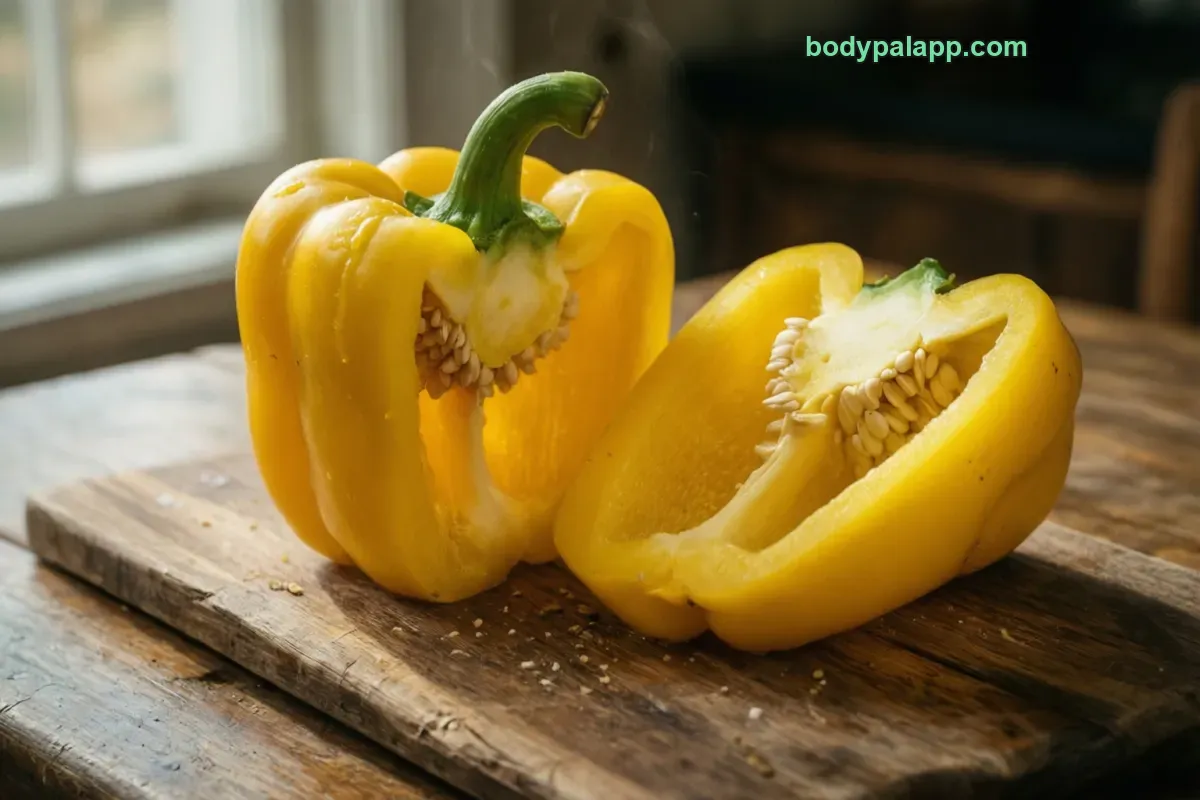
Yellow bell pepper calories come to 50 for one large raw pepper (186 g) and 27 per 100 g. That is about 3% of a 2000-calorie day for a whole pepper. Carbs supply 81% of those calories, mostly natural sugars, so the pepper adds crunch and volume while barely moving your daily total.
50kcal
1 large pepper · 186 g, raw
13%protein
1.9 gProtein
12 gCarbs
0.4 gFat
How to burn off 50 kcal
—Walking, brisk
—Jogging
—Cycling, moderate
—Swimming
Skip the math. BodyPal counts these calories from your steps and workouts automatically.
Nutrition facts
Raw · per 186 g
Calories
50 kcal
Protein
1.9 g
Carbohydrate
11.8 g
Fat
0.4 g
Saturated fat
0.1 g
Cholesterol
0 mg
Sodium
4 mg
Potassium
394 mg
Iron
0.9 mg
Source: USDA FoodData Central
🛡️
Verified nutrition data
Numbers on this page come from USDA FoodData Central, the U.S. Department of Agriculture’s food composition database, and from manufacturer labels where a branded product is named. Last verified September 2026. How we verify our data →
Yellow bell pepper: calories, protein and sodium by serving
Percent of daily value uses the FDA reference of 2,000 kcal a day.
Serving
kcal
Protein
Carbs
Fat
Sodium
% DV kcal
1 large (186 g)
50
1.9 g
11.8 g
0.4 g
4 mg
3%
10 strips (52 g)
14
0.5 g
3.3 g
0.1 g
1 mg
1%
100 g
27
1 g
6.3 g
0.2 g
2 mg
1%
3 × 1 large (186 g)
151
5.6 g
11 mg
5 × 1 large (186 g)
251
9.3 g
19 mg
One large pepper is a 50-calorie side
A large yellow bell pepper weighs about 186 g and brings 50 calories, 1.9 g of protein and 11.8 g of carbs. Slice it into strips and a 52 g handful lands at 14 calories. That is the kind of portion you might scatter over a salad or dip into hummus, and it barely registers.
The total climbs slowly even when you eat a lot. Two large peppers (372 g) come to 100 calories. Three (558 g) reach 151 calories, and five large peppers, close to a kilo of produce at 930 g, still total only 251 calories. Few foods let you fill a plate that full for so little.
The practical takeaway: you do not need to weigh yellow pepper carefully unless you are logging every gram. The bigger swing comes from what you cook it in or serve it with. A drizzle of oil or a creamy dip can outweigh the pepper itself many times over, so track those instead.
Carbs supply 81% of the calories
Per 100 g, yellow bell pepper has 6.3 g of carbs, 1 g of protein and 0.2 g of fat. Translated into calories, carbs make up 81%, protein 13% and fat 6%. It is a carb food in the strict sense, but the absolute amounts are small because most of the pepper is water.
Those carbs are mostly natural sugars, which is why yellow peppers taste noticeably sweeter than green ones. A large pepper's 11.8 g of carbs is a modest share of the 275 g daily value. If you count carbs closely, a few strips (3.3 g) fit almost any plan.
Protein is low. One large pepper gives 1.9 g, about 4% of the daily value of 50 g. Fat is close to nothing at 0.4 g, with 0 g saturated fat and 0 mg cholesterol. Think of yellow pepper as volume, color and crunch, not as a source of protein or energy.
Sodium is near zero, fiber is modest
Raw yellow pepper carries just 2 mg of sodium per 100 g, and a large pepper has 4 mg. Against the 2300 mg daily value, that rounds to 0%. If you watch sodium, the pepper itself is never the problem. Seasoning, dressings and cheese are where the salt hides.
Fiber is real but not large: 0.9 g per 100 g and 1.7 g in a large pepper, set against a daily value of 28 g. It helps, yet you would want beans, whole grains or other vegetables alongside it to make a dent in that number.
Potassium is the quieter strength. Yellow pepper has 212 mg per 100 g, a useful contribution toward the 4700 mg daily value, especially when you eat a whole large pepper or more. Combined with almost no fat and little sodium, the label reads cleanly from top to bottom.
Pair it with protein and a little fat
Because yellow pepper is low in protein and fat, it works best as part of a meal rather than the whole thing. Pair raw strips with hummus, cottage cheese or a yogurt dip for a snack that holds you longer. Add sliced pepper to eggs, chicken or tofu to stretch the plate without stretching the calories much.
Cooked, it works in fajitas, omelets, grain bowls and sheet-pan dinners. Roasting softens the texture and deepens the sweetness. Keep an eye on the oil, since the cooking fat, not the pepper, usually decides the final number.
Frozen pepper blends are handy for stir-fries and skillet meals; Harris Teeter sells one mixed with onion. However you buy it, BodyPal can log your pepper dish from a photo, so the pepper and whatever you cooked it with land in your diary together.
How does yellow bell pepper compare?
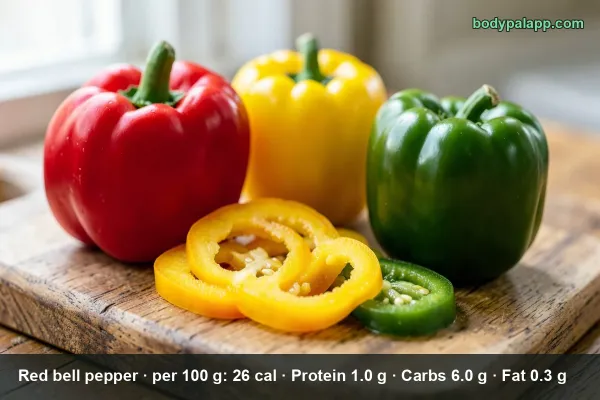
Here is how yellow bell pepper stacks up against red, green and generic pepper, per 100 g and per usual serving.
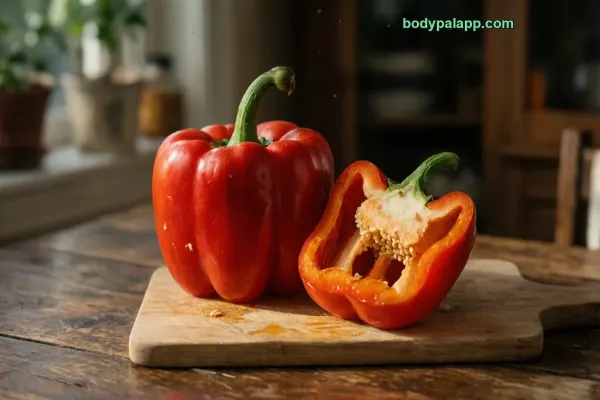
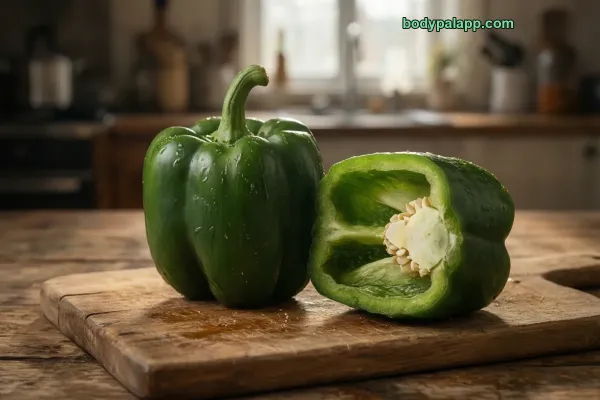
Verdict: Per 100 g the differences are tiny: yellow has 27 calories, green 26 and red 31, so pick by flavor and price, not by calories. If you want the lowest number per serving, a medium green pepper at 19 calories wins, while red gives the sweetest bite for 37 calories per medium pepper.
Most popular yellow bell pepper brands in the United States
Ranked by popularity in the BodyPal database
# Productkcal / 100 g
1365 Whole Foods Market Three Pepper Blend3/4 cup · 85 g24 kcal
These blends mix green, red and yellow peppers (one adds onion), so their label numbers differ slightly from yellow pepper alone. Source: manufacturer labels / USDA FoodData Central.
Yellow bell pepper FAQs
How many calories are in one yellow bell pepper?
A large raw yellow bell pepper (186 g) has about 50 calories, and 10 strips (52 g) have 14.
Is yellow bell pepper good for weight loss?
It is low in calories at 27 per 100 g, with 0.21 g of fat and 0.9 g of fiber per 100 g.
Yellow vs red bell pepper: which has fewer calories?
Per 100 g, yellow bell pepper has 27 calories and red bell pepper has 31.
How many carbs are in a yellow bell pepper?
A large yellow bell pepper has 11.8 g of carbs, including 1.7 g of fiber, plus 1.9 g of protein.
How many calories are in yellow bell pepper strips?
A 52 g serving of yellow bell pepper strips has 14 calories, with 0.5 g of protein, 3.3 g of carbs and 0.1 g of fat. That is about 1% of a 2000-calorie day.
How many calories are in 100 g of yellow bell pepper?
Raw yellow bell pepper has 27 calories per 100 g, plus 1 g of protein, 6.3 g of carbs, 0.2 g of fat and 0.9 g of fiber. Most of its weight is water.
How much protein is in a yellow bell pepper?
One large yellow bell pepper (186 g) has 1.9 g of protein, about 4% of the 50 g daily value. Protein supplies 13% of its calories, so pair it with a protein food.
Is yellow bell pepper high in sodium?
No. Raw yellow bell pepper has 2 mg of sodium per 100 g and 4 mg in a large pepper, which is 0% of the 2300 mg daily value. Any salt comes from seasoning.
How many calories are in two yellow bell peppers?
Two large yellow bell peppers (372 g) have 100 calories and 3.7 g of protein. Even three large peppers stay at 151 calories, so the vegetable itself rarely moves your total much.