
How Many Calories Are in Bread With Peanut Butter?
One slice of bread with peanut butter, spread open-face, weighs about 46 g and carries 176 calories. Per 100 g the same food runs 382 calories, and most of that comes from the spread rather than the slice under it. Close two slices into a sandwich and you land at 351.
On this page
- Bread with peanut butter quick facts
- US servings, from one ounce to three slices
- Wheat bread, reduced-fat spread and jelly
- Sodium is the row most people miss
- How does bread with peanut butter compare?
- Bread with peanut butter FAQs
Bread with peanut butter quick facts
The row behind every number here is FNDDS 2707550, "Peanut butter sandwich, with regular peanut butter, on white bread". It is the profile of ordinary supermarket white bread with ordinary full-fat peanut butter, and its household portion of 46 g is exactly one slice with the spread on it — the open-face version most people actually eat at the counter.
Neighboring USDA records exist for wheat bread and for reduced-fat spread. Those are the same food built differently, not a different data source, so they stay in their own section below instead of being blended into an average.
| Nutrient | Per 100 g | Per 1 slice with peanut butter (46 g) | % Daily Value |
|---|---|---|---|
| Calories | 382 | 176 | — |
| Total fat | 20.21 g | 9.3 g | 12% |
| Saturated fat | 4.13 g | 1.9 g | 9% |
| Carbohydrate | 39.85 g | 18.3 g | 7% |
| Dietary fiber | 3.2 g | 1.5 g | 5% |
| Total sugars | 7.13 g | 3.3 g | — |
| Protein | 13.88 g | 6.4 g | 13% |
| Sodium | 442 mg | 203 mg | 9% |
% Daily Value is based on a 2,000-calorie diet.
Verified nutrition data
Numbers on this page come from USDA FoodData Central, the U.S. Department of Agriculture’s food composition database, and from manufacturer labels where a branded product is named. Last verified September 2026. How we verify our data →
Two rows you would see on a jar label are missing on purpose. Added sugars and trans fat are not published for these FNDDS records at all, so there is nothing honest to print — the 3.3 g in the sugars row is total sugars, which has no Daily Value and should not be read against the 50 g added-sugars limit. Cholesterol is 0 mg, since neither bread nor peanut butter contributes any. Potassium comes to 124 mg per slice, about 3% of the Daily Value.
US servings, from one ounce to three slices
| Serving | Weight | Calories |
|---|---|---|
| 1 oz | 28 g | 108 kcal |
| One slice with peanut butter, open-face | 46 g | 176 kcal |
| One sandwich, two slices | 92 g | 351 kcal |
| Three slices with peanut butter | 138 g | 527 kcal |
| Per 100 g | 100 g | 382 kcal |
The 46 g slice and the 92 g sandwich are USDA household measures. The 1 oz line and the three-slice line are our own arithmetic from the USDA 100 g figure, not USDA servings — useful if you are weighing on a kitchen scale or building a stack for two people.
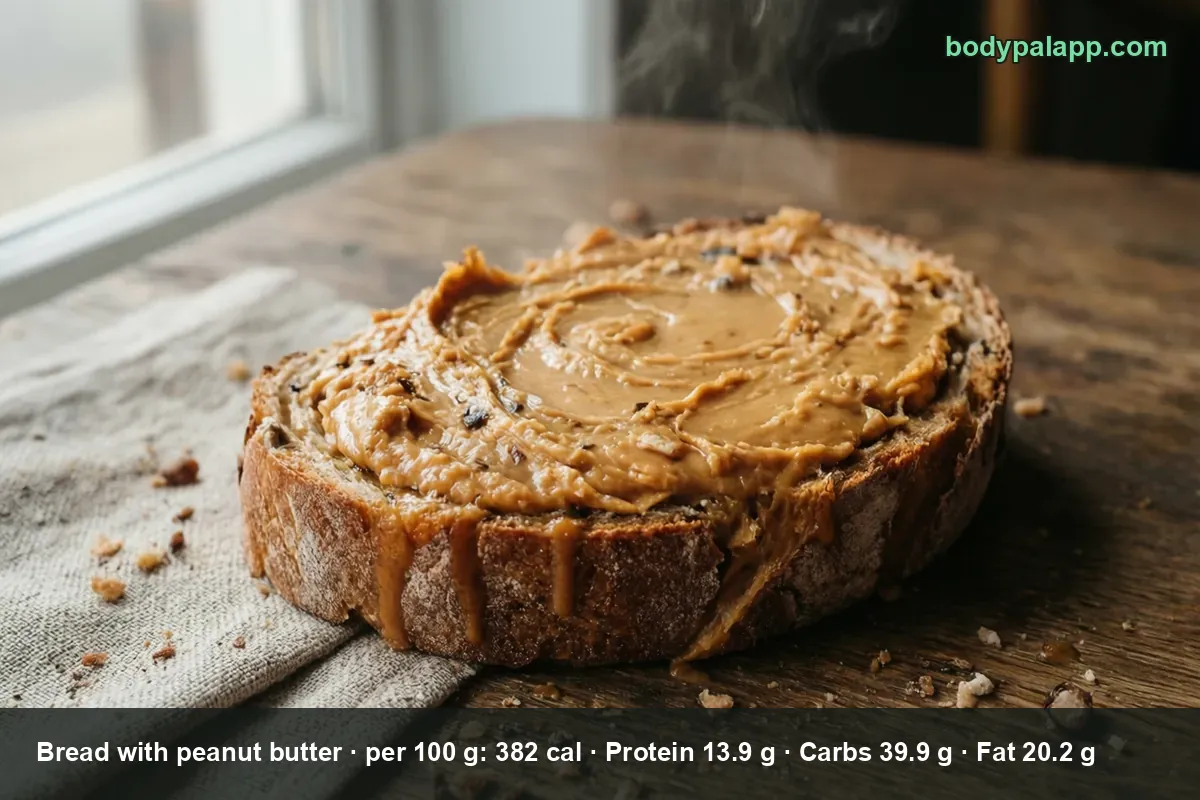
One warning the hero photo makes obvious: a thick cut from a rustic loaf is not 46 g. A hand-cut slice around 70 g with the spread scaled to match lands near 267 calories, again our own arithmetic from the 100 g figure. The bread's thickness moves the total more than the brand of peanut butter does, so weigh the slice once and you will know your own number for good.
Wheat bread, reduced-fat spread and jelly
| Version | Per 100 g | Typical sandwich | Calories |
|---|---|---|---|
| Regular peanut butter, white bread | 382 kcal | 92 g | 351 kcal |
| Regular peanut butter, wheat bread | 380 kcal | 92 g | 350 kcal |
| Reduced-fat peanut butter, white bread | 355 kcal | 92 g | 327 kcal |
| Reduced-fat peanut butter, wheat bread | 353 kcal | 92 g | 325 kcal |
| Peanut butter and jelly, reduced fat, white bread | 339 kcal | 112 g | 380 kcal |
| Peanut butter and jelly, reduced fat, wheat bread | 337 kcal | 112 g | 377 kcal |
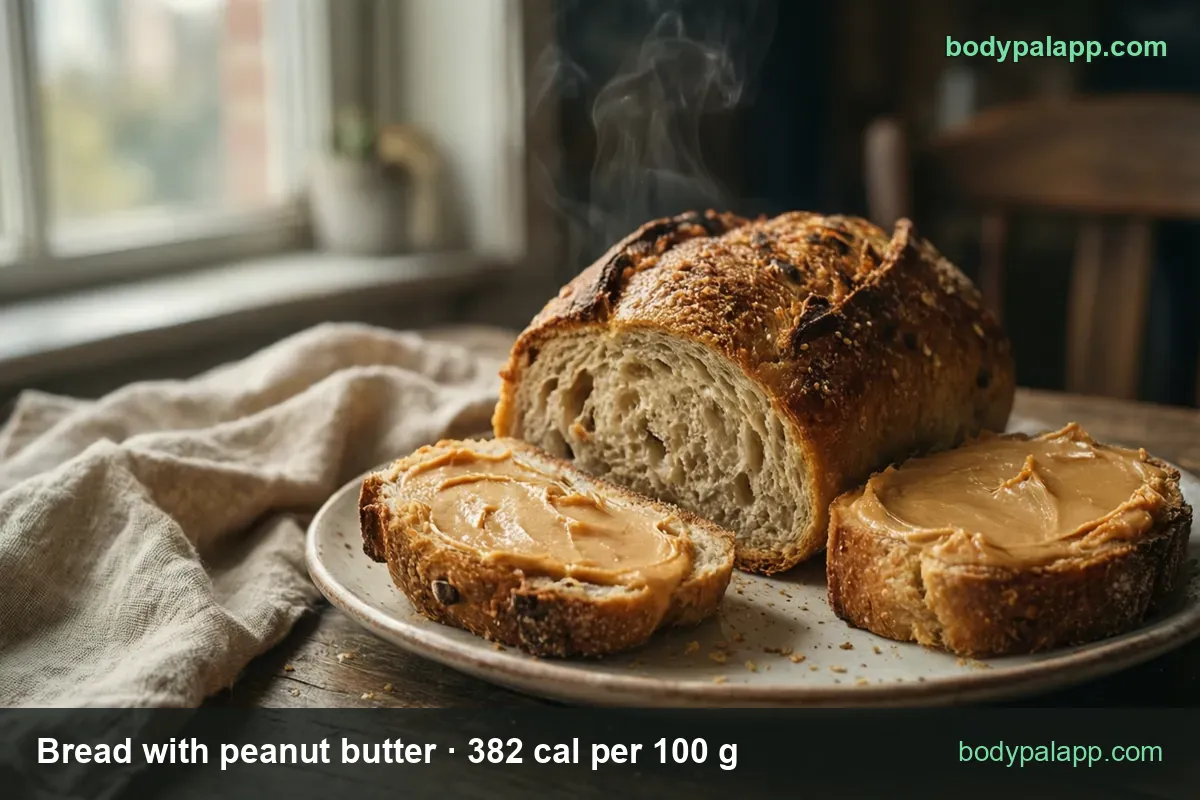
Wheat bread is a rounding error on calories: 380 per 100 g against 382, which is one calorie across a whole sandwich. Fiber is the reason to make the swap anyway. It goes from 3.2 to 5.3 g per 100 g, which is 17% of the Daily Value in a wheat sandwich instead of 11% in the white one, and protein climbs from 13.88 to 15.16 g per 100 g at the same time.
Reduced-fat peanut butter is the swap that disappoints. It takes the sandwich from 351 to 327 calories — 24 calories, less than a third of an ounce of the regular spread. Fat falls from 20.21 to 14.17 g per 100 g, but carbohydrate climbs from 39.85 to 44.49 g and sodium goes up, not down, from 442 to 481 mg per 100 g. You are trading fat for starch and salt to save 24 calories a sandwich.
Jelly is the version worth watching. Peanut butter and jelly with reduced-fat spread sits near the bottom of the table per 100 g at 339 calories, and at the top per sandwich at 380, because the standard record weighs 112 g rather than 92 g. Total sugars roughly double, from 7.13 to 14.66 g per 100 g. Store brands and the big national peanut butter names sit inside these same FNDDS profiles; USDA's branded database has no record for bread with peanut butter spread on it, because it is a food you assemble rather than one you buy in a wrapper.
Sodium is the row most people miss
Peanut butter tastes sweet, so the salt goes unnoticed. A 92 g sandwich carries about 407 mg of sodium, 18% of the FDA Daily Value of 2,300 mg — roughly a sixth of a teaspoon of table salt, before anything else you eat that day. The open-face slice cuts it cleanly in half, to 203 mg and 9%.
That halving is the single most useful thing on this page. Eating the slice open-face is not a diet trick with a catch: 176 calories instead of 351, 9% of the sodium Daily Value instead of 18%, and the peanut butter layer stays exactly as thick as you like it, because you are dropping a slice of bread rather than scraping the spread.
Saturated fat behaves better than the label size suggests. The whole sandwich holds 3.8 g, about 19% of the Daily Value, most of it from the peanut butter, and the Dietary Guidelines for Americans put the ceiling at less than 10% of daily calories. Protein is the quiet win: 12.8 g in the sandwich, 26% of the Daily Value, which is more than most bread-based breakfasts deliver and puts it in the same conversation as the everyday choices on MyPlate's protein foods list.
How does bread with peanut butter compare?
| Sandwich | Per 100 g | US serving | Calories |
|---|---|---|---|
| Peanut butter on white bread | 382 kcal | one sandwich, 92 g | 351 kcal |
| Peanut butter on wheat bread | 380 kcal | one sandwich, 92 g | 350 kcal |
| Reduced-fat peanut butter, white bread | 355 kcal | one sandwich, 92 g | 327 kcal |
| Peanut butter and jelly, reduced fat, white bread | 339 kcal | one sandwich, 112 g | 380 kcal |
Our take: for weight loss, eat it open-face on wheat bread — 176 calories, the best fiber of any version here, and half the sodium of the closed sandwich. For staying full through a long morning, take the full wheat sandwich at 350 calories and 13.9 g of protein; the extra 174 calories buy real staying power. Skip reduced-fat peanut butter, which is the only row that lands under 350 per serving but pays for its 24 calories with more carbohydrate and more salt. And note the trap in the last row: the lightest food per 100 g on this table is the heaviest one on the plate.
Bread with peanut butter FAQs
How many calories are in a slice of bread with peanut butter?
One slice with peanut butter, open-face, is 176 calories at 46 g, which works out to 382 calories per 100 g. Roughly two thirds of that comes from the spread, which carries 9.3 g of fat against the bread's 18.3 g of carbohydrate. Close it into a sandwich and the number doubles.
How many calories in 2 slices of bread with peanut butter?
Two slices closed into a sandwich weigh 92 g and come to 351 calories. That is a real lunch rather than a snack: 12.8 g of protein, 18.6 g of fat and 36.7 g of carbohydrate, plus about 407 mg of sodium, which is 18% of the FDA Daily Value in one hand.
How much protein is in bread with peanut butter?
A single open-face slice carries 6.4 g of protein, 13% of the FDA Daily Value, and the closed sandwich carries 12.8 g, or 26%. That beats most plain-bread breakfasts. Building it on wheat bread lifts the sandwich to about 13.9 g without moving the calorie total in any meaningful way.
Does wheat bread change the calories with peanut butter?
Barely — wheat bread with regular peanut butter is 380 calories per 100 g against 382 for white, so a 92 g sandwich is 350 instead of 351. Fiber is where the swap pays off: 5.3 g per 100 g instead of 3.2 g, which is 17% of the Daily Value per sandwich rather than 11%.
Is reduced-fat peanut butter lower in calories on bread?
Yes, but by less than most people expect: reduced-fat peanut butter on white bread is 355 calories per 100 g, so a 92 g sandwich is 327 instead of 351 — a saving of 24 calories. Fat drops from 20.21 to 14.17 g per 100 g, while carbohydrate and sodium both rise.
How much sodium is in a peanut butter sandwich?
A 92 g sandwich on white bread carries about 407 mg of sodium, 18% of the FDA Daily Value of 2,300 mg, or roughly a sixth of a teaspoon of table salt. The open-face slice halves that to 203 mg and 9%. Reduced-fat peanut butter raises sodium rather than lowering it.
Is bread with peanut butter good for weight loss?
It can work at 176 calories for an open-face slice, which fits a breakfast far more comfortably than the 351-calorie closed sandwich. The 6.4 g of protein and 1.5 g of fiber help with fullness. Watch the spread rather than the bread, since the peanut butter carries most of the 9.3 g of fat.
How many calories in peanut butter and jelly vs plain peanut butter on bread?
Plain peanut butter on white bread is 382 calories per 100 g; peanut butter and jelly with reduced-fat spread is 339. The jelly version still eats bigger, at 112 g and 380 calories per sandwich against 92 g and 351. Total sugars climb from 7.13 to 14.66 g per 100 g.
Similar foods
- Scone — 267 cal per regular scone
- Rice Krispies Crisped Rice Cereal — 107 cal per cup
- Corn Flakes — 108 cal per cup
- Corn Flakes — 108 cal per cup
- Cake — 546 cal per slice (1/12 cake)
- Cake Ball — 87 cal per cake ball
Count it without the math
Point the camera at the plate and BodyPal counts the slice, spread and all.


How long does it take to burn off 176 kcal of peanut butter bread?
One slice with peanut butter (46 g) is 176 kcal. Enter your weight and the amount you ate to see how long it takes you to burn that off:
lb
| Activity | Time to burn 176 kcal |
|---|---|
| Walking, brisk | 35 min |
| Cycling, moderate | 22 min |
| Swimming, moderate | 25 min |
| Jogging | 21 min |
| Weight training, moderate | 39 min |
Times are for a 155 lb adult at a steady pace; change the weight to see yours. The amount is set to the portion in the text (46 g); change it to what you actually ate. BodyPal works this out from your steps automatically.
One food is easy to picture; a whole day is harder. See how many calories you need a day and what a deficit actually looks like.