Cheese omelette calories come to 276 for a two-egg omelette (130 g) cooked with oil, or 212 per 100 g. Fat supplies 74% of those calories. The pan matters more than you might think: the same omelette made without oil drops to 222 calories while keeping almost all of its protein.
264kcal
1 2-egg omelette · 130 g, made with butter
25%protein
16.5 gProtein
2 gCarbs
21 gFat
How to burn off 264 kcal
—Walking, brisk
—Jogging
—Cycling, moderate
—Swimming
Skip the math. BodyPal counts these calories from your steps and workouts automatically.
Nutrition facts
Made with butter · per 130 g
Calories
264 kcal
Protein
16.5 g
Carbohydrate
1.8 g
Fat
21 g
Saturated fat
9.4 g
Cholesterol
468 mg
Sodium
460 mg
Potassium
166 mg
Iron
1.8 mg
Source: USDA FoodData Central
🛡️
Verified nutrition data
Numbers on this page come from USDA FoodData Central, the U.S. Department of Agriculture’s food composition database, and from manufacturer labels where a branded product is named. Last verified September 2026. How we verify our data →
Cheese omelette: calories, protein and sodium by serving
Percent of daily value uses the FDA reference of 2,000 kcal a day.
Serving
kcal
Protein
Carbs
Fat
Sodium
% DV kcal
2 eggs (130 g)
276
16.4 g
1.8 g
22.6 g
421 mg
14%
Made without oil (130 g)
222
17.4 g
1.9 g
16 g
447 mg
11%
1 cup (135 g)
286
17.1 g
1.9 g
23.4 g
437 mg
14%
100 g
212
12.6 g
1.4 g
17.4 g
324 mg
11%
3 × 2 eggs (130 g)
827
49.3 g
1,264 mg
5 × 2 eggs (130 g)
1,378
82.2 g
2,106 mg
A two-egg omelette is a 276-calorie plate
The default serving here is a two-egg omelette weighing 130 g, cooked with oil and folded around cheese. That plate lands at 276 calories, about 14% of a 2,000-calorie daily value, with 16.4 g of protein. Measured by volume, 1 cup (135 g) comes to 286 calories, so a cup is a fair stand-in for one omelette.
The total climbs quickly once you double up. Two of those omelettes reach 551 calories and 32.9 g of protein. Three come to 827 calories, and five, the kind of tally a shared brunch pan can reach, add up to 1,378 calories. Sodium follows the same curve: 842 mg for two omelettes and 1,264 mg for three.
The cheapest saving is in the pan, not the eggs. Cooked without oil, the same 130 g omelette is 222 calories, about 11% of the daily value. You keep the eggs, keep the cheese and lose most of the extra fat. If you want a bigger plate, adding volume with vegetables moves the total far less than adding another egg and another handful of cheese.
Fat supplies three quarters of the calories
The calorie split is lopsided: 74% from fat, 24% from protein and just 3% from carbohydrates. Per 100 g you get 17.4 g of fat, 12.6 g of protein and only 1.4 g of carbs, with 0.5 g of sugars and no fiber at all. This is an egg-and-cheese dish, and the numbers read like one.
In a full omelette that means 22.6 g of fat against 16.4 g of protein. The fat comes from three places: the yolks, the cheese and the cooking oil. You can only easily control the last one. Made without oil, fat falls to 16 g per omelette while protein actually reads slightly higher at 17.4 g, because the same weight holds more egg and less oil.
That protein is still meaningful. One omelette covers about 33% of the daily value for protein, or 35% in the no-oil version. For a breakfast with almost no carbs, that is a solid return. Just know that you are getting it in a fat-forward package, and the cheese is doing a lot of the calorie work.
Cholesterol is the row that stands out
Per 100 g, a cheese omelette carries 347 mg of cholesterol. The daily value used on this page is 300 mg, so even a 100 g portion sits above it, and a full two-egg omelette sits further above. That comes almost entirely from the yolks. If you track cholesterol, this is the line to read first, not the calories.
Saturated fat is the next number to check. At 5.4 g per 100 g, measured against a daily value of 20 g, it adds up faster than the modest calorie count suggests. Most of it comes from the cheese, so a sharper cheese used sparingly gives you the flavor with less of the load.
Sodium is moderate for one serving: 421 mg, or 18% of the daily value, for the oil-cooked omelette. The no-oil version reads 447 mg, or 19%, because the plate holds more egg and cheese and less oil. Salt added at the stove is not always reflected in standard values, so if you watch sodium, go light on the shaker and let the cheese season the eggs.
Pair it with fiber, because it brings none
A cheese omelette brings protein and fat but only 1.8 g of carbs and no fiber. On its own, that can feel filling for a while and then leave the meal looking thin. The easy fix is to add what the eggs lack. Spinach, peppers, mushrooms or tomatoes folded in add bulk and fiber for very few calories.
On the side, fruit or a slice of whole-grain toast rounds out the plate without matching the calories of a breakfast sandwich. If you are counting, log the toast and butter separately, since they can quietly rival the omelette itself. Coffee with cream and juice belong in the log too.
As a lunch or light dinner, the omelette works with a large green salad. The protein holds up the meal, and the vegetables do the job the eggs cannot. If you would rather skip the weighing, BodyPal can log the omelette and its sides from a photo.
How does cheese omelette compare?
Here is how a cheese omelette compares with three egg-and-cheese breakfast sandwiches, per 100 g and per usual serving.
Verdict: Per 100 g the cheese omelette is the lightest choice at 212 calories and the lowest in sodium at 324 mg, while the egg and cheese biscuit reaches 315 calories and 804 mg. For weight loss or low carbs pick the omelette; if you want bread in the meal, the egg and cheese English muffin at 228 calories is the leanest sandwich here.
Cheese omelette FAQs
How many calories are in a cheese omelette?
A 2-egg cheese omelette made with butter (130 g) has about 264 calories, and a 1-egg one (65 g) has 132.
Is a cheese omelette good for weight loss?
Cooked without added fat, a 2-egg cheese omelette (120 g) is 205 calories with 16.1 g protein and 1.8 g carbs. An egg white version with cheese is 132 calories per 100 g.
Cheese omelette vs cheese wonton: which has fewer calories?
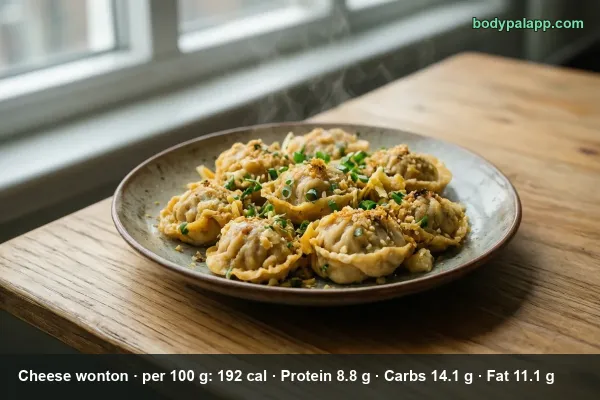
Per 100 g, a cheese omelette made with butter has 203 calories and a cheese wonton has 192.
How much protein is in a cheese omelette?
A 2-egg cheese omelette made with butter (130 g) has 16.5 g protein, 21.2 g fat and 1.8 g carbs.
How many calories are in a cheese omelette made without oil?
A two-egg cheese omelette made without oil (130 g) has 222 calories, compared with 276 when cooked with oil. Fat drops from 22.6 g to 16 g, and protein stays strong at 17.4 g.
How many carbs are in a cheese omelette?
A two-egg cheese omelette has just 1.8 g of carbs, or 1.4 g per 100 g. It contains 0.7 g of sugars and no fiber, so carbohydrates supply only 3% of its calories.
How much sodium is in a cheese omelette?
One two-egg cheese omelette cooked with oil has 421 mg of sodium, about 18% of the daily value. Made without oil, the same 130 g serving lists 447 mg, about 19%.
How many calories are in a cup of cheese omelette?
One cup of cheese omelette (135 g) has 286 calories, with 17.1 g of protein, 23.4 g of fat and 1.9 g of carbs. That is about 14% of a 2,000-calorie daily value.
How much fat is in a cheese omelette?
A two-egg cheese omelette cooked with oil has 22.6 g of fat, or 17.4 g per 100 g, including 5.4 g saturated fat per 100 g. Fat supplies 74% of its calories.