
How many calories are in chicken lo mein?
A 1-cup serving of chicken lo mein weighs 200 g and carries 260 calories. Per 100 g the dish runs 130 calories, which is light for a noodle plate. The number people miss sits two rows down: 826 mg of sodium in that same cup, 36% of a day's limit.
On this page
- Chicken lo mein quick facts
- US servings, from one ounce to a takeout plate
- Beef, pork and vegetable lo mein
- Lo mein vs chow mein and chop suey
- Sodium is the row to watch
- How does chicken lo mein compare?
- Most popular chicken lo mein brands
- Chicken lo mein FAQs
Chicken lo mein quick facts
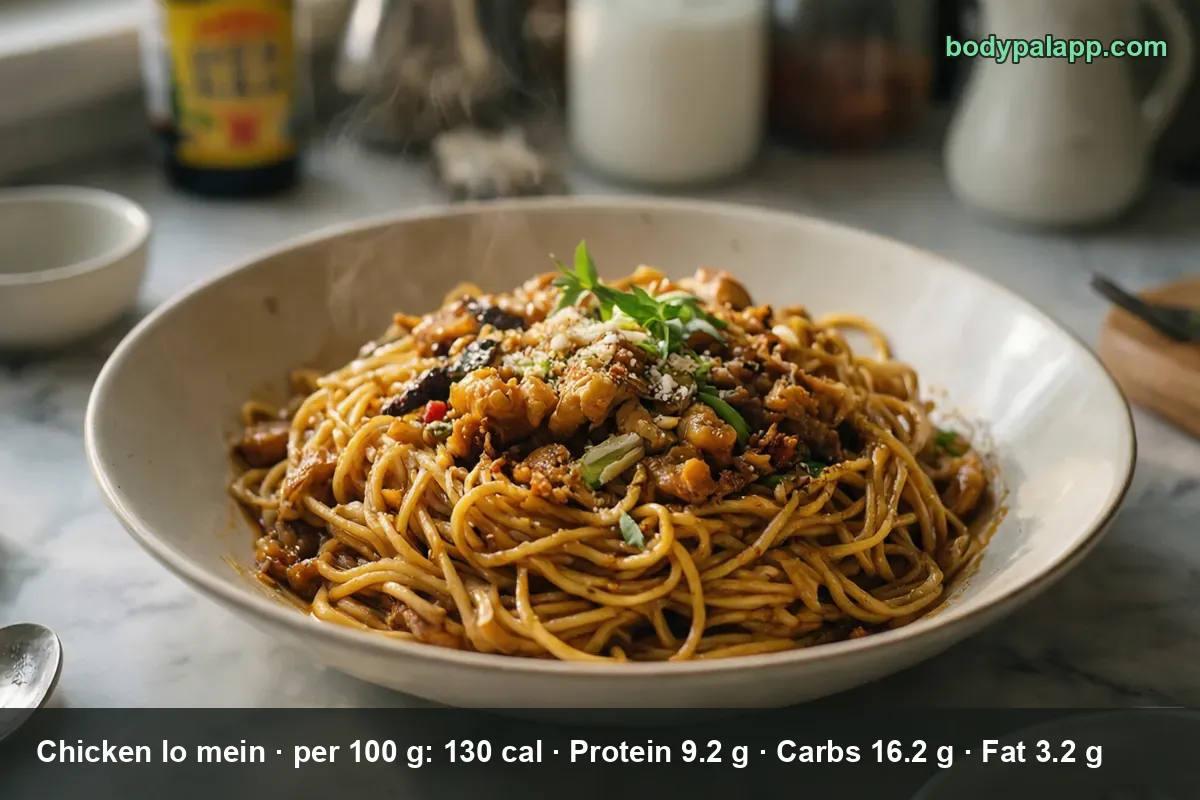
The figures below come from the one USDA record that describes this exact plate: FNDDS 2708803, "Lo mein, with chicken", from the 2021–2023 survey cycle. That is soft wheat noodles tossed with sauce and chicken, cooked and ready to eat — the bowl in the photo, not a package of dry noodles. Chow mein and chop suey sit in separate records because the noodles are fried rather than boiled, and mixing the two would move every row on this page.
USDA's household measure for the record is 1 cup at 200 g, so that is the serving used throughout. If you eat straight from a carton, weigh the carton once and you will never have to guess again.
| Nutrient | Per 100 g | Per 1 cup (200 g) | % Daily Value |
|---|---|---|---|
| Calories | 130 | 260 | — |
| Total fat | 3.15 g | 6.3 g | 8% |
| Saturated fat | 0.69 g | 1.4 g | 7% |
| Carbohydrate | 16.15 g | 32.3 g | 12% |
| Dietary fiber | 1 g | 2.0 g | 7% |
| Total sugars | 2.11 g | 4.2 g | — |
| Protein | 9.15 g | 18.3 g | 37% |
| Sodium | 413 mg | 826 mg | 36% |
% Daily Value is based on a 2,000-calorie diet.
Verified nutrition data
Numbers on this page come from USDA FoodData Central, the U.S. Department of Agriculture’s food composition database, and from manufacturer labels where a branded product is named. Last verified September 2026. How we verify our data →
Two rows you would see on a frozen box are missing here: added sugars and trans fat. USDA does not publish either value for mixed survey dishes, so listing them would mean inventing numbers. Cholesterol and potassium do exist on this record — 44 mg and 280 mg in a cup, 15% and 6% of their Daily Values.
US servings, from one ounce to a takeout plate
| Serving | Weight | Calories |
|---|---|---|
| 1 oz | 28 g | 37 kcal |
| 1 cup, USDA measure | 200 g | 260 kcal |
| 1 1/2 cups | 300 g | 390 kcal |
| 2 cups, typical takeout plate | 400 g | 520 kcal |
| Per 100 g | 100 g | 130 kcal |
Only the 1-cup row is a USDA household measure. The ounce, the cup and a half and the two-cup plate are our own arithmetic from the USDA 100 g figure, not USDA servings. Half a cup, if you are using lo mein as a side next to something else, lands at 100 g and 130 calories — the tidiest number on the page.
The gap between one cup and a finished carton is where the day goes sideways. Two cups is 520 calories, and that is before an egg roll or a scoop of fried rice joins it.
Frozen boxes are their own thing and worth checking on the label, because they are sauced differently. A Banquet Mega Bowl of sesame chicken lo mein is 569 calories for a 382 g bowl, a Smart Ones package is 260 for 255 g, and an EatingWell noodle bowl is also 260, for 283 g.
One more trap: this 130 per 100 g is the finished, sauced dish. USDA carries no dry-noodle figure on this record, and dry pasta weighs far more per calorie than the same noodles once they have absorbed water. Weigh the plate, never the package.
Beef, pork and vegetable lo mein
| Version | Per 100 g | Typical serving | Calories |
|---|---|---|---|
| Chicken lo mein | 130 kcal | 1 cup, 200 g | 260 kcal |
| Beef lo mein | 129 kcal | 1 cup, 200 g | 258 kcal |
| Pork lo mein | 138 kcal | 1 cup, 200 g | 276 kcal |
| Lo mein, no meat specified | 121 kcal | 1 cup, 200 g | 242 kcal |
| Vegetable lo mein | 121 kcal | 1 cup, 200 g | 242 kcal |
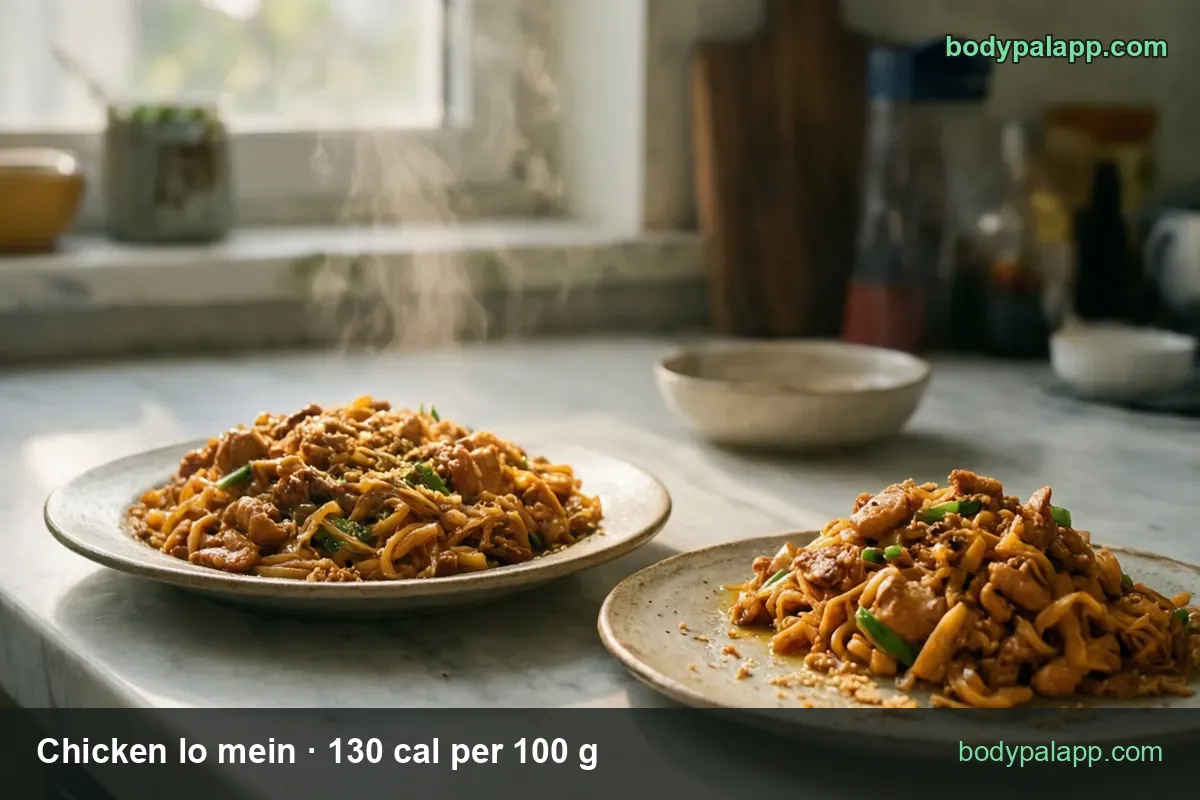
Swapping the protein barely moves the total. Beef comes in two calories below chicken per cup, pork sits 16 above it, and the whole spread across five versions is 34 calories — less than a tablespoon of oil. The noodles are the meal; the meat is a garnish by weight.
Where the swap does matter is protein. Chicken lo mein gives 9.15 g per 100 g and plain lo mein only 4.77 g, just over half, so the meatless cup drops from 18.3 g of protein to about 9.5 g while saving just 18 calories. If the point of lunch is staying full until dinner, that is a bad trade.
Lo mein vs chow mein and chop suey
| Version | Per 100 g | Typical serving | Calories |
|---|---|---|---|
| Chicken lo mein | 130 kcal | 1 cup, 200 g | 260 kcal |
| Chicken chow mein with noodles | 131 kcal | 1 cup, 220 g | 288 kcal |
| Chicken chow mein or chop suey, no noodles | 83 kcal | 1 cup, 220 g | 182 kcal |
| Restaurant chicken chow mein | 85 kcal | 1 order, 604 g | 513 kcal |
Per gram, lo mein and chow mein with noodles are a dead heat: 130 against 131. The difference shows up in what the calories are made of. Chow mein's noodles are fried, so a serving brings 11.9 g of fat against 6.3 g for lo mein, while lo mein carries more starch.
Drop the noodles entirely and the plate collapses to 182 calories a cup. Carbohydrate falls from 32.3 g to 8.4 g, and that single swap is worth 78 calories a cup with the chicken and vegetables untouched. It is the cheapest edit on a Chinese takeout menu.
The restaurant chow mein record is the odd one out at 85 calories per 100 g — a wetter, vegetable-heavy sample with fewer noodles in it. It reads low per gram, but the USDA order weighs 604 g, so the plate still totals 513 calories. Density and portion pull in opposite directions here, which is exactly why per-100-g numbers alone mislead.
Sodium is the row to watch
A cup of chicken lo mein is 13% of a 2,000-calorie day and 36% of the sodium — nearly triple its share. That is 826 mg, about a third of a teaspoon of table salt, sitting in a bowl most people would call light. The Dietary Guidelines for Americans put the adult ceiling at 2,300 mg a day, the same figure the FDA uses as the Daily Value on every label.
Eat the two-cup plate and you are at 1,652 mg, roughly 72% of the day, from one lunch. Nothing about that is dangerous on its own, but it does decide what the rest of your day can look like. Sauce on the side is the standard fix, and it works because most of the sodium rides in the sauce rather than the noodles.
The upside on the same plate is protein. A cup delivers 18.3 g, 37% of the Daily Value, which is more than most noodle lunches manage, and MyPlate counts the chicken here as a real contribution to the protein group. Fiber is the weak spot at 2 g a cup, 7% of the Daily Value — a bowl this size built on white wheat noodles was never going to do better. Extra broccoli or snow peas costs almost nothing and fixes both the fiber and the volume.
How does chicken lo mein compare?
| Dish | Per 100 g | US serving | Calories |
|---|---|---|---|
| Chicken lo mein | 130 kcal | 1 cup, 200 g | 260 kcal |
| Beef lo mein | 129 kcal | 1 cup, 200 g | 258 kcal |
| Pork lo mein | 138 kcal | 1 cup, 200 g | 276 kcal |
| Lo mein, no meat specified | 121 kcal | 1 cup, 200 g | 242 kcal |
Our take: chicken is the pick of the four. Pork is the heaviest at 138 per 100 g, beef is a statistical tie with chicken, and the plain version saves only 18 calories a cup while giving up roughly half the protein. If you are cutting calories, cut the second cup rather than the chicken — that one decision is worth 260 calories, fourteen times more than switching protein. If you want the meal to hold you until dinner, one cup plus a side of steamed vegetables beats two cups of noodles at the same total.
Most popular chicken lo mein brands in the United States
Ranked by how widely each product appears among foods sold in the United States, from the BodyPal food database of over 3.3 million products. Calories are the figures printed on each Nutrition Facts label, checked against USDA FoodData Central.
| Product | Calories (per 100 g) |
|---|---|
| Banquet Mega Bowls Sesame Chicken Lo Mein | 149 cal |
| Smart Ones Chicken Lo Mein | 102 cal |
| Michelina's Signature Bowls Chicken Lo Mein | 115 cal |
| EatingWell Noodle Bowls Chicken Lo Mein | 92 cal |
| Kahiki Chicken Lo Mein | 103 cal |
| ShopRite Chicken Lo Mein with Lo Mein Noodles | 98 cal |
Brand popularity: BodyPal food database. Nutrition: manufacturer labels / USDA FoodData Central.
Chicken lo mein FAQs
How many calories are in chicken lo mein?
A 1-cup serving of chicken lo mein is 260 calories, and the dish runs 130 calories per 100 g in USDA's record. That cup weighs 200 g. Most takeout cartons hold closer to two cups, or 400 g, which is 520 calories before you add an egg roll or rice.
How many calories are in a takeout container of chicken lo mein?
A 2-cup takeout portion of 400 g comes to 520 calories, which is our own arithmetic from the USDA 100 g figure rather than a USDA serving. Containers vary; weigh yours once and you will know your number. At 400 g you also take in 1,652 mg of sodium, 72% of a day.
Is chicken lo mein healthy?
One cup gives 18.3 g of protein, 37% of the Daily Value, for 260 calories, which is a good trade. The catch is 826 mg of sodium in that same cup, 36% of the 2,300 mg daily limit. Fiber is thin at 2 g. Order it with steamed vegetables.
Chicken lo mein vs chicken chow mein: which has more calories?
Chicken chow mein with noodles is 131 calories per 100 g against 130 for lo mein, so per gram they tie. The USDA cup for chow mein is heavier, 220 g, so it lands at 288 calories against 260. Fat is the real gap: 11.9 g versus 6.3 g per serving.
How much protein is in chicken lo mein?
A 1-cup serving carries 18.3 g of protein, 37% of the Daily Value, from 9.15 g per 100 g. That is a solid load for a noodle dish, because the chicken is spread through the whole bowl. Two cups would cover 73% of the day's protein target for 520 calories.
How much sodium is in chicken lo mein?
One cup holds 826 mg of sodium, 36% of the Daily Value and about a third of a teaspoon of table salt. The Dietary Guidelines cap adults at 2,300 mg a day, so a two-cup plate at 1,652 mg uses nearly three quarters of it. Sauce on the side helps.
How many carbs are in chicken lo mein?
A 1-cup serving has 32.3 g of carbohydrate, 12% of the Daily Value, with 2 g of fiber and 4.2 g of total sugars. Per 100 g that is 16.15 g. The noodles own almost all of it: the same dish served as chop suey without noodles drops to 8.4 g per cup.
Is chicken lo mein good for weight loss?
At 130 calories per 100 g, a 1-cup 260-calorie serving fits inside a normal lunch, and 18.3 g of protein keeps it filling. Portion is the whole game: eat the carton to the bottom, 400 g, and it is 520 calories. Ask for extra vegetables and half the noodles.
Similar foods
- Chicken Chow Mein — 288 cal per cup
- Half And Half — 20 cal per tbsp
- Snow Cone — 256 cal per snow cone
- Egg Foo Yung — 108 cal per patty
- Lasagna — 286 cal per piece
- Shrimp Lo Mein — 242 cal per cup
Count it without the math
Point the camera at the bowl and BodyPal counts the noodles, the chicken and the sauce for you.


How long does it take to burn off 260 kcal of chicken lo mein?
A 1-cup (200 g) serving is 260 kcal. Enter your weight and the amount you ate to see how long it takes you to burn that off:
lb
| Activity | Time to burn 260 kcal |
|---|---|
| Walking, brisk | 52 min |
| Cycling, moderate | 32 min |
| Swimming, moderate | 37 min |
| Jogging | 31 min |
| Weight training, moderate | 58 min |
Times are for a 155 lb adult at a steady pace; change the weight to see yours. The amount is set to the portion in the text (200 g); change it to what you actually ate. BodyPal works this out from your steps automatically.
Burning it off is one side of it. The other is knowing your number: work out how many calories you need a day, with macros and a goal date.