
How Many Calories Are in a Piece of Lasagna?
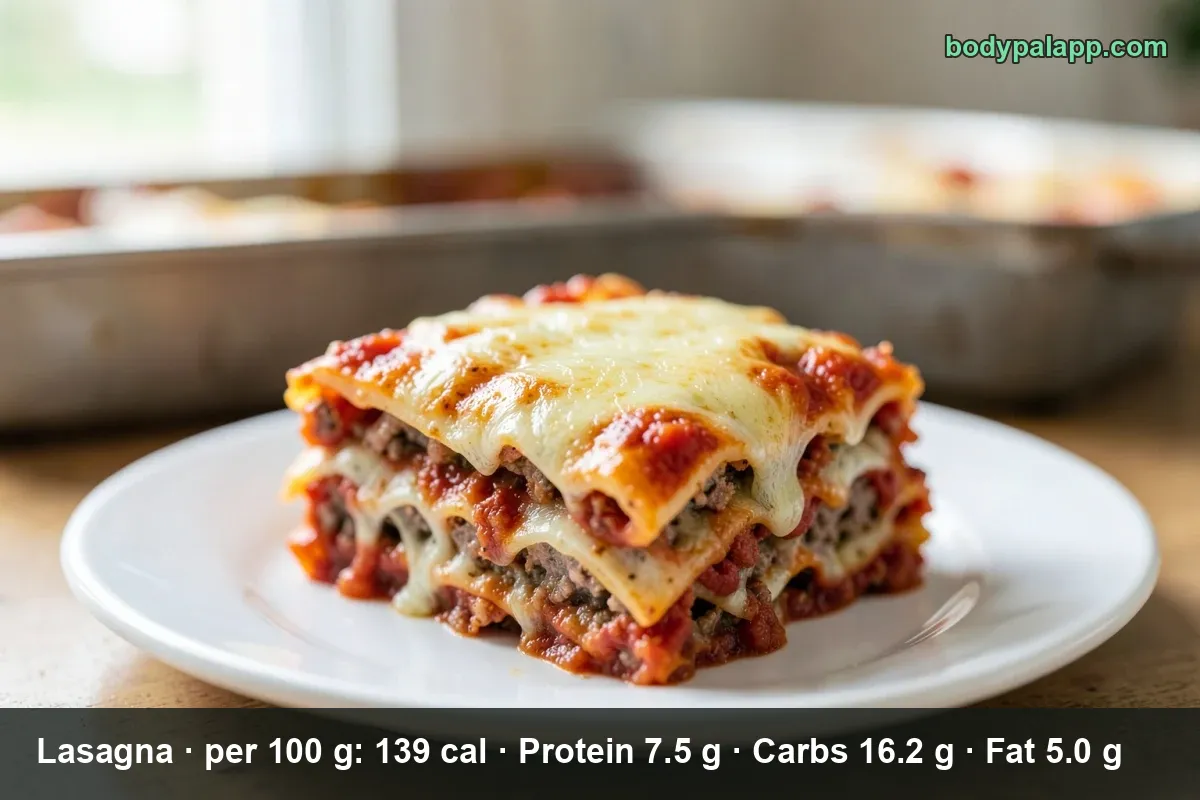
A standard piece of lasagna with meat, 206 g cut from a home-sized pan, is 286 calories. Per 100 g the dish runs 139 calories, which is lighter per gram than most people assume for a baked pasta. The number that moves is the cut: a cup of the same lasagna is 348.
On this page
- Lasagna quick facts
- US servings from one ounce to a full cup
- How the lasagna in your pan changes the number
- Frozen trays and the supermarket aisle
- Sodium is the row to watch
- How does lasagna compare?
- Most popular lasagna brands
- Lasagna FAQs
Lasagna quick facts
The row behind this page is FNDDS 2708750, "Lasagna with meat", the generic entry for the dish as it lands on a plate: noodles, tomato-based meat sauce, ricotta or cottage cheese, mozzarella on top. It is the only lasagna record with a full set of household measures, which is why the piece, the cup and the surface inch below all come from one place instead of being stitched together.
A home recipe made with more ground beef and a restaurant plate are separate USDA records, and they sit further down this page as their own rows. That difference is preparation, not a difference of opinion between sources, so nothing here is averaged.
| Nutrient | Per 100 g | Per 1 piece (206 g) | % Daily Value |
|---|---|---|---|
| Calories | 139 | 286 | — |
| Total fat | 4.97 g | 10.2 g | 13% |
| Saturated fat | 2.32 g | 4.8 g | 24% |
| Carbohydrate | 16.17 g | 33.3 g | 12% |
| Dietary fiber | 1.6 g | 3.3 g | 12% |
| Total sugars | 3.33 g | 6.9 g | — |
| Protein | 7.45 g | 15.3 g | 31% |
| Sodium | 390 mg | 803 mg | 35% |
% Daily Value is based on a 2,000-calorie diet.
Verified nutrition data
Numbers on this page come from USDA FoodData Central, the U.S. Department of Agriculture’s food composition database, and from manufacturer labels where a branded product is named. Last verified September 2026. How we verify our data →
Two label rows are missing on purpose. Added sugars and trans fat are not published for this FNDDS record, so putting a figure in either slot would mean inventing one. Cholesterol and potassium are published: a 206 g piece carries 33 mg of cholesterol (11% DV) and 426 mg of potassium (9% DV). The Daily Values used here are the FDA's.
US servings from one ounce to a full cup
Lasagna is the rare dish where nobody weighs anything and everybody says "a piece." USDA describes two of them, and they are not the same size.
| Serving | Weight | Calories |
|---|---|---|
| 1 surface inch | 22.8 g | 32 kcal |
| 1 oz | 28 g | 39 kcal |
| Per 100 g | 100 g | 139 kcal |
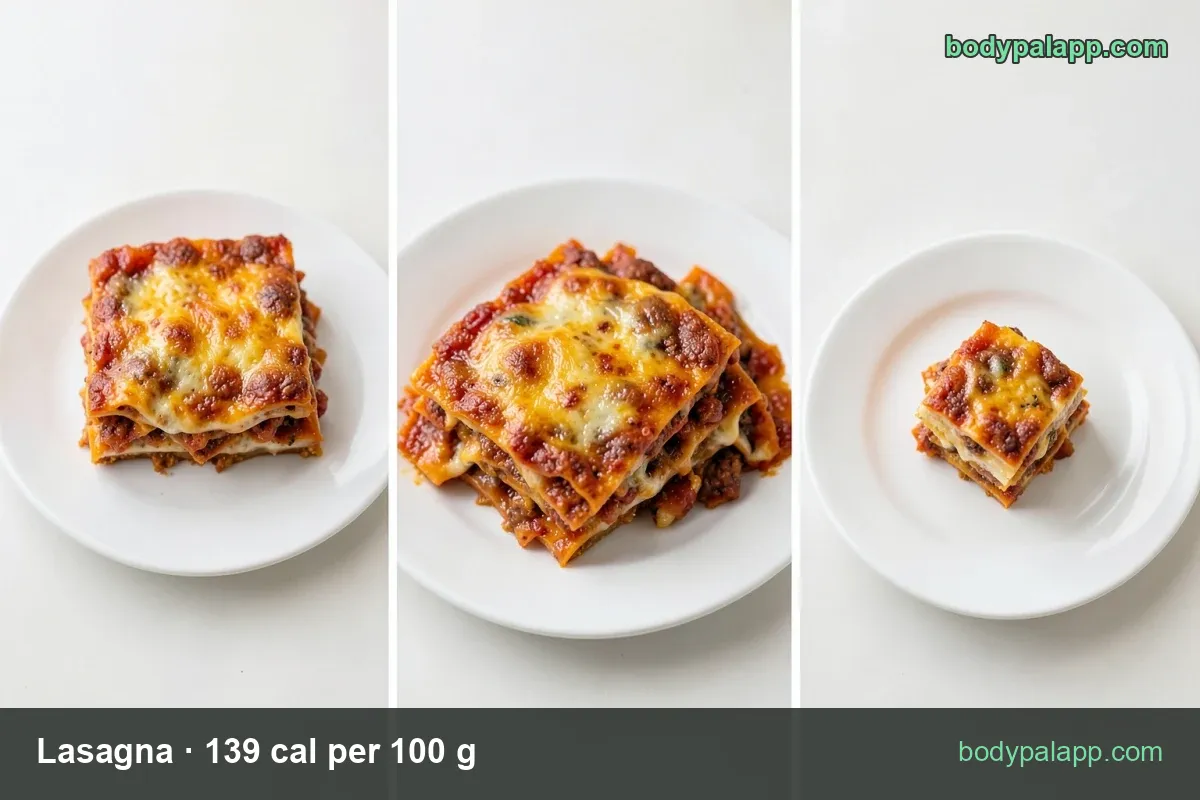
| 1 piece, 1/6 of an 8-inch square pan | 206 g | 286 kcal |
| 1 piece, 1/8 of a 7 x 12 inch pan | 232 g | 322 kcal |
| 1 cup | 250 g | 348 kcal |
The 206 g piece, the 232 g piece and the 250 g cup are USDA household measures with USDA weights. The ounce is our own arithmetic from the 100 g figure, not a USDA serving, and the calorie count for the surface inch is scaled the same way from its listed 22.8 g weight.
Here is the trap. A cup is 348 calories and a piece is 286, a gap of 62 for two things people describe with the same shrug. Scooping into a measuring cup compresses the layers, so a cup holds 44 g more lasagna than the standard cut piece. If you serve yourself with a spoon rather than a spatula, log the cup.
How the lasagna in your pan changes the number
Recipe style moves this dish more than anything else on the page. USDA keeps each version as its own record, so these are measured differences, not estimates.
| Version | Per 100 g | Typical piece | Calories |
|---|---|---|---|
| Lasagna with meat (generic) | 139 kcal | 1 piece (206 g) | 286 kcal |
| Homemade lasagna with meat | 206 kcal | 100 g | 206 kcal |
| Lasagna with meat and spinach | 207 kcal | 1 piece (206 g) | 426 kcal |
| Chicken or turkey lasagna with spinach | 201 kcal | 1 piece (206 g) | 414 kcal |
| Vegetable lasagna, meatless | 188 kcal | 1 piece (227 g) | 427 kcal |
| Cheese lasagna, meatless | 130 kcal | 1 piece (227 g) | 295 kcal |
The home recipe is the surprise. At 206 calories per 100 g it is among the densest versions in this group, 48% above the generic meat row, because a home cook loads in more ground beef and more cheese and less watery sauce. Its protein tells the same story: 13.63 g per 100 g against 7.45 g. USDA lists no household piece for that record, so the table shows it at 100 g. If you want a rough piece, 206 g of homemade lasagna would be about 424 calories, which is our own arithmetic from the 100 g figure rather than a USDA serving.
The other surprise runs the opposite way. Skipping the meat does not make lasagna light. Vegetable lasagna is 188 calories per 100 g, higher than the meat version, because ricotta and bechamel step in where the beef used to be. A 227 g piece of it is 427 calories, 141 more than a meat piece. Plain cheese lasagna is the genuinely lighter meatless option at 130 per 100 g, and it carries the least sodium of the meatless options at 284 mg per 100 g.
Frozen trays and the supermarket aisle
Frozen lasagna with meat is 124 calories per 100 g, the lightest of the common versions by weight, with 6.63 g of protein and 347 mg of sodium per 100 g. That is not virtue, it is sauce: frozen entrees run wetter, which dilutes calories per gram and protein per gram together.
Retail trays sit in a tight band around that USDA figure. Michael Angelo's Lasagna with Meat Sauce is 132 calories per 100 g and Stouffer's Meat Lovers Lasagna is 155, while the diet-line entrees go the other way, with Lean Cuisine Lasagna with Meat Sauce at 104 per 100 g. The catch is the box: a Lean Cuisine package is 297 g, so the whole thing is 309 calories, 23 more than a standard 206 g piece of the generic meat version.
Canned lasagna is the floor at 97 calories per 100 g, with 3.24 g of protein. It is the lightest lasagna USDA lists and also the least food per bite.
Sodium is the row to watch
Calories are not what stands out on this label. A 206 g piece carries 803 mg of sodium, 35% of the Daily Value, or roughly a third of a teaspoon of table salt worked through the sauce and the cheese. Scoop a 250 g cup instead and it is 975 mg, 42% of the day.
The Dietary Guidelines for Americans put the ceiling at 2,300 mg of sodium a day. Two cups of lasagna clear 1,950 mg of that before anything else on the table. Restaurant lasagna is the saltiest per 100 g at 466 mg, so a plate out is a heavier sodium day than a plate at home even when the calories look similar. If you are watching sodium, cheese lasagna at 284 mg per 100 g is the softer pick, and the frozen tray at 347 mg is next.
Saturated fat deserves a glance too: 4.8 g in a piece, 24% of the Daily Value. The home recipe more than doubles the per 100 g figure, 5.63 g against 2.32 g. On the good side, 15.3 g of protein per piece is 31% of the Daily Value, which puts lasagna closer to a protein food than most baked pasta gets.
How does lasagna compare?
| Lasagna | Per 100 g | US serving | Calories |
|---|---|---|---|
| Lasagna with meat | 139 kcal | 1 piece, 206 g | 286 kcal |
| Cheese lasagna, meatless | 130 kcal | 1 piece, 227 g | 295 kcal |
| Lasagna with meat and spinach | 207 kcal | 1 piece, 206 g | 426 kcal |
| Frozen lasagna with meat | 124 kcal | 1 piece, 206 g | 255 kcal |
Our take: if you are counting calories, the plain meat version at 286 a piece is already a reasonable dinner and there is little reason to trade down to the frozen tray for 31 calories. Note how the rankings flip between columns. Cheese lasagna is lighter than the meat version per 100 g but heavier per serving, because its standard piece is 21 g bigger. For fullness per calorie, the meat and spinach row wins on paper with 13.33 g of protein per 100 g, but a 426-calorie piece is a big ask at lunch. The practical answer for most days: one 206 g meat piece, a salad, and no second scoop from the cup.
Most popular lasagna brands in the United States
Ranked by how widely each product appears among foods sold in the United States, from the BodyPal food database of over 3.3 million products. Calories are the figures printed on each Nutrition Facts label, checked against USDA FoodData Central.
| Product | Calories (per 100 g) |
|---|---|
| Michael Angelo's Lasagna with Meat Sauce | 132 cal |
| Stouffer's Meat Lovers Lasagna | 155 cal |
| Michael Angelo's Vegetable Lasagna | 119 cal |
| Smart Ones Traditional Lasagna with Meat Sauce | 111 cal |
| Lean Cuisine Lasagna with Meat Sauce | 104 cal |
| Stouffer's Lasagna with Meat & Sauce | 123 cal |
Brand popularity: BodyPal food database. Nutrition: manufacturer labels / USDA FoodData Central.
Lasagna FAQs
How many calories are in a piece of lasagna?
A standard piece of lasagna with meat weighs 206 g and delivers 286 calories, based on the USDA figure of 139 calories per 100 g. Cut the same dish into eighths of a 7 by 12 inch pan and each piece runs 232 g and 322 calories instead.
How many calories in 1 cup of lasagna?
One cup of lasagna with meat is 250 g and 348 calories, 62 more than the 206 g piece most people picture. A cup compresses the layers, so you get more food for the same word. It also carries 975 mg of sodium, 42 percent of the Daily Value.
Is lasagna high in protein?
A 206 g piece carries 15.3 g of protein, 31 percent of the Daily Value, which is solid for a baked pasta. The meat and the cheese do the work. Home recipe lasagna is denser still at 13.63 g per 100 g, against 7.45 g for the generic meat version.
How many calories in homemade lasagna vs frozen lasagna?
Homemade lasagna with meat runs 206 calories per 100 g and frozen runs 124, so the same weight on the plate differs by 66 percent. The home recipe uses more ground beef and cheese and less sauce. Frozen trays are wetter, which dilutes calories per gram and protein alike.
How much sodium is in lasagna?
A 206 g piece has 803 mg of sodium, 35 percent of the Daily Value, and a 250 g cup has 975 mg, or 42 percent. Restaurant lasagna is the saltiest per 100 g at 466 mg. The Dietary Guidelines put the daily ceiling at 2,300 mg of sodium.
How many calories in vegetable lasagna?
Meatless lasagna with vegetables is 188 calories per 100 g, so a 227 g piece is 427 calories, more than the 286 in a meat piece. Ricotta and bechamel replace the ground beef. Plain cheese lasagna is the lighter meatless option at 130 calories per 100 g.
Is lasagna good for weight loss?
At 139 calories per 100 g, lasagna with meat is not heavy by weight, and 15.3 g of protein per piece helps with fullness. Portion size is the catch, since a cup is 348 calories. If you are watching sodium, the frozen version at 347 mg per 100 g is the softer pick.
How many carbs are in lasagna?
A 206 g piece of lasagna with meat has 33.3 g of carbohydrate, 12 percent of the Daily Value, plus 3.3 g of fiber and 6.9 g of total sugars. A full 250 g cup pushes carbohydrate to 40.4 g. The noodles carry most of it, the sauce the sugars.
Similar foods
- Toor Dal — 348 cal per cup
- Chicken Chow Mein — 288 cal per cup
- Half And Half — 20 cal per tbsp
- Shrimp Pad Thai — 294 cal per cup
- Snow Cone — 256 cal per snow cone
- Egg Foo Yung — 108 cal per patty
Count it without the math
Point the camera at the pan and BodyPal counts the piece for you, sauce and cheese included.


How long does it take to burn off lasagna?
One piece (206 g) is 286 kcal. Enter your weight and the amount you ate to see how long it takes you to burn that off:
lb
| Activity | Time to burn 286 kcal |
|---|---|
| Walking, brisk | 57 min |
| Cycling, moderate | 36 min |
| Swimming, moderate | 41 min |
| Jogging | 34 min |
| Weight training, moderate | 1 hr 4 min |
Times are for a 155 lb adult at a steady pace; change the weight to see yours. The amount is set to the portion in the text (206 g); change it to what you actually ate. BodyPal works this out from your steps automatically.
This table assumes you know your daily total. If you do not, the daily calorie calculator works it out from five numbers.