
How Many Calories Are in a Filet of Fish?
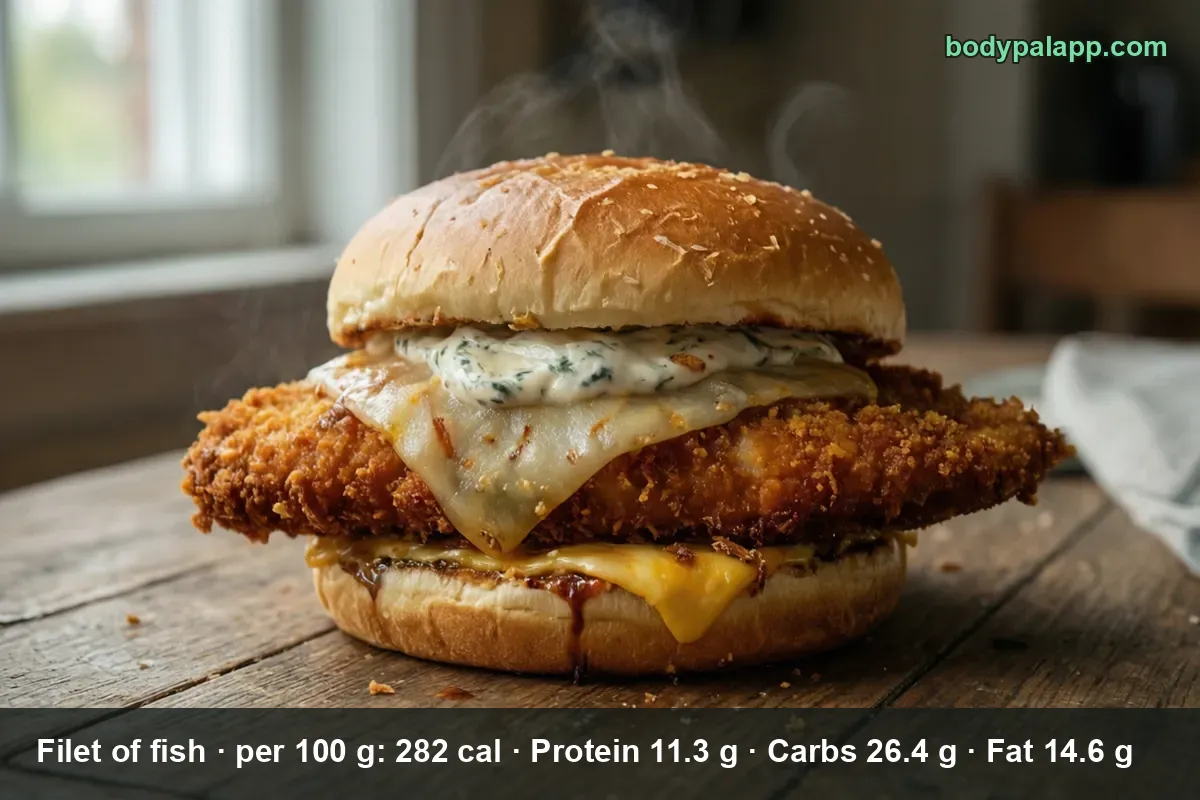
One filet of fish sandwich weighs 134 g and carries 378 calories. Per 100 g that is 282 calories, which puts a breaded fish fillet in a bun exactly level with a double cheeseburger. Nearly half of those calories come from fat, and most of that fat rides in on the tartar sauce.
On this page
- Filet of fish quick facts
- US servings from one ounce to two sandwiches
- Filet of fish without tartar sauce
- Sodium is the row to watch
- How does a filet of fish compare?
- Most popular filet of fish brands
- FAQ
Filet of fish quick facts
The record used here is SR Legacy 170319, "McDONALD'S, FILET-O-FISH", and it was picked for a simple reason: it is the assembled sandwich, with a gram weight attached to it. Someone typing this search is holding a whole thing — breaded fish, tartar sauce, half a slice of cheese, a soft steamed bun — not a bare fillet. Any number that covers only the fish would undercount what is actually on the tray.
That record puts one sandwich at 134 g. Everything in the serving column below is that 134 g, and everything in the 100 g column is the raw USDA figure with no rounding applied.
| Nutrient | Per 100 g | Per 1 sandwich (134 g) | % Daily Value |
|---|---|---|---|
| Calories | 282 | 378 | — |
| Total fat | 14.64 g | 19.6 g | 25% |
| Saturated fat | 2.83 g | 3.8 g | 19% |
| Carbohydrate | 26.39 g | 35.4 g | 13% |
| Dietary fiber | 1.4 g | 1.9 g | 7% |
| Total sugars | 3.67 g | 4.9 g | — |
| Protein | 11.26 g | 15.1 g | 30% |
| Sodium | 434 mg | 582 mg | 25% |
| Cholesterol | 32 mg | 43 mg | 14% |
| Potassium | 220 mg | 295 mg | 6% |
% Daily Value is based on a 2,000-calorie diet.
Verified nutrition data
Numbers on this page come from USDA FoodData Central, the U.S. Department of Agriculture’s food composition database, and from manufacturer labels where a branded product is named. Last verified September 2026. How we verify our data →
There is no added sugars row above, and that is not an oversight. The SR Legacy edition of this record does not publish added sugars at all, so the line would be a guess rather than a measurement. Total sugars have no Daily Value of their own under the FDA label rules, which is why that cell shows a dash while the %DV reference amounts fill in the rest.
Two rows people rarely check are worth a glance. Cholesterol lands at 43 mg, 14% of the day, which is modest for a fried item. Potassium is 295 mg, only 6% — a fish sandwich is not a potassium food the way a baked potato or a banana is.
US servings from one ounce to two sandwiches
| Serving | Weight | Calories |
|---|---|---|
| 1 oz | 28.4 g | 80 kcal |
| Half a sandwich | 67 g | 189 kcal |
| One sandwich | 134 g | 378 kcal |
| Two sandwiches | 268 g | 756 kcal |
| Per 100 g | 100 g | 282 kcal |
Only one line here is a USDA household measure: the 134 g sandwich. The ounce, the half, and the pair are our own arithmetic from the USDA 100 g figure, scaled straight up or down, not servings that USDA publishes.
The half-sandwich row exists because people really do split one. At 189 calories it slots into a snack budget in a way the whole thing does not. The two-sandwich row matters for the opposite reason — 756 calories is a full day's dinner allowance for a lot of people who are tracking, and it arrives in about four minutes of eating.
One ounce is a strange way to think about a sandwich, but it is useful for one thing: it tells you that every bite of this food costs roughly 80 calories per ounce, sauce and bread included. A fish fillet on its own would not price that way.
Filet of fish without tartar sauce
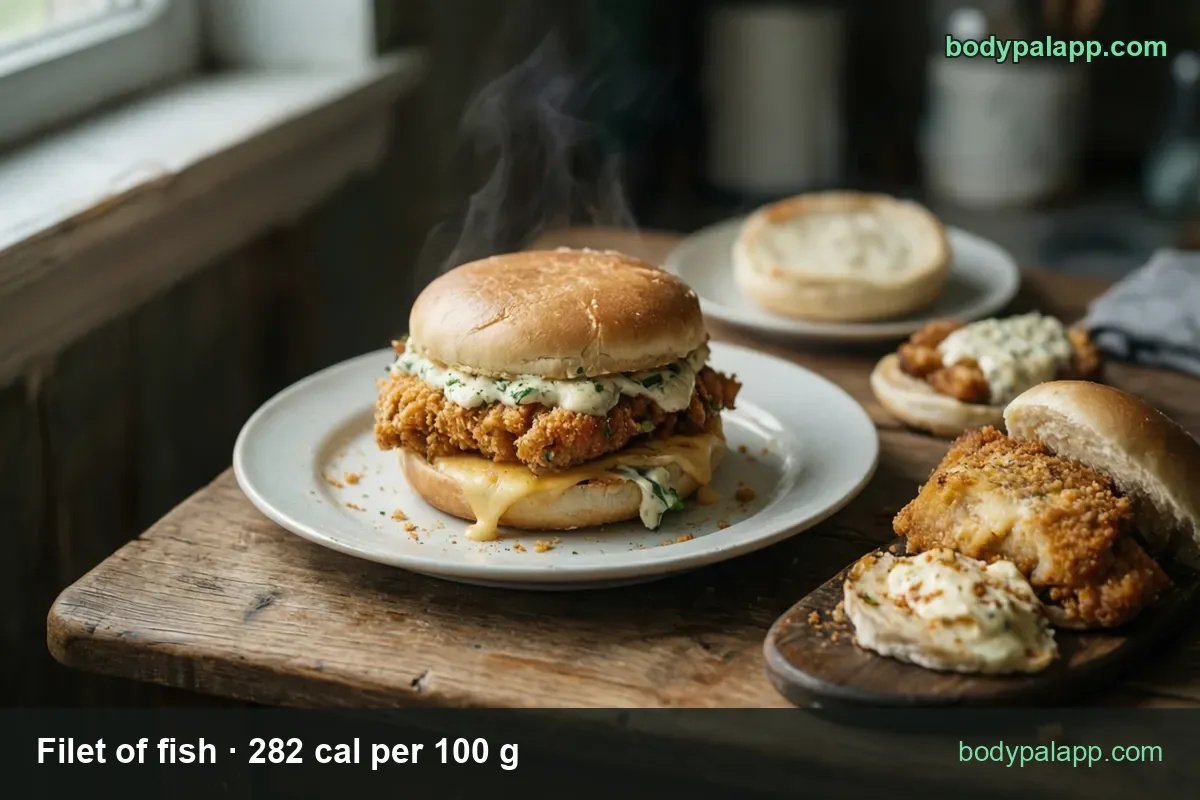
USDA keeps a separate record for the sauce-free build, SR Legacy 173314, and it is the single most useful comparison on this page. It is a distinct measurement rather than a subtraction, so the two rows do not line up perfectly — but the direction is unmistakable.
| Version | Per 100 g | Typical item | Calories |
|---|---|---|---|
| With tartar sauce | 282 kcal | one sandwich, 134 g | 378 kcal |
| Without tartar sauce | 243 kcal | one item, 124 g | 301 kcal |
Here is the full nutrient picture for the sauce-free version, scaled from its own 100 g record to the 124 g item.
| Nutrient | Per 100 g | Per 1 item (124 g) | % Daily Value |
|---|---|---|---|
| Calories | 243 | 301 | — |
| Total fat | 7.62 g | 9.4 g | 12% |
| Saturated fat | 1.77 g | 2.2 g | 11% |
| Carbohydrate | 31.08 g | 38.5 g | 14% |
| Dietary fiber | 1 g | 1.2 g | 4% |
| Total sugars | 4.27 g | 5.3 g | — |
| Protein | 12.47 g | 15.5 g | 31% |
| Sodium | 464 mg | 575 mg | 25% |
Seventy-seven calories separate the two, and fat does almost all of the work: 19.6 g down to 9.4 g. Protein does not suffer — it nudges up to 15.5 g, because what you removed was condiment, not fish. Carbohydrate reads higher on the sauce-free record, 38.5 g against 35.4 g, which is a reminder that these are two independent lab measurements of two slightly different builds and not one sandwich with a spoon of sauce scraped off.
Practical version: asking for it plain is the cheapest single edit available on this sandwich. It buys back 77 calories and roughly 10 g of fat for no loss of protein at all.
Sodium is the row to watch
582 mg of sodium in one sandwich is 25% of the 2,300 mg Daily Value — about a quarter teaspoon of table salt, sitting inside something most people finish in a few minutes. Order two and you are at 1,164 mg before anything else on the tray.
Now the part almost nobody expects. Dropping the tartar sauce does not fix the salt. The sauce-free record still carries 575 mg per item, also 25% of the day. The salt lives in the breading, the cheese and the bun, and none of those leave when the sauce does. If sodium is the number you are managing, this sandwich is a costly pick in either build, and the sauce-free order should be understood as a fat edit rather than a salt edit.
The protein side reads better. 15.1 g is 30% of the Daily Value, and MyPlate counts breaded fish toward the protein foods group even in fried form. The Dietary Guidelines for Americans suggest about 8 ounces of seafood a week for adults, and a 134 g sandwich is not a bad way to get some of it in — the fillet just comes wrapped in bread, oil and salt that a broiled fillet would not carry.
Saturated fat is the quiet good news: 3.8 g, 19% of the day. For a fried fast-food item, that is low. The fat here is mostly unsaturated frying and sauce fat rather than the dairy and beef fat that pushes burgers up.
How does a filet of fish compare?
| Item | Per 100 g | USDA serving | Calories per serving |
|---|---|---|---|
| Filet of fish | 282 kcal | one sandwich, 134 g | 378 kcal |
| Double cheeseburger | 282 kcal | one sandwich, no gram weight published | — |
| Pizza, sausage, thick crust | 282 kcal | one slice, no gram weight published | — |
| Sausage, egg and cheese breakfast sandwich | 283 kcal | one item, no gram weight published | — |
That column of near-identical numbers is not a typo. Four different fast-food items — fish, beef, pizza, breakfast — land within one calorie of each other per 100 g. USDA publishes no gram weight for the three comparison records, so a per-serving figure for them would be invented, and the 100 g line is the only honest comparison available.
Where they separate is composition. The double cheeseburger carries 15.5 g of protein per 100 g against the fish sandwich's 11.26 g, and 16.09 g of fat against 14.64 g. The fish sandwich answers with 7.6 g more carbohydrate per 100 g, which is the bun and breading talking.
Our take: choosing a filet of fish over a burger to save calories does not work — at the same weight they are identical. Choose it if you want a little less fat and a seafood serving on the day, and order it without tartar sauce if you want the edit that actually moves a number. If your target is sodium, neither one helps, and this sandwich is the wrong tool for that job in both versions.
Most popular filet of fish brands in the United States
Ranked by how widely each product appears among foods sold in the United States, from the BodyPal food database of over 3.3 million products. Calories are the figures printed on each Nutrition Facts label, checked against USDA FoodData Central.
| Product | Calories (per 100 g) |
|---|---|
| 7-Eleven Fish Fillet Sandwich | 308 cal |
| Fast Bites Fish and Cheese Sandwich | 286 cal |
| Maple View Farms Fish Sandwich | 256 cal |
| Van de Kamp's Crunchy Breaded Fish Sandwich Fillets | 235 cal |
| Gorton's Golden Crispy Panko Fish Sandwich Breaded Fillets | 200 cal |
| Trident Seafoods The Alaskan Fish Sandwich Fillets | 184 cal |
Brand popularity: BodyPal food database. Nutrition: manufacturer labels / USDA FoodData Central.
Filet of fish FAQs
How many calories are in a filet of fish sandwich?
378 calories for one 134 g sandwich, which works out to 282 calories per 100 g. That figure covers the breaded fish fillet, the tartar sauce, the half slice of cheese and the steamed bun together. Skip the sauce and the same sandwich drops to 301 calories.
How much protein is in a filet of fish sandwich?
15.1 g of protein per sandwich, or 30% of the Daily Value in one hand-held item. That is 11.26 g per 100 g. It is decent but not remarkable for a seafood item; a double cheeseburger of the same weight carries 15.5 g per 100 g.
How many calories are in a filet of fish without tartar sauce?
301 calories for the 124 g version, a saving of 77 calories against the full sandwich. Fat falls hardest, from 19.6 g to 9.4 g. Protein actually edges up to 15.5 g, because you are removing sauce rather than fish. Carbohydrate rises slightly to 38.5 g.
How much sodium is in a filet of fish?
582 mg per sandwich, 25% of the 2,300 mg Daily Value and roughly a quarter teaspoon of table salt. Dropping the tartar sauce barely helps: that version still carries 575 mg, also 25%. The salt sits in the breading, the cheese and the bun, not the sauce.
Is a filet of fish sandwich healthier than a cheeseburger?
Per 100 g they are identical at 282 calories, so the fish sandwich wins nothing on density. The double cheeseburger carries more protein, 15.5 g against 11.26 g per 100 g, and more fat, 16.09 g against 14.64 g. Pick the fish for lower fat, not for fewer calories.
How many carbs are in a filet of fish?
35.4 g of carbohydrate per sandwich, 13% of the Daily Value, with 4.9 g of that as total sugars and 1.9 g as fiber. Almost all of it is the bun and the breading. On a low-carb day this single item takes a real bite out of the budget.
How much fat is in a filet of fish sandwich?
19.6 g of fat per sandwich, 25% of the Daily Value, of which 3.8 g is saturated at 19%. Multiply the fat by nine and you get about 176 calories, close to half the sandwich's 378. The no-sauce record cuts fat to 9.4 g.
How many calories are in two filet of fish sandwiches?
756 calories for two 134 g sandwiches, our own arithmetic from the USDA figure rather than a listed serving. That is 1,164 mg of sodium, just over half the daily limit, and 39.2 g of fat. Two of them make a heavy lunch for most people counting calories.
Similar foods
- Shrimp With Garlic Sauce — 596 cal per cup
- Salmon Cake — 242 cal per cake
- Fish Stick — 78 cal per stick
- Salmon Baked — 384 cal per fillet
- Salmon Fillet 6 Oz — 466 cal per 6 oz fillet
- Salmon Portion — 310 cal per 4 oz portion
Count it without the math
Point the camera at the tray and BodyPal logs the sandwich for you, sauce and all.


How long does it take to burn off 378 kcal of filet of fish?
One sandwich (134 g) is 378 kcal. Enter your weight and the amount you ate to see how long it takes you to burn that off:
lb
| Activity | Time to burn 378 kcal |
|---|---|
| Walking, brisk | 1 hr 16 min |
| Cycling, moderate | 47 min |
| Swimming, moderate | 54 min |
| Jogging | 44 min |
| Weight training, moderate | 1 hr 24 min |
Times are for a 155 lb adult at a steady pace; change the weight to see yours. The amount is set to the portion in the text (134 g); change it to what you actually ate. BodyPal works this out from your steps automatically.
Burning it off is one side of it. The other is knowing your number: work out how many calories you need a day, with macros and a goal date.