
How many calories are in cheese grits?
A 1-cup serving of cheese grits, cooked with butter the way most Southern kitchens make it, weighs 240 g and carries 259 calories. Per 100 g that is 108 calories, which is lighter than it tastes: the bowl is mostly water. The cheese and the butter, not the corn, do the heavy lifting.
On this page
- Cheese grits quick facts
- US servings, from a half cup to a dry packet
- Butter, no butter, and the instant packet
- Saturated fat and sodium, not the carbs
- How do cheese grits compare?
- Most popular grits with cheese brands
- FAQ
Cheese grits quick facts
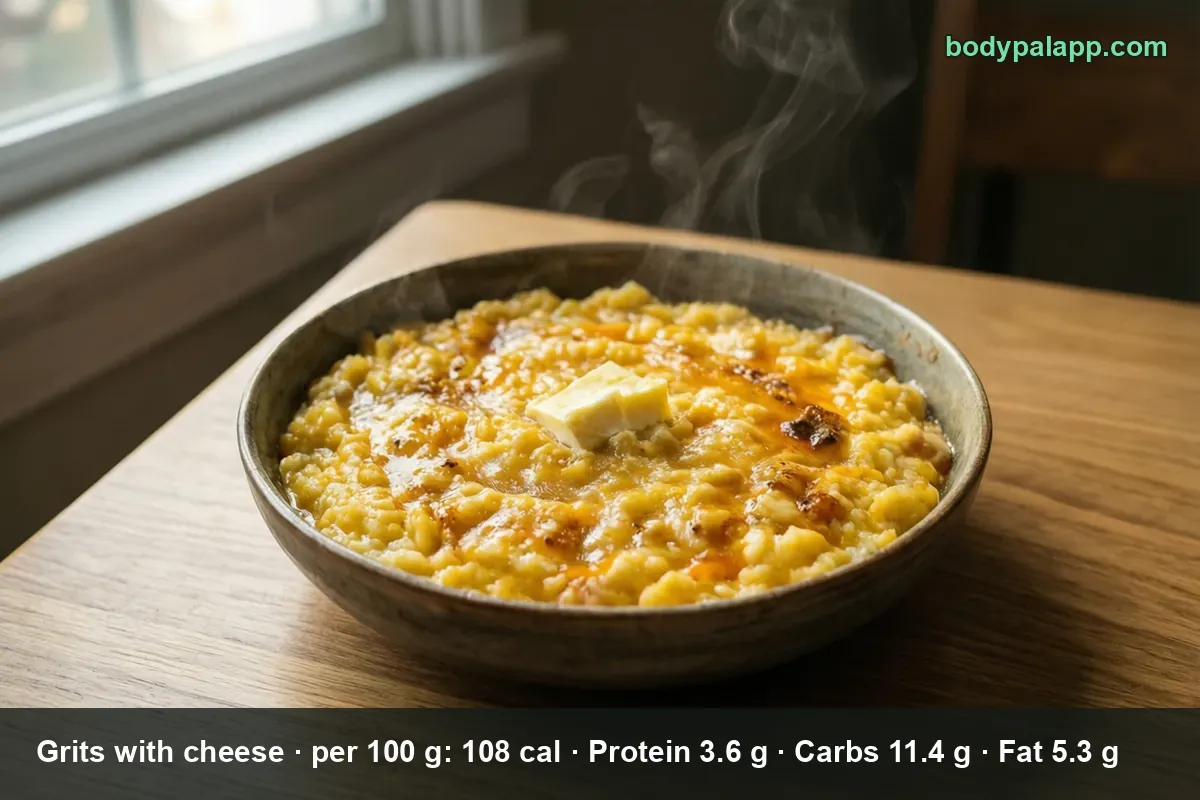
The record behind every number on this page is FNDDS 2708369, "Grits, with cheese, fat added", from the 2021-2023 survey release. That is the bowl in the photograph: stone-ground or quick grits cooked soft, cheese stirred through, a pat of butter melting on top. USDA also keeps a "NS as to fat" version for cases where the survey respondent could not say whether fat went in, and it carries an identical nutrient profile.
The version with no added fat exists too, and it is the rarer order in a diner. If you cook yours without butter, use the numbers in the variants table further down instead of this one.
| Nutrient | Per 100 g | Per 1 cup, cooked (240 g) | % Daily Value |
|---|---|---|---|
| Calories | 108 | 259 | — |
| Total fat | 5.28 g | 12.7 g | 16% |
| Saturated fat | 2.7 g | 6.5 g | 32% |
| Carbohydrate | 11.36 g | 27.3 g | 10% |
| Dietary fiber | 0.6 g | 1.4 g | 5% |
| Total sugars | 0.12 g | 0.3 g | — |
| Protein | 3.56 g | 8.5 g | 17% |
| Sodium | 143 mg | 343 mg | 15% |
% Daily Value is based on a 2,000-calorie diet.
Verified nutrition data
Numbers on this page come from USDA FoodData Central, the U.S. Department of Agriculture’s food composition database, and from manufacturer labels where a branded product is named. Last verified September 2026. How we verify our data →
Two rows you would see on a package are missing here on purpose: added sugars and trans fat are not published for FNDDS mixed dishes, so there is nothing honest to put in those cells. Cholesterol and potassium are published — a cup gives 31 mg of cholesterol (10% DV) and 65 mg of potassium (1% DV), which makes cheese grits a poor potassium source by any measure. The Daily Values used throughout come from the FDA nutrition label reference.
US servings, from a half cup to a dry packet
| Serving | Weight | Calories |
|---|---|---|
| 1 oz | 28 g | 31 kcal |
| 1/2 cup, cooked | 120 g | 130 kcal |
| 1 cup, cooked | 240 g | 259 kcal |
| 1 packet, dry, yields | 148 g | 160 kcal |
| 1 oz, dry, yields | 185 g | 200 kcal |
| Per 100 g | 100 g | 108 kcal |
Here is the trap that ruins more grits entries than anything else. USDA lists two things that both say "1 oz," and they are nowhere near each other. One ounce of the finished bowl is 28 g and 31 calories. One ounce of dry grits, once it takes on water, yields 185 g of cooked cereal and 200 calories. Pick the wrong one and you are off by a factor of six.
The cup and the two dry-yield rows are USDA household measures. The half cup and the plain 1 oz row are our own arithmetic from the USDA 100 g figure, not USDA servings, which is why they land on round-ish numbers. If you eat grits as a side next to eggs, the half cup is usually the honest entry; the full cup is a breakfast in its own right.
Butter, no butter, and the instant packet
| Version | Per 100 g | Typical serving | Calories |
|---|---|---|---|
| Cheese grits, fat added | 108 kcal | 1 cup, cooked (240 g) | 259 kcal |
| Cheese grits, no added fat | 97 kcal | 1 cup, cooked (240 g) | 233 kcal |
| Cheese grits, NS as to fat | 108 kcal | 1 cup, cooked (240 g) | 259 kcal |
| Quaker Instant Grits Cheese Lovers, dry | 356 kcal | 1 packet (28 g) | 100 kcal |
| Plain instant grits, water, fat added | 85 kcal | 1 cup, cooked (240 g) | 204 kcal |
| Grits, NFS | 71 kcal | 1 cup, cooked (240 g) | 170 kcal |
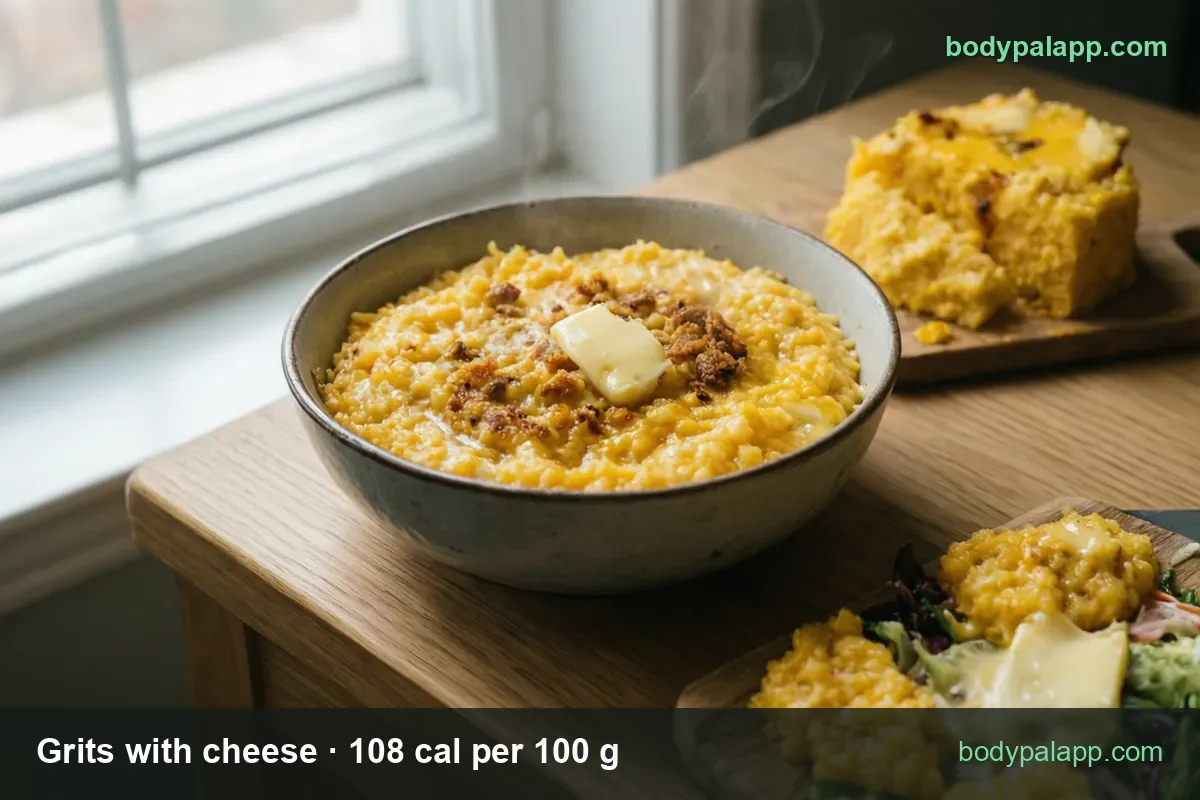
Leaving the butter out saves less than people expect: 26 calories on a full cup, 108 down to 97 per 100 g. What actually moves is the saturated fat, and that is the section below.
The instant packet needs its own warning. At 356 calories per 100 g it looks like the worst thing in the table, but that is a dry powder. One 28 g packet is 100 calories, and the water you stir into it is what brings the finished bowl back down near 108 per 100 g. Anything you add after that — a second packet, shredded cheddar, a pat of butter, a spoon of bacon grease — is stacked on top and has to be logged separately.
Grits, NFS is the entry to use when someone else cooked them and you have no idea what went in. At 170 calories a cup it assumes plain, and it will understate a cheesy restaurant bowl by around 89 calories.
Saturated fat and sodium, not the carbs
Look at the Daily Value column again and the story flips. Carbohydrate, the thing grits get blamed for, is only 10% DV in a full cup. Saturated fat is 32%. That single bowl uses roughly a third of the day's saturated fat before you have touched the bacon or the sausage gravy, and the Dietary Guidelines for Americans put the ceiling at less than 10% of calories.
Cook the same grits without added butter and the saturated fat drops from 6.5 g to 5.1 g, from 32% DV to 25%. That is a bigger proportional cut than the 26-calorie saving suggests, and it is the change worth making if your doctor has flagged saturated fat rather than weight.
Sodium sits at 343 mg a cup, 15% DV — moderate, not alarming, and equal to about a seventh of a teaspoon of table salt. The salt shaker at the table and a heavily seasoned restaurant version are what push it. Fiber is the weak spot at 1.4 g, 5% DV, because grits are a refined corn cereal; MyPlate's grains guidance asks for half your grains to be whole, and this bowl is not one of them.
If you are eating cheese grits for satiety, the 8.5 g of protein per cup is doing more work than the volume is. If you are eating them to cut calories, the honest move is a half cup plus eggs rather than a full cup on its own.
How do cheese grits compare?
| Grain bowl | Per 100 g | US serving | Calories |
|---|---|---|---|
| Cheese grits, fat added | 108 kcal | 1 cup, cooked (240 g) | 259 kcal |
| Instant grits, water, fat added | 85 kcal | 1 cup, cooked (240 g) | 204 kcal |
| Grits, NFS | 71 kcal | 1 cup, cooked (240 g) | 170 kcal |
| Cornmeal mush, fat added | 71 kcal | 1 cup, cooked (240 g) | 170 kcal |
Our take: cheese grits are the heaviest bowl on this list, about half again the calories of plain grits for the same 240 g, and the gap is 89 calories and 8.3 g of fat. That is a fair trade if the bowl is your meal, because the cheese takes protein from 1.19 g to 3.56 g per 100 g and plain grits leave most people hungry an hour later. If grits are a side dish next to eggs and bacon, plain or instant is the smarter pick and the cheese is better spent on the eggs. Cornmeal mush and plain grits are nutritionally the same bowl under two names, so do not agonize over which one you log.
Most popular grits with cheese brands in the United States
Ranked by how widely each product appears among foods sold in the United States, from the BodyPal food database of over 3.3 million products. Calories are the figures printed on each Nutrition Facts label, checked against USDA FoodData Central.
| Product | Calories (per 100 g) |
|---|---|
| Quaker Instant Grits Cheese Lovers | 356 cal |
Brand popularity: BodyPal food database. Nutrition: manufacturer labels / USDA FoodData Central.
Cheese grits FAQs
How many calories are in 1 cup of cheese grits?
A 1-cup serving, 240 g cooked, has 259 calories when the grits are made with cheese and added fat. That works out to 108 calories per 100 g. The same cup carries 8.5 g of protein, 27.3 g of carbohydrate and 12.7 g of fat, so it eats more like a small meal than a side.
How many calories in cheese grits without butter?
233 calories a cup. The USDA record for cheese grits with no added fat runs 97 calories per 100 g against 108 with fat, so a 240 g bowl drops 26 calories. Saturated fat falls further, from 6.5 g to 5.1 g, because the butter is the fattier half of the pair.
How many calories in a half cup of cheese grits?
About 130 calories for 120 g, our own arithmetic from the USDA 100 g figure rather than a listed USDA serving. That half bowl brings 4.3 g of protein, 13.6 g of carbohydrate and 6.3 g of fat. A half cup next to eggs is the portion most home cooks actually plate.
How many carbs are in cheese grits?
27.3 g in a 1-cup serving, which is 10% of the Daily Value, with 1.4 g of that as fiber and only 0.3 g as sugar. Per 100 g the count is 11.36 g. Grits are a refined corn cereal, so the carbohydrate arrives with very little fiber attached to it.
How much protein is in cheese grits?
8.5 g in a 240 g cup, 17% of the Daily Value, from 3.56 g per 100 g. The cheese supplies most of it, since plain grits carry only 1.19 g per 100 g. If you want the bowl to hold you until lunch, an egg or two alongside is the cheapest way to raise that number.
How many calories in a packet of instant cheese grits?
100 calories for one 28 g dry packet of Quaker Instant Grits Cheese Lovers, which is 356 calories per 100 g dry. The dry figure looks alarming next to 108 for the cooked bowl, but the water you stir in is the entire difference. Extra butter or cheese sits on top of the 100.
Are cheese grits high in sodium?
343 mg in a cup, 15% of the 2,300 mg Daily Value, so moderate rather than high before anyone reaches for the salt shaker. That is roughly a seventh of a teaspoon of table salt. Restaurant and instant versions season harder, and a salted pat of butter on top climbs faster still.
Cheese grits vs plain grits: how do the calories compare?
259 calories a cup versus 170 for plain grits, about half again as much for the same 240 g bowl. Instant grits made with water and fat added land between them at 204. The cheese and butter add 89 calories and 8.3 g of fat, and take protein from 1.19 g to 3.56 g per 100 g.
Similar foods
- Yogurt With Topping — 129 cal per container
- Yoplait Yogurt — 179 cal per cup
- Egg White Scrambled — 135 cal per cup
- Cottage Cheese — 206 cal per cup
- Noosa Yogurt — 270 cal per container
- Fruit Yogurt — 158 cal per container
Count it without the math
Point the camera at the bowl and BodyPal counts the grits, the cheese and the butter for you.


How long does it take to burn off cheese grits?
A 1-cup (240 g) serving is 259 kcal. Enter your weight and the amount you ate to see how long it takes you to burn that off:
lb
| Activity | Time to burn 259 kcal |
|---|---|
| Walking, brisk | 52 min |
| Cycling, moderate | 32 min |
| Swimming, moderate | 37 min |
| Jogging | 30 min |
| Weight training, moderate | 58 min |
Times are for a 155 lb adult at a steady pace; change the weight to see yours. The amount is set to the portion in the text (240 g); change it to what you actually ate. BodyPal works this out from your steps automatically.
One food is easy to picture; a whole day is harder. See how many calories you need a day and what a deficit actually looks like.