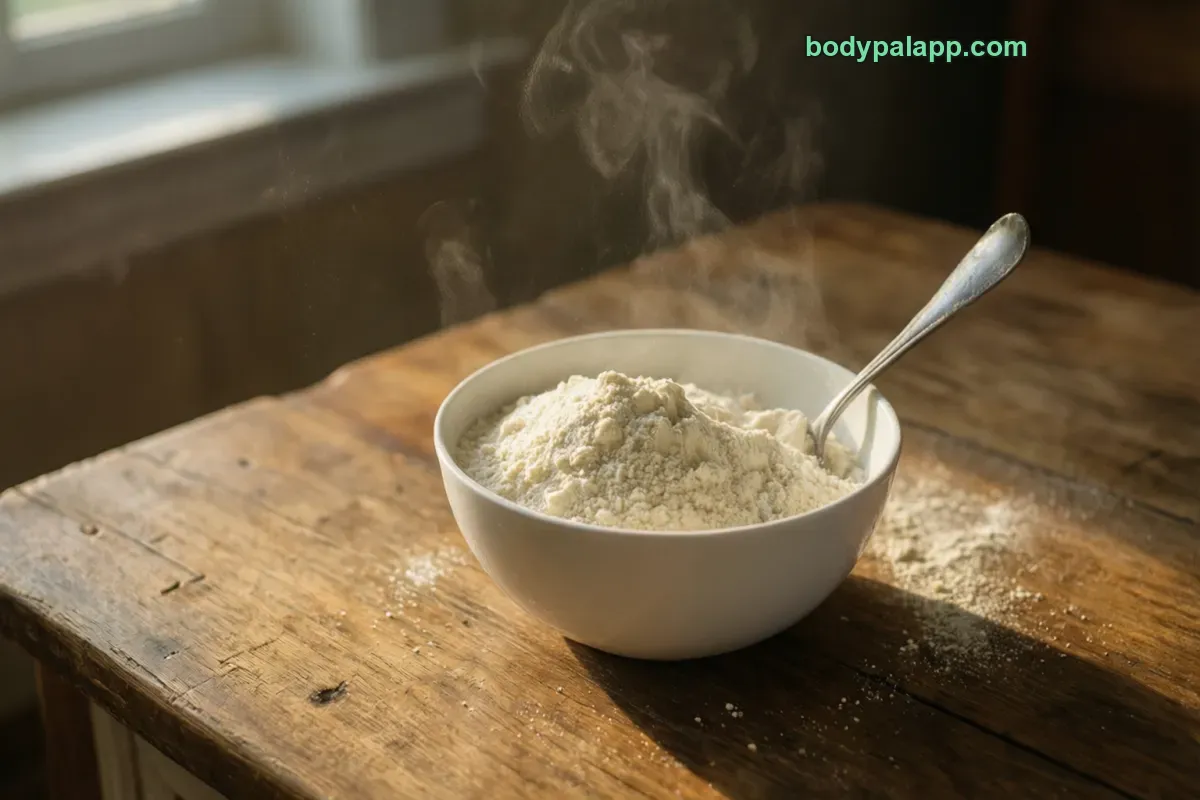
Milk powder calories come to 635 for 1 cup (128 g) and 496 per 100 g of dry whole milk powder. What to notice is the density: one 1/4 cup scoop has 159 calories, and fat supplies 48% of them, more than either protein or carbohydrate.
635kcal
1 cup · 128 g, dry, whole milk
21%protein
34 gProtein
49 gCarbs
34 gFat
How to burn off 635 kcal
—Walking, brisk
—Jogging
—Cycling, moderate
—Swimming
Skip the math. BodyPal counts these calories from your steps and workouts automatically.
Nutrition facts
Dry, whole milk · per 128 g
Calories
635 kcal
Protein
34 g
Carbohydrate
49 g
Fat
34 g
Saturated fat
21 g
Cholesterol
124 mg
Sodium
475 mg
Potassium
1702 mg
Iron
0.6 mg
Source: USDA FoodData Central
🛡️
Verified nutrition data
Numbers on this page come from USDA FoodData Central, the U.S. Department of Agriculture’s food composition database, and from manufacturer labels where a branded product is named. Last verified September 2026. How we verify our data →
Milk powder: calories, protein and sodium by serving
Percent of daily value uses the FDA reference of 2,000 kcal a day.
Serving
kcal
Protein
Carbs
Fat
Sodium
% DV kcal
1 cup (128 g)
635
33.7 g
49.2 g
34.2 g
475 mg
32%
1/4 cup (32 g)
159
8.4 g
12.3 g
8.5 g
119 mg
8%
100 g
496
26.3 g
38.4 g
26.7 g
371 mg
25%
3 × 1 cup (128 g)
1,905
101.1 g
1,425 mg
5 × 1 cup (128 g)
3,174
168.4 g
2,374 mg
A 1/4 cup scoop is 159 calories, a full cup is 635
Milk powder is water-free milk, so a small volume carries a lot of energy. A 1/4 cup (32 g) scoop gives 159 calories, 8.4 g protein and 8.5 g fat. That is 8% of a 2,000-calorie daily value, a modest hit for something you stir into coffee or a smoothie.
The full cup is a different story. At 128 g it delivers 635 calories, 32% of the daily value, along with 33.7 g protein, or 67% of the protein daily value. Nobody eats a cup straight, but recipes for baked goods, homemade mixes and bulk shakes often call for that much or more.
Scale it up and the totals climb fast. Two cups come to 1,270 calories, three cups to 1,905, and five cups to 3,174. If you mix a big batch and portion it out over the week, weigh the powder once so you know what each serving really holds instead of guessing from a heaping spoon.
Fat brings nearly half the calories
Of every calorie in whole milk powder, 48% comes from fat, 31% from carbohydrate and 21% from protein. Per 100 g that works out to 26.7 g fat, 38.4 g carbs and 26.3 g protein. The fat share is what separates whole milk powder from skimmed versions and from protein powders.
Saturated fat makes up most of that fat: 16.7 g per 100 g, set against a daily value of 20 g. A heavy-handed cup in a recipe takes you well past that line on its own, so if you track saturated fat, this is the number to log carefully.
Protein is still respectable. At 26.3 g per 100 g it beats most foods in the dairy aisle on a weight basis, simply because the water is gone. The trade is that every gram of protein arrives with roughly a gram of fat and more than a gram of sugar.
All the carbs are sugar, and sodium adds up
Every gram of carbohydrate in milk powder is listed as sugar: 38.4 g per 100 g, 12.3 g per 1/4 cup and 49.2 g per cup. Plain whole milk powder has no added sweetener, so this is the milk's own sugar, concentrated. Fiber is 0, so nothing slows it down on the label.
Sodium is the quieter row. A 1/4 cup carries 119 mg, 5% of the daily value, which barely registers. A full cup reaches 475 mg, or 21%, and two cups land at 950 mg. If you watch sodium and use the powder in baking, count it alongside the salt in the recipe.
Two other rows stand out per 100 g. Cholesterol is 97 mg against a daily value of 300 mg, and potassium is 1,330 mg, a solid amount for a pantry staple. Both shrink in proportion when you stick to scoop-sized servings.
Use it as an ingredient, not a drink base by the cup
Milk powder works best as a measured add-in. A scoop in oatmeal, coffee or a smoothie adds creaminess and some protein for 159 calories. Pair it with fruit or oats if you want fiber, since the powder brings none of its own.
Flavored products such as Nestle Strawberry Milk Powder or Nestle Chocolate Flavor Milk Powder are a separate case. Their labels differ from plain dry whole milk, so check the package rather than borrowing the numbers on this page.
If you are counting calories, the simplest habit is to level the scoop and log it every time, because powder settles and packs. BodyPal can log milk powder from a photo of your mug or bowl, which helps when it is mixed into something and hard to see.
How does milk powder compare?
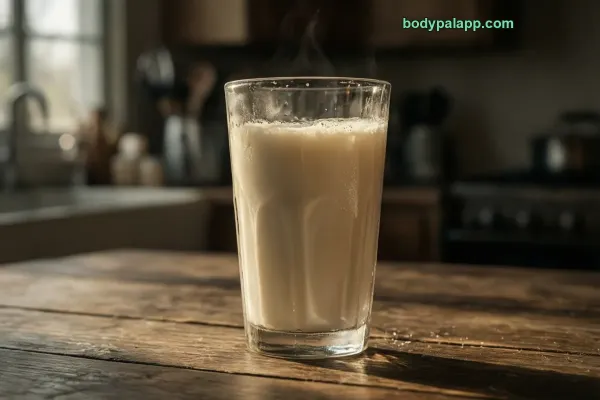
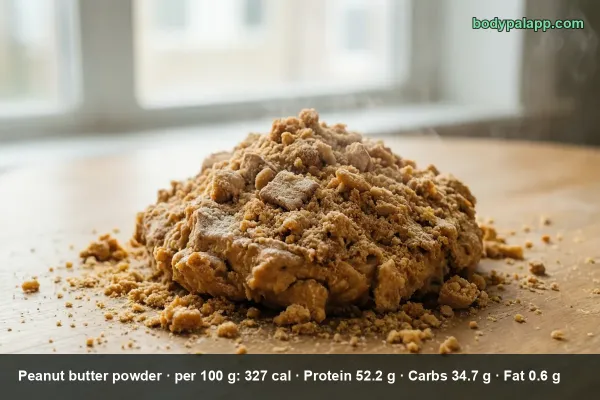
Here is milk powder next to a glass of milk, semi-skimmed milk and peanut butter powder, per 100 g and per usual serving.
Verdict: If you want protein for the fewest calories, peanut butter powder wins with 52.2 g protein and only 0.6 g fat per 100 g at 327 calories, against 26.3 g protein and 26.7 g fat in milk powder. For a drink, a glass of milk at 149 calories or semi-skimmed milk at 122 is the lighter route to dairy than spooning up powder at 496 calories per 100 g.
Most popular milk powder brands in the United States
These are sweetened, flavored milk powders, so they read lower than plain dry whole milk. Source: manufacturer labels / USDA FoodData Central.
Milk powder FAQs
How many calories are in a cup of milk powder?
One cup (128 g) of dry whole milk powder has 635 calories, and a quarter cup (32 g) has 159.
Is milk powder good for weight loss?
It is calorie-dense at 496 calories per 100 g, with 26.7 g of fat and 38.4 g of sugar per 100 g.
Milk powder vs a glass of milk: which has more calories?
Per 100 g, dry whole milk powder has 496 calories and a glass of milk has 60. The difference is mostly water, since powder is dried milk.
How much protein is in milk powder?
Dry whole milk powder has 26.3 g of protein per 100 g, which is 8.4 g per quarter cup (32 g) and 33.7 g per cup (128 g).
How many calories are in 1/4 cup of milk powder?
A 1/4 cup (32 g) of dry whole milk powder has 159 calories. It also gives 8.4 g protein, 8.5 g fat and 12.3 g sugar, about 8% of a 2,000-calorie daily value.
How much fat is in milk powder?
Whole milk powder has 26.7 g fat per 100 g, of which 16.7 g is saturated. Fat supplies 48% of its calories, and a full cup holds 34.2 g fat.
How much sugar is in milk powder?
Milk powder has 38.4 g sugar per 100 g, which equals all of its carbohydrate. A 1/4 cup holds 12.3 g and a full cup 49.2 g, with 0 g fiber.
Is milk powder high in sodium?
Moderately. Milk powder has 371 mg sodium per 100 g. A 1/4 cup gives 119 mg, 5% of the daily value, while a full cup reaches 475 mg, or 21%.
How much potassium and cholesterol does milk powder have?
Per 100 g, milk powder has 1,330 mg potassium and 97 mg cholesterol. The cholesterol figure compares with a daily value of 300 mg, so scoop-sized servings keep it small.