
How many calories are in pork gyoza?
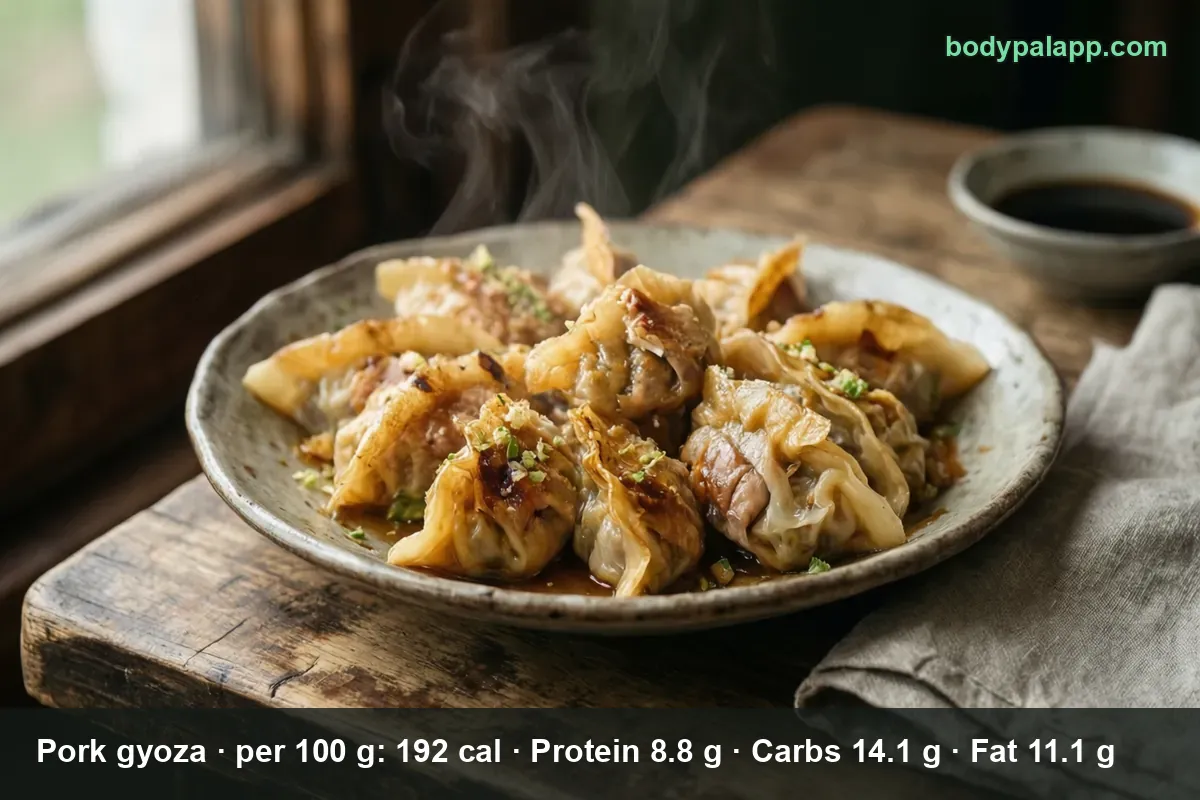
Six pan-fried pork gyoza weigh about 150 g and carry 288 calories. Per 100 g the same dumplings run 192 calories, so a single 25 g piece is 48. Order them steamed instead and the plate drops to 170. The filling barely moves the number; the pan does.
On this page
- Pork gyoza quick facts
- US servings from one piece to a plate of eight
- Steamed frozen and meat free versions
- Sodium is the row to watch
- How does pork gyoza compare
- Most popular pork gyoza brands
- FAQ
Pork gyoza quick facts
USDA has no record called "pork gyoza." What it has is FNDDS 2708705, "Wonton, dumpling or pot sticker, fried", and that is the right row for the plate most people are looking at: dumplings finished in oil in a hot pan, crisp on the bottom, steamed on top. Meat is the default filling in that record, since the database keeps a separate line for the meat-free version.
One oddity is worth knowing before you trust any single figure. FNDDS also publishes 2708706, "fried, no meat," with numbers identical to the meat row down to the last decimal. That is a limitation of how mixed dishes are modeled, not a claim that pork and cabbage cost the same. Treat 192 calories per 100 g as the fried-dumpling average, meat or not.
| Nutrient | Per 100 g | Per 6 pieces (150 g) | % Daily Value |
|---|---|---|---|
| Calories | 192 | 288 | — |
| Total fat | 11.13 g | 16.7 g | 21% |
| Saturated fat | 2.53 g | 3.8 g | 19% |
| Carbohydrate | 14.05 g | 21.1 g | 8% |
| Dietary fiber | 1.5 g | 2.3 g | 8% |
| Total sugars | 2.92 g | 4.4 g | — |
| Protein | 8.76 g | 13.1 g | 26% |
| Sodium | 467 mg | 701 mg | 30% |
% Daily Value is based on a 2,000-calorie diet.
Verified nutrition data
Numbers on this page come from USDA FoodData Central, the U.S. Department of Agriculture’s food composition database, and from manufacturer labels where a branded product is named. Last verified September 2026. How we verify our data →
Two rows you would see on a retail package are missing here: added sugars and trans fat. USDA does not publish either for this FNDDS record, so rather than guess we leave them out. Cholesterol comes in at 18 mg per 100 g, or 27 mg for six pieces, which is 9% of the Daily Value. Potassium runs 301 mg per 100 g, 452 mg per six pieces, 10% of the Daily Value.
US servings from one piece to a plate of eight
| Serving | Weight | Calories |
|---|---|---|
| 1 piece, any size | 25 g | 48 kcal |
| 1 oz | 28 g | 54 kcal |
| 1 cup | 75 g | 144 kcal |
| 6 pieces, one order | 150 g | 288 kcal |
| 8 pieces, a shared plate | 200 g | 384 kcal |
| Per 100 g | 100 g | 192 kcal |
Only two of those are USDA household measures: the single piece at 25 g and the cup at 75 g. The ounce, the six and the eight are our own arithmetic from the USDA 100 g figure, not USDA servings.
The cup is the line that trips people up. A cup of gyoza holds about three pieces, because dumplings are mostly air once they are stacked in a measuring cup. If you log "1 cup" thinking you covered the whole appetizer order, you are 144 calories short of a six-piece plate. Count pieces instead; it is the one food where the household measure is worse than simply counting.
The 25 g piece is also a USDA average, not a promise. Restaurant gyoza are frequently 30 to 35 g apiece, which by the same 100 g math is 58 to 67 calories each. Eight of those land closer to 460 calories than 384.
Steamed frozen and meat free versions
| Version | Per 100 g | Typical serving | Calories |
|---|---|---|---|
| Pan-fried pork gyoza | 192 kcal | 6 pieces (150 g) | 288 kcal |
| Steamed pork gyoza | 113 kcal | 6 pieces (150 g) | 170 kcal |
| Frozen, uncooked from the bag | 136 kcal | 5 pieces (145 g) | 197 kcal |
| Vegetable dumpling, no meat | 125 kcal | 1 cup (75 g) | 94 kcal |
| Gyoza wrappers only | 283 kcal | 12 wrappers (60 g) | 170 kcal |
| Gyoza dipping sauce | 77 kcal | 1 Tbsp (13 g) | 10 kcal |
Steaming is the single biggest lever on this page. The same dumpling, same filling, same wrapper, costs 113 calories per 100 g steamed against 192 fried, because fat falls from 11.13 g to 4.6 g per 100 g. Across six pieces that is 170 calories versus 288. Nothing else you can change about a gyoza saves 118 calories.
The frozen row is the one that quietly breaks calorie logs. Uncooked pork and vegetable potstickers straight from the bag are 136 calories per 100 g. That is the number the package math is built on, and it is honest for what is in the bag. Cook them the way the bag tells you to, in oil, and the USDA cooked record reads 192 per 100 g, roughly 41 percent higher. Log the cooked figure unless you are steaming or boiling.
Wrappers deserve a mention because they explain the shape of the food. Plain gyoza wrappers are 283 calories per 100 g, denser than the finished dumpling, since the filling brings water with it. The pastry, not the pork, is where most of the 14.05 g of carbohydrate comes from. Strip the meat out entirely and the plain dumpling row drops to 125 calories per 100 g but also to 3.45 g of protein, which is the trade.
Retail packs sit near the USDA fried number, not the steamed one. Bibigo pork and vegetable mandu run 229 calories per 100 g, with 321 for the four-piece 140 g serving on the label; Tai Pei pork potstickers are 168 per 100 g and Synear pork and cabbage 231. The spread across brands is wide enough that the package is always worth reading.
Sodium is the row to watch
Six pan-fried gyoza carry 701 mg of sodium. Against the FDA Daily Value of 2,300 mg that is 30% of a day from an appetizer, and it is roughly a third of a teaspoon of table salt. Protein, at 13.1 g, only reaches 26%. When the salt outruns the protein in a food built on ground pork, the wrapper seasoning and the soy in the filling are doing it.
Then there is the dip. A tablespoon of gyoza dipping sauce is only 10 calories, which makes it one of the cheapest flavor buys in a restaurant, but it adds about 310 mg of sodium. Two tablespoons over a plate of eight and you are past half the day's sodium before the entrée arrives.
Steaming helps here too, though less than it helps with calories: 368 mg per 100 g steamed against 467 mg fried. If sodium is something you are tracking, the CDC's guidance on cutting back is straightforward, and with gyoza the practical move is skipping the sauce rather than skipping the dumplings. On the protein side, 13.1 g from six pieces is a real contribution toward a day's protein foods, even if it arrives wrapped in dough.
How does pork gyoza compare
| Dumpling | Per 100 g | US serving | Calories |
|---|---|---|---|
| Pork gyoza, pan-fried | 192 kcal | 6 pieces (150 g) | 288 kcal |
| Gyoza, steamed | 113 kcal | 1 cup (75 g) | 85 kcal |
| Pork potstickers, frozen, uncooked | 136 kcal | 5 pieces (145 g) | 197 kcal |
| Pierogies, potato or cheese filled | 195 kcal | 3 pierogies (114 g) | 222 kcal |
Our take: pan-fried gyoza and pierogies land in the same place per 100 g, 192 against 195, but they get there differently. Gyoza spend their calories on fat and protein, 11.13 g and 8.76 g per 100 g; pierogies spend theirs on starch, 29.64 g of carbohydrate against 14.05 g, with only 5.26 g of protein. For a filling appetizer with some protein in it, gyoza win. For the lightest plate on the table, order them steamed and the whole question goes away at 113 calories per 100 g.
Most popular pork gyoza brands in the United States
Ranked by how widely each product appears among foods sold in the United States, from the BodyPal food database of over 3.3 million products. Calories are the figures printed on each Nutrition Facts label, checked against USDA FoodData Central.
| Product | Calories (per 100 g) |
|---|---|
| Bibigo Pork & Vegetable Dumplings Mandu | 229 cal |
| Tai Pei Pork Potstickers | 168 cal |
| Annie Chun's Organic Pork & Vegetable Potstickers | 193 cal |
| Kahiki Pork Potstickers | 200 cal |
| Chef One Pork & Chive Dumplings | 169 cal |
| Synear Pork & Cabbage Dumplings | 231 cal |
Brand popularity: BodyPal food database. Nutrition: manufacturer labels / USDA FoodData Central.
Pork gyoza FAQs
How many calories are in one pork gyoza?
One piece is 48 calories at the USDA average weight of 25 g, taken from 192 calories per 100 g for pan-fried dumplings. Restaurant gyoza often run 30 to 35 g, which by the same 100 g math puts one piece nearer 58 to 67 calories. Weigh one if you can.
How many calories in 6 pork gyoza?
Six pan-fried pieces at 150 g come to 288 calories, with 16.7 g fat, 21.1 g carbohydrate and 13.1 g protein. That is a light main course by itself but an expensive appetizer next to a bowl of ramen. Steamed, the same six pieces are 170 calories.
Are steamed gyoza lower in calories than fried gyoza?
Yes, by a wide margin: USDA lists steamed dumplings at 113 calories per 100 g against 192 pan-fried, so six pieces are 170 calories instead of 288. Fat is the gap: 4.6 g per 100 g steamed versus 11.13 g fried. The filling is the same in both records.
How many calories in frozen pork gyoza before cooking?
Frozen, uncooked pork and vegetable potstickers are 136 calories per 100 g, so five pieces at 145 g are 197 calories. That is the raw number on the bag. Pan-fry them in oil and the USDA cooked record jumps to 192 per 100 g, about 41 percent higher.
How much protein is in pork gyoza?
Six pan-fried pieces give 13.1 g of protein, 26% of the Daily Value, from 8.76 g per 100 g. That is decent for a wrapper-heavy food but well under a chicken breast. Wrappers carry the carbohydrate; the pork does the protein work, which is why the plain dumpling row at 3.45 g per 100 g sits lower.
How much sodium is in pork gyoza?
701 mg for six pan-fried pieces, 30% of the 2,300 mg Daily Value, or roughly a third of a teaspoon of table salt. A tablespoon of dipping sauce adds about 310 mg on top. Steamed dumplings are lower at 368 mg per 100 g against 467, but neither is a low-sodium food.
Is pork gyoza good for weight loss?
Steamed, yes: six pieces for 170 calories with 10.4 g of protein is a solid trade. Pan-fried at 288 calories for the same six is still workable, but the oil adds 118 calories you cannot taste. The dipping sauce is cheap at 10 calories per tablespoon.
Are gyoza and potstickers the same thing?
Nutritionally, yes: USDA files gyoza under one record, Wonton, dumpling or pot sticker, at 192 calories per 100 g fried and 113 steamed. Gyoza is the Japanese version with a thinner wrapper and finer filling; potsticker is the Chinese-American name. The calorie math does not separate them.
Similar foods
- 93 Lean Ground Beef — 163 cal per 3 oz
- Flank Steak — 163 cal per 3 oz
- Beef Sandwich — 223 cal per sandwich
- Tuna With Mayo — 231 cal per half cup
- Pierogi — 78 cal per pierogi
- Crab Salad — 391 cal per cup
Count it without the math
Point the camera at the plate and BodyPal counts the gyoza for you, sauce and all.


How long does it take to burn off pork gyoza?
A 6-piece serving (150 g) is 288 kcal. Enter your weight and the amount you ate to see how long it takes you to burn that off:
lb
| Activity | Time to burn 288 kcal |
|---|---|
| Walking, brisk | 58 min |
| Cycling, moderate | 36 min |
| Swimming, moderate | 41 min |
| Jogging | 34 min |
| Weight training, moderate | 1 hr 4 min |
Times are for a 155 lb adult at a steady pace; change the weight to see yours. The amount is set to the portion in the text (150 g); change it to what you actually ate. BodyPal works this out from your steps automatically.
Want the bigger picture? Calculate your daily calorie needs — your maintenance figure, a target for losing or gaining, and the date you get there.