
How many calories are in a salad?
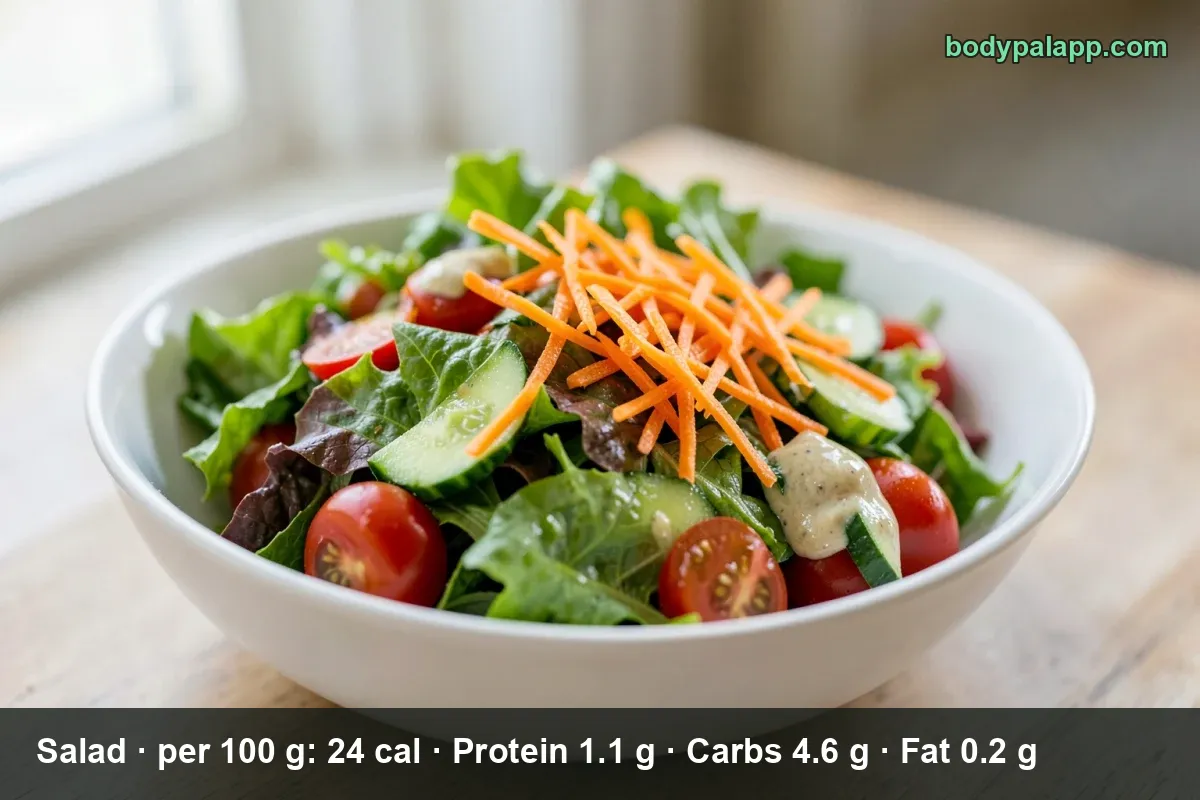
A side salad of leaves, tomato and cucumber weighs 94 g and carries 23 calories. Per 100 g the same bowl is 24 calories — lighter than almost anything else you can put on a plate. Undressed, that is. What lands on top of the leaves decides the rest of this page.
On this page
- Salad quick facts
- US servings from one cup to a dinner bowl
- What goes in the bowl changes the number
- Chicken shrimp and other main course salads
- Dressing is where the calories come from
- Bagged salad kits are a different food
- Fiber and potassium are the rows to watch
- How does salad compare?
- Most popular salad brands
- Salad FAQs
Salad quick facts
Search "salad" in the USDA database and the first screen fills with dressings and oils. Those are a condiment, not the food anyone is trying to log. The row that matches the bowl in the photo — and the bowl most people mean — is FNDDS 2709822, "Lettuce, salad with assorted vegetables including tomatoes and/or carrots, no dressing". Leaves, tomato, a little carrot or cucumber, nothing poured on top.
USDA gives that record a household serving of 94 g, described as one side salad. Everything below is built from it.
| Nutrient | Per 100 g | Per 1 side salad (94 g) | % Daily Value |
|---|---|---|---|
| Calories | 24 | 23 | — |
| Total fat | 0.2 g | 0.2 g | 0% |
| Saturated fat | 0.04 g | 0.0 g | 0% |
| Carbohydrate | 4.58 g | 4.3 g | 2% |
| Dietary fiber | 1.5 g | 1.4 g | 5% |
| Total sugars | 1.9 g | 1.8 g | — |
| Protein | 1.07 g | 1.0 g | 2% |
| Sodium | 39 mg | 37 mg | 2% |
% Daily Value is based on a 2,000-calorie diet.
Verified nutrition data
Numbers on this page come from USDA FoodData Central, the U.S. Department of Agriculture’s food composition database, and from manufacturer labels where a branded product is named. Last verified September 2026. How we verify our data →
Two label rows are missing on purpose. USDA's FNDDS survey records do not publish added sugars or trans fat, so neither can be shown here honestly. Cholesterol is 0 mg, as you would expect from a bowl with no animal food in it, and potassium comes to 256 mg in the 94 g serving, 5% of the Daily Value. The %DV reference amounts are FDA's.
US servings from one cup to a dinner bowl
| Serving | Weight | Calories |
|---|---|---|
| 1 oz | 28 g | 7 kcal |
| 1 cup | 73 g | 18 kcal |
| 1 side salad | 94 g | 23 kcal |
| 2 cups | 146 g | 35 kcal |
| 3 cups, dinner bowl | 219 g | 53 kcal |
| Per 100 g | 100 g | 24 kcal |
Only two of those are USDA household measures: the 73 g cup and the 94 g side salad. The ounce, the two-cup portion and the three-cup dinner bowl are our own arithmetic from the USDA 100 g figure, not USDA servings.
Here is the trap in the cup. Leaves do not pack, so a cup of salad is 73 g while a cup of, say, cooked rice is more than twice that weight. It also means "a bowl of salad" spans a three-fold range: 18 calories in a small cup, 53 in the dinner bowl you actually eat from. At these numbers the spread barely matters, which is the point — it is one of the few foods where guessing the portion badly costs you fewer than 40 calories.
What goes in the bowl changes the number
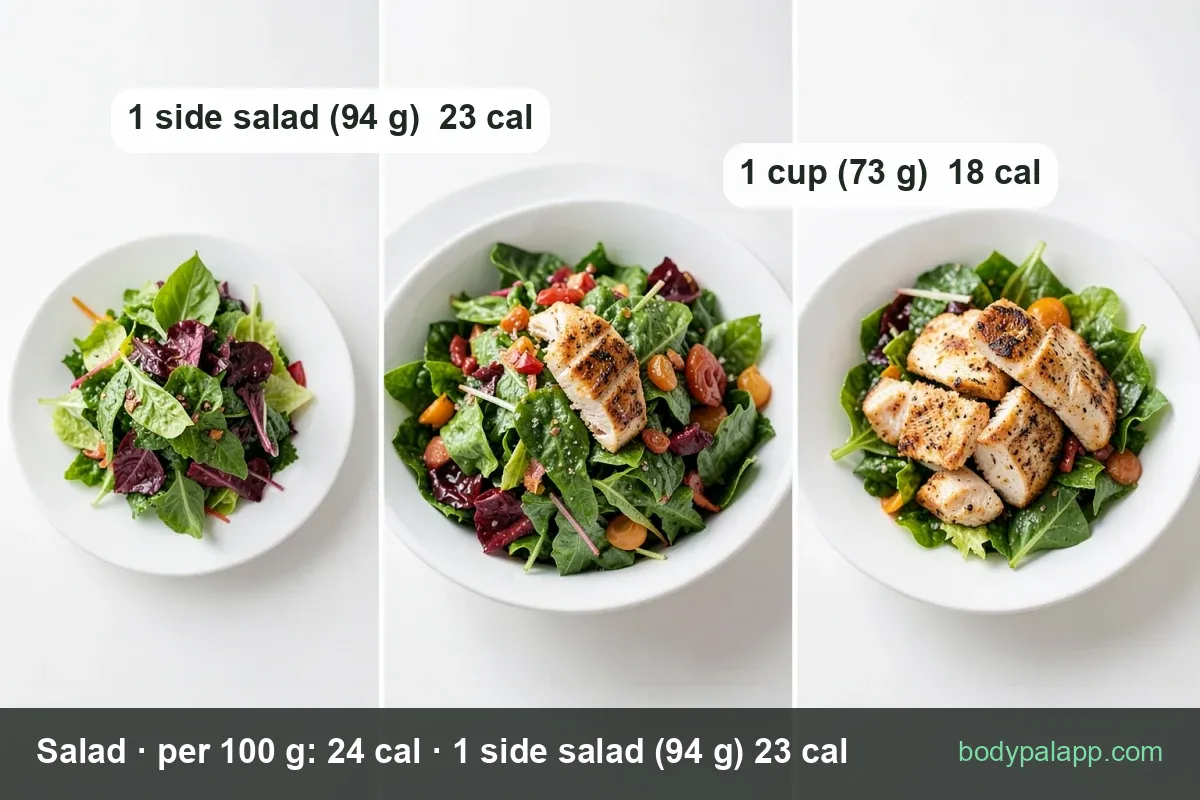
USDA keeps a separate record for each common mix, all of them still undressed. Lined up side by side, the ingredient list moves the calories four-fold before a drop of dressing is involved.
| Salad, no dressing | Per 100 g | Per 94 g bowl | What moves it |
|---|---|---|---|
| Mixed salad greens only | 21 kcal | 20 kcal | leaves alone, no vegetables |
| Leaves, tomato and carrot (base row) | 24 kcal | 23 kcal | the standard side salad |
| Leaves without tomato or carrot | 23 kcal | 22 kcal | 1.55 g sugars instead of 1.9 g |
| Greek, feta and olives | 48 kcal | 45 kcal | 246 mg sodium per 100 g |
| With egg | 50 kcal | 47 kcal | protein up to 3.4 g per 100 g |
| With avocado | 54 kcal | 51 kcal | 3.39 g fat, 2.7 g fiber |
| Caesar with romaine | 77 kcal | 72 kcal | croutons and Parmesan |
| With cheese | 91 kcal | 86 kcal | 3.37 g saturated fat per 100 g |
The 100 g column is USDA. The 94 g column is our own arithmetic, scaled so every row can be read against the 23-calorie base salad.
Three things worth taking from that table. Egg costs about the same as avocado, 50 against 54 per 100 g, but the egg version brings 3.4 g of protein per 100 g while the avocado version brings 2.7 g of fiber — different jobs for the same calories. Cheese is the expensive add-on, nearly four times the base salad, and it arrives with 146 mg of sodium per 100 g against 39 mg. And a Caesar is already 77 calories per 100 g with no dressing at all, because the croutons and Parmesan are baked into the record.
Chicken shrimp and other main course salads
Once protein goes in, the salad stops being a side and becomes lunch. USDA has records for these too, again with no dressing.
| Main course salad, no dressing | Per 100 g | Typical serving | Calories |
|---|---|---|---|
| Garden salad without tomatoes or carrots | 23 kcal | 1 cup (74 g) | 17 kcal |
| Chicken or turkey garden salad | 64 kcal | 1 cup (90 g) | 58 kcal |
| Chicken Caesar garden salad | 63 kcal | 1 salad (286 g) | 180 kcal |
| Shrimp garden salad | 65 kcal | 1 cup (95 g) | 62 kcal |
| Garden salad with chicken, bacon and cheese | 106 kcal | 1 cup (90 g) | 95 kcal |
| Asian chicken salad with crispy noodles | 116 kcal | 1 cup (90 g) | 104 kcal |
Chicken and shrimp land in the same place, 64 and 65 per 100 g, so the choice between them is about taste rather than calories. Bacon and cheese add roughly two-thirds on top of plain chicken, 106 against 64. The crispy noodles in an Asian chicken salad are the heaviest row in the table at 116, which is a useful reminder that crunch is usually fried.
Note the serving column. A full chicken Caesar salad is 286 g, three times the side-salad serving, so its 180 calories are as much about bowl size as about ingredients.
Dressing is where the calories come from
This is the number that decides everything else. Two tablespoons of ranch dressing weigh 30 g at 430 calories per 100 g, which is 129 calories — more than five times the 23 calories in the salad underneath it.
Put differently: the leaves, tomato and cucumber account for 15% of a dressed side salad, and the ranch accounts for 85%. Nobody free-pours exactly two tablespoons, either, so the real figure at a restaurant is usually higher than that.
Our position is straightforward. If you are counting, the salad itself is not worth measuring carefully — the difference between a small cup and a dinner bowl is 35 calories. The dressing is worth measuring to the tablespoon, and asking for it on the side is the single change that moves the total most.
Bagged salad kits are a different food
A washed bag of plain leaves logs like homemade salad. A kit does not. Marketside Classic Iceberg is 18 calories per 100 g, right next to the 24 of the USDA bowl. Signature Farms Chopped Complete Salad Kit, Southwest Style, is 120, Taylor Farms Southwest Chopped is 140, and Braga Farms Sweet Kale Chopped is 160 — because the dressing packet, cheese, seeds and tortilla strips are counted inside the serving.
Sodium moves with them. The base salad is 39 mg per 100 g; the Signature Farms kit is around 270 mg per 100 g, so the same 94 g helping goes from 37 mg to roughly seven times that. Neither figure is alarming on its own, but a kit belongs in your log as a kit, not as "salad".
Fiber and potassium are the rows to watch
Look at the %DV column again and something odd shows up. A 94 g side salad delivers 5% of the Daily Value for fiber and 5% for potassium, while supplying about 1% of a 2,000-calorie day. That ratio — nutrients well ahead of calories — is the reason salad earns its place, and it is a cleaner argument than any claim about the leaves themselves.
Sodium sits at 37 mg, 2% of the Daily Value, which is a rounding error next to the 2,300 mg limit FDA uses on the label. The Greek and Caesar records tell the other half of the story at 246 mg and 238 mg per 100 g, still before dressing. If you are watching sodium, the plain bowl is the better pick and the feta version is the one to keep an eye on; the Dietary Guidelines treat sodium as one of the components most Americans overshoot.
One practical note from MyPlate: raw leafy greens count at half their cup volume toward the vegetable group. Two cups of leaves count as one cup of vegetables. So a big salad goes less far toward the day's vegetable target than the volume suggests, which is another argument for the tomato, carrot and cucumber in the bowl rather than leaves alone.
How does salad compare?
| Salad, no dressing | Per 100 g | US serving | Calories |
|---|---|---|---|
| Garden salad, leaves with tomato and carrot | 24 kcal | 1 side salad, 94 g | 23 kcal |
| Garden salad without tomato or carrot | 23 kcal | 1 cup, 74 g | 17 kcal |
| Chicken or turkey garden salad | 64 kcal | 1 cup, 90 g | 58 kcal |
| Chicken or turkey Caesar garden salad | 63 kcal | 1 cup, 90 g | 57 kcal |
Our take: the version without tomato and carrot is the only row here lighter than the base salad, and only by 1 calorie per 100 g — leaving out the vegetables saves nothing and costs you the fiber and the color. Chicken and chicken Caesar are within one calorie of each other per 100 g, so the Caesar name is not the problem; the dressing that usually comes with it is. For a side, take the 23-calorie bowl and spend your budget on what goes next to it. For lunch that holds until dinner, the 58-calorie cup of chicken garden salad does far more work per calorie than any bigger pile of leaves.
Most popular salad brands in the United States
Ranked by how widely each product appears among foods sold in the United States, from the BodyPal food database of over 3.3 million products. Calories are the figures printed on each Nutrition Facts label, checked against USDA FoodData Central.
| Product | Calories (per 100 g) |
|---|---|
| Taylor Farms Southwest Chopped Salad | 140 cal |
| Signature Farms Chopped Complete Salad Kit Southwest Style | 120 cal |
| Marketside Classic Iceberg Salad | 18 cal |
| Braga Farms Sweet Kale Chopped Salad | 160 cal |
Brand popularity: BodyPal food database. Nutrition: manufacturer labels / USDA FoodData Central.
Salad FAQs
How many calories are in a side salad?
23 calories for a 94 g side salad of leaves with tomato and cucumber, no dressing, which is 24 calories per 100 g. That is the USDA figure for the undressed bowl. Add two tablespoons of ranch and the same salad becomes 152 calories, dressing included.
How many calories in 1 cup of garden salad?
18 calories in one cup, 73 g on the USDA scale. Two cups come to 35 and a three-cup dinner bowl to 53, both scaled from the 24 calories per 100 g figure rather than taken from a USDA serving. The cup you use at home decides the number.
How many calories does dressing add to a salad?
129 calories for two tablespoons of ranch, 30 g at 430 calories per 100 g. That is more than five times the 23 calories in the salad underneath it. Free pouring is rarely two tablespoons, so ordering the dressing on the side is the single change that matters most here.
How many calories in a Caesar salad without dressing?
77 calories per 100 g for romaine Caesar with croutons and Parmesan and no dressing, which works out to 72 for a 94 g bowl by our own arithmetic from the USDA figure. That is more than three times a plain garden salad, and the dressing has not gone on yet.
Is a chicken salad higher in calories than a garden salad?
Yes, 64 calories per 100 g against 24 for a plain garden salad, so a 90 g cup of chicken garden salad is 58 calories next to 18 for a cup of leaves. The chicken also carries 10.1 g of protein per 100 g, against 1.07 g. This is chicken on greens, not the mayonnaise kind.
Does salad have carbs?
4.58 g per 100 g, which is 4.3 g in a 94 g side salad and 2% of the Daily Value. Of that, 1.4 g is fiber and 1.8 g is naturally occurring sugars from the tomato and carrot. There is no starch here worth counting, which is why the calorie count stays so low.
Is bagged salad the same calories as homemade?
Only if the bag is plain leaves: Marketside Classic Iceberg is 18 calories per 100 g, close to the 24 of a homemade bowl, but Taylor Farms Southwest Chopped runs 140 and Braga Farms Sweet Kale Chopped 160. The dressing, cheese and crunchy toppings in the kit are the difference.
Can salad help with weight loss?
A 94 g bowl at 23 calories gives you 1.4 g of fiber and 256 mg of potassium for almost nothing on the calorie side, which is why it works as a filler in front of a meal. The 129 calories in two tablespoons of ranch are what usually undo it.
Similar foods
- Salad With Dressing — 23 cal per side salad
- Tomato Sauce — 59 cal per cup
- Arugula — 5 cal per cup
- Broccoli Rabe — 21 cal per cup
- Cabbage — 22 cal per cup chopped
- Cabbage Boiled — 17 cal per half cup
Count it without the math
Point the camera at the bowl and BodyPal counts the salad for you, dressing and all.


Burning it off is one side of it. The other is knowing your number: work out how many calories you need a day, with macros and a goal date.