
How Many Calories in a Sushi Roll?
A six-piece salmon sushi roll weighs 180 g and carries 185 calories. Per 100 g the roll runs 103 calories, which puts it among the lightest restaurant carbs you can order. One piece is 31. The number that actually moves is sodium: 630 mg in that roll, before you touch the soy sauce.
On this page
- Sushi roll quick facts
- US servings from one piece to a full roll
- How the filling moves the number
- Sodium is the row to watch
- How does a sushi roll compare?
- Most popular sushi roll brands
- FAQ
Sushi roll quick facts
The record on this page is FNDDS 2708963, "Sushi roll, salmon", from the 2021-2023 survey release. Salmon is the fish Americans order most in a maki roll, and at 103 calories per 100 g it sits second from the top of the seven sushi roll records USDA publishes, which run only from 93 to 116. That makes it a fair stand-in when the menu just says "roll" and you have no idea what went inside.
The serving below is a whole six-piece roll, the way it arrives on the plate. Nothing here includes soy sauce, spicy mayo, eel glaze or a tempura fry, because none of those are part of the record.
| Nutrient | Per 100 g | Per 6 pieces (180 g) | % Daily Value |
|---|---|---|---|
| Calories | 103 | 185 | — |
| Total fat | 1.28 g | 2.3 g | 3% |
| Saturated fat | 0.23 g | 0.4 g | 2% |
| Carbohydrate | 15.3 g | 27.5 g | 10% |
| Dietary fiber | 0.7 g | 1.3 g | 4% |
| Total sugars | 0.92 g | 1.7 g | — |
| Protein | 6.88 g | 12.4 g | 25% |
| Sodium | 350 mg | 630 mg | 27% |
| Cholesterol | 12 mg | 22 mg | 7% |
| Potassium | 101 mg | 182 mg | 4% |
% Daily Value is based on a 2,000-calorie diet.
Verified nutrition data
Numbers on this page come from USDA FoodData Central, the U.S. Department of Agriculture’s food composition database, and from manufacturer labels where a branded product is named. Last verified September 2026. How we verify our data →
Two label rows are missing on purpose. USDA does not publish added sugars or trans fat for any of the survey sushi records, so guessing at them would be worse than leaving them out. The sugar you do see, 1.7 g in a whole roll, is the seasoned rice, not a dessert sauce.
US servings from one piece to a full roll
| Serving | Weight | Calories |
|---|---|---|
| 1 piece | 30 g | 31 kcal |
| 3 pieces, half a roll | 90 g | 93 kcal |
| 6 pieces, one roll | 180 g | 185 kcal |
| 1 cup, cut pieces | 150 g | 155 kcal |
| 1 oz | 28 g | 29 kcal |
| Per 100 g | 100 g | 103 kcal |
The single piece, the six-piece roll and the cut cup are USDA household measures. The half roll and the ounce are our own arithmetic from the USDA 100 g figure, not USDA servings.
Watch the cup. A cup of cut sushi holds 150 g and comes to 155 calories, while the roll it came from weighs 180 g and costs 185. Log a cup when you ate a roll and you are 30 calories short every time, which is the kind of quiet gap that only shows up at the end of the week. If you are eyeballing rather than weighing, count pieces instead: 31 calories each is close enough for a standard maki, and specialty rolls cut thicker pieces than that.
How the filling moves the number
USDA carries seven sushi roll records, and the spread between the lightest and the heaviest is 23 calories per 100 g. Fat drives the top of that range, and missing protein the bottom.
| Roll | Per 100 g | Typical serving | Calories |
|---|---|---|---|
| Salmon | 103 kcal | 6 pieces, 180 g | 185 kcal |
| Tuna | 97 kcal | 6 pieces, 180 g | 175 kcal |
| Shrimp, cooked not tempura | 100 kcal | 6 pieces, 180 g | 180 kcal |
| Eel, unagi | 116 kcal | 6 pieces, 180 g | 209 kcal |
| Avocado | 93 kcal | 6 pieces, 180 g | 167 kcal |
| Vegetable | 93 kcal | 6 pieces, 132 g | 123 kcal |
| California | 94 kcal | no piece weight published | — |
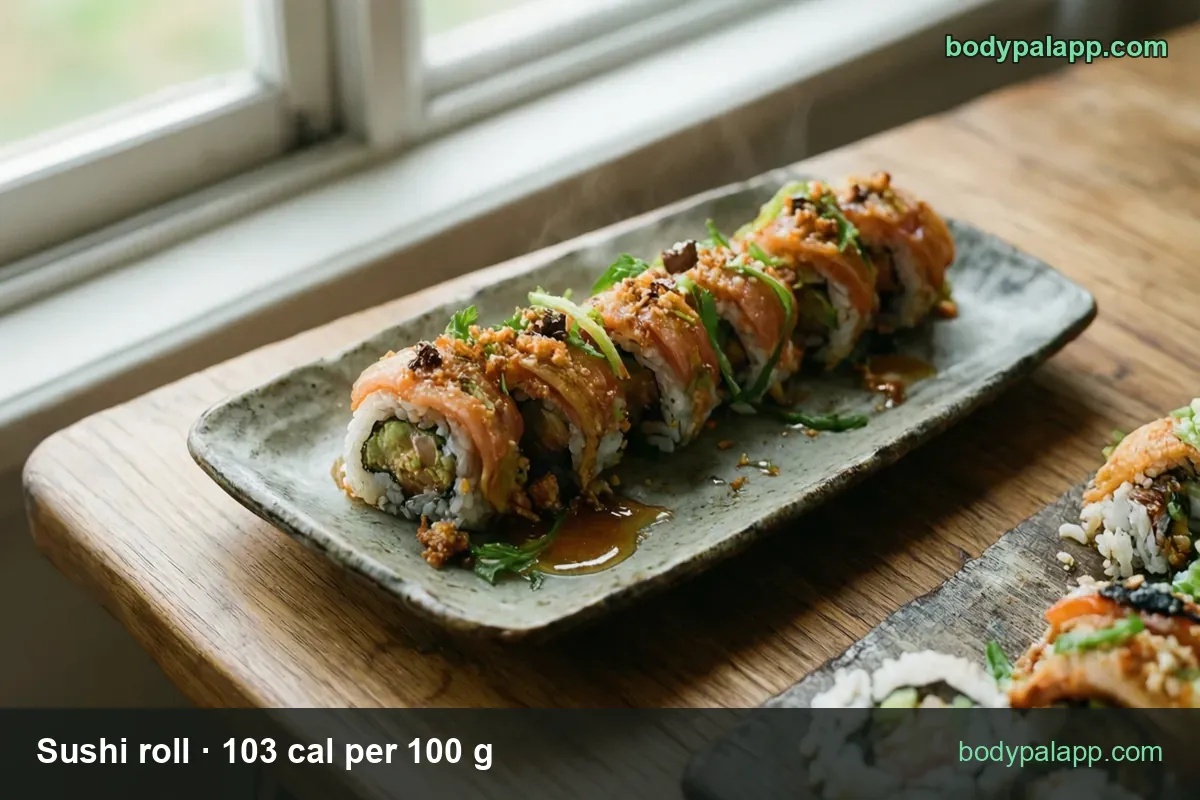
Eel is the heaviest of the seven at 116 per 100 g, and it gets there with 2.98 g of fat against 1.28 g in salmon and 1.47 g in the vegetable roll. The carbohydrate line barely moves across the fish rolls, 15.3 g per 100 g for salmon, tuna and eel, because the rest of the roll is rice.
Going meatless does not save you much and costs you a lot. The avocado roll and the vegetable roll both land at 93 calories per 100 g, ten under salmon, but protein falls from 6.88 g to 1.8 g per 100 g. That is a rice dish with a garnish. Tuna is the opposite trade: the lightest fish roll at 97 and the highest protein of the set at 7.4 g per 100 g.
The vegetable roll row also shows why piece counting beats roll counting. Its pieces run about 22 g rather than 30, so six of them weigh 132 g and cost 123 calories, not 167.
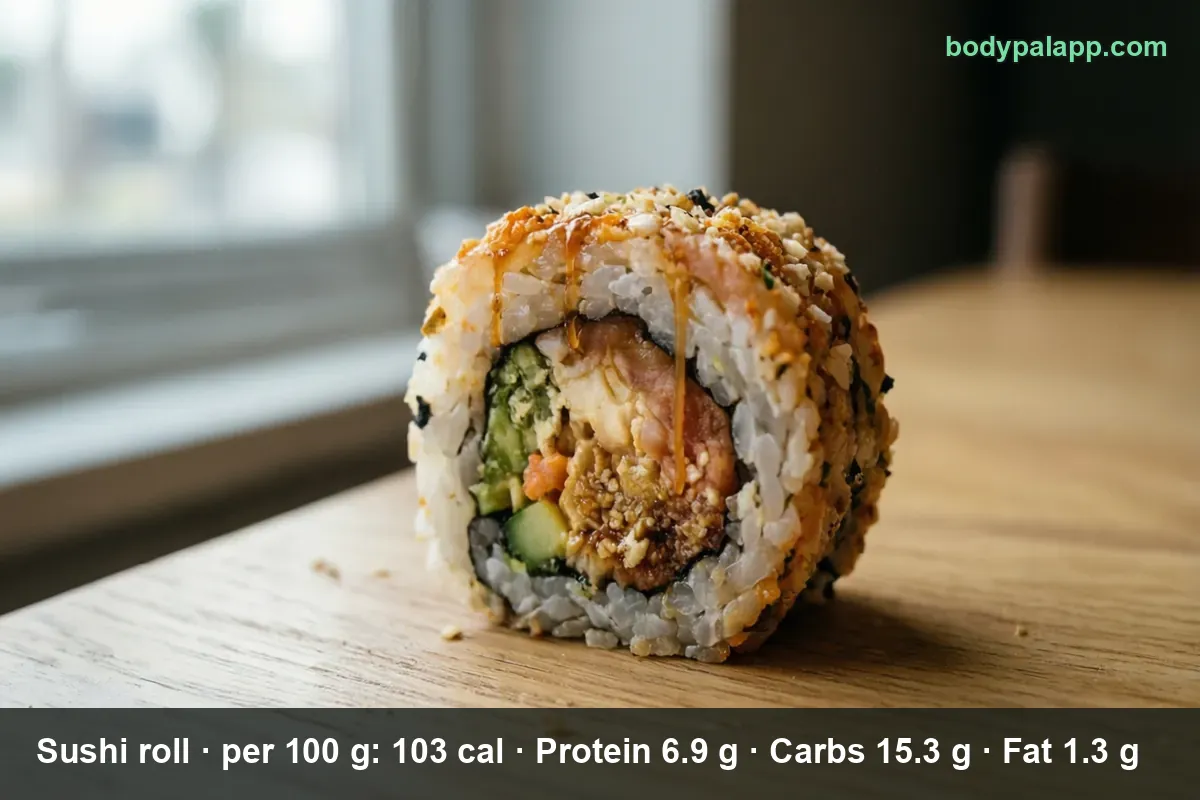
Grocery-case rolls read heavier than any of these. A Banzai Tropical California roll is 121 calories per 100 g, a Bento Express Fuji combo 151, and a Sushic All American roll 202, just under double the salmon record, which puts one 263 g package at 531 calories. Mayo-based sauces and fried fillings are the reason, and they are the same reason the crunchy tempura piece in the photo at the top of this page is not a 103-calorie food.
Sodium is the row to watch
A whole salmon roll delivers 3% of the Daily Value for fat and 27% for sodium. That is the story of sushi in one line. The FDA Daily Value for sodium is 2,300 mg, so 630 mg is roughly a quarter teaspoon of table salt sitting in the rice seasoning and the fillings, not in the fish.
The California roll is the salty outlier at 428 mg per 100 g, against 350 for salmon and 342 for tuna, the lowest of the seven. Order two California rolls and the sodium arithmetic gets uncomfortable fast, and none of it counts the soy sauce, which is poured on top of every number here. If you are watching sodium, sashimi or a tuna roll with sauce on the side is the better pick.
The good news is on the protein line. Six pieces give 12.4 g, a quarter of the Daily Value, for 185 calories. That ratio is why sushi works as the lunch in a day built around the protein foods group: the calories per gram of protein are excellent as long as the roll actually contains fish. The Dietary Guidelines recommendation to eat seafood twice a week is easier to hit with a maki roll than with a salmon fillet you have to cook.
How does a sushi roll compare?
| Item | Per 100 g | US serving | Calories |
|---|---|---|---|
| Sushi roll, salmon | 103 kcal | 6 pieces, 180 g | 185 kcal |
| Nigiri, topped with salmon | 107 kcal | 1 piece, no weight published | — |
| Nigiri, topped with crab | 95 kcal | 1 piece, no weight published | — |
| Fresh spring roll, rice paper, not fried | 112 kcal | 1 roll, no weight published | — |
Three of those records carry no gram weight in the survey release, so the per-serving column stays empty rather than being filled with a guess.
Our take: on a per-gram basis a salmon maki roll is already near the floor for anything Japanese on a menu, and only crab nigiri at 95 comes in lighter among these four. The fresh spring roll, which most people assume is the lighter order, is 112 per 100 g, higher than the sushi roll. So the roll is not the problem. The count of rolls, the tempura, and the sauce are, and those three things can take a 185-calorie lunch past 600 without changing the word on the menu.
Most popular sushi roll brands in the United States
Ranked by how widely each product appears among foods sold in the United States, from the BodyPal food database of over 3.3 million products. Calories are the figures printed on each Nutrition Facts label, checked against USDA FoodData Central.
| Product | Calories (per 100 g) |
|---|---|
| Bento Express Fuji Combo Sushi Rolls | 151 cal |
| Sushic All American Sushi Roll | 202 cal |
| Banzai Tropical California Sushi Roll | 121 cal |
Brand popularity: BodyPal food database. Nutrition: manufacturer labels / USDA FoodData Central.
Sushi roll FAQs
How many calories are in one sushi roll?
185 calories for a standard six-piece salmon roll of 180 g, at 103 calories per 100 g. That is the USDA FNDDS figure for the roll itself, with no soy sauce, tempura or spicy mayo. A tuna roll of the same size is 175 and an eel roll 209.
How many calories in 6 pieces of sushi?
Six pieces cut from a salmon roll weigh about 180 g and come to 185 calories. Six pieces of a vegetable roll are lighter, near 123 calories, because each piece weighs about 22 g. Piece size is the variable here, not the fish, so weigh the plate when it matters.
How many calories in one piece of a sushi roll?
One 30 g piece of a salmon roll is 31 calories, at 103 calories per 100 g. Three pieces, half a roll, come to 93 by our own arithmetic from that 100 g figure. Pieces from a thick specialty roll weigh more than 30 g, so treat 31 as a floor.
Which sushi roll has the fewest calories?
The avocado and vegetable rolls tie at 93 calories per 100 g, the lowest of the seven USDA sushi roll records. California is next at 94, then tuna at 97. Across six pieces of the same 180 g weight that is 167 calories for avocado against 209 for eel, the heaviest of the set.
How much protein is in a salmon roll?
A six-piece salmon roll has 12.4 g of protein, 25% of the Daily Value, from 6.88 g per 100 g. Tuna is the leader of the seven records at 7.4 g per 100 g. Avocado and vegetable rolls carry 1.8 g, so a fish-free roll is mostly rice.
How much sodium is in sushi?
A six-piece salmon roll carries 630 mg of sodium, 27% of the Daily Value and about a quarter teaspoon of table salt. The California roll is saltiest per gram at 428 mg per 100 g against 350 for salmon. Soy sauce sits on top of all of these numbers.
Is a sushi roll good for weight loss?
At 103 calories per 100 g a salmon roll is one of the lighter restaurant plates, and 185 calories with 12.4 g of protein for six pieces is a small lunch. The catch is that one roll rarely stops the hunger, and two rolls double both to 370 calories and 1,260 mg of sodium by our own arithmetic.
Do soy sauce and spicy mayo add calories to sushi?
The 185 calories for six pieces cover the roll alone. USDA does not publish a combined record for sushi served with dipping sauce, so the sauce sits outside every number on this page. Spicy mayo and tempura shrimp also fall outside these seven records, and both push the roll higher.
Similar foods
- Injera — 118 cal per injera (12 in)
- Shrimp Tempura Roll — 432 cal per roll, 8 pieces
- Fish Cake — 180 cal per cake or patty
- Bagel — 277 cal per bagel
- Sesame bagel — 277 cal per medium bagel
- Bread — 75 cal per medium slice
Count it without the math
Point the camera at the plate and BodyPal counts the pieces for you, filling and all.


How long does it take to burn off sushi roll?
A 6-piece roll (180 g) is 185 kcal. Enter your weight and the amount you ate to see how long it takes you to burn that off:
lb
| Activity | Time to burn 185 kcal |
|---|---|
| Walking, brisk | 37 min |
| Cycling, moderate | 23 min |
| Swimming, moderate | 26 min |
| Jogging | 22 min |
| Weight training, moderate | 41 min |
Times are for a 155 lb adult at a steady pace; change the weight to see yours. The amount is set to the portion in the text (180 g); change it to what you actually ate. BodyPal works this out from your steps automatically.
Want the bigger picture? Calculate your daily calorie needs — your maintenance figure, a target for losing or gaining, and the date you get there.