
How many calories are in a slice of bread?
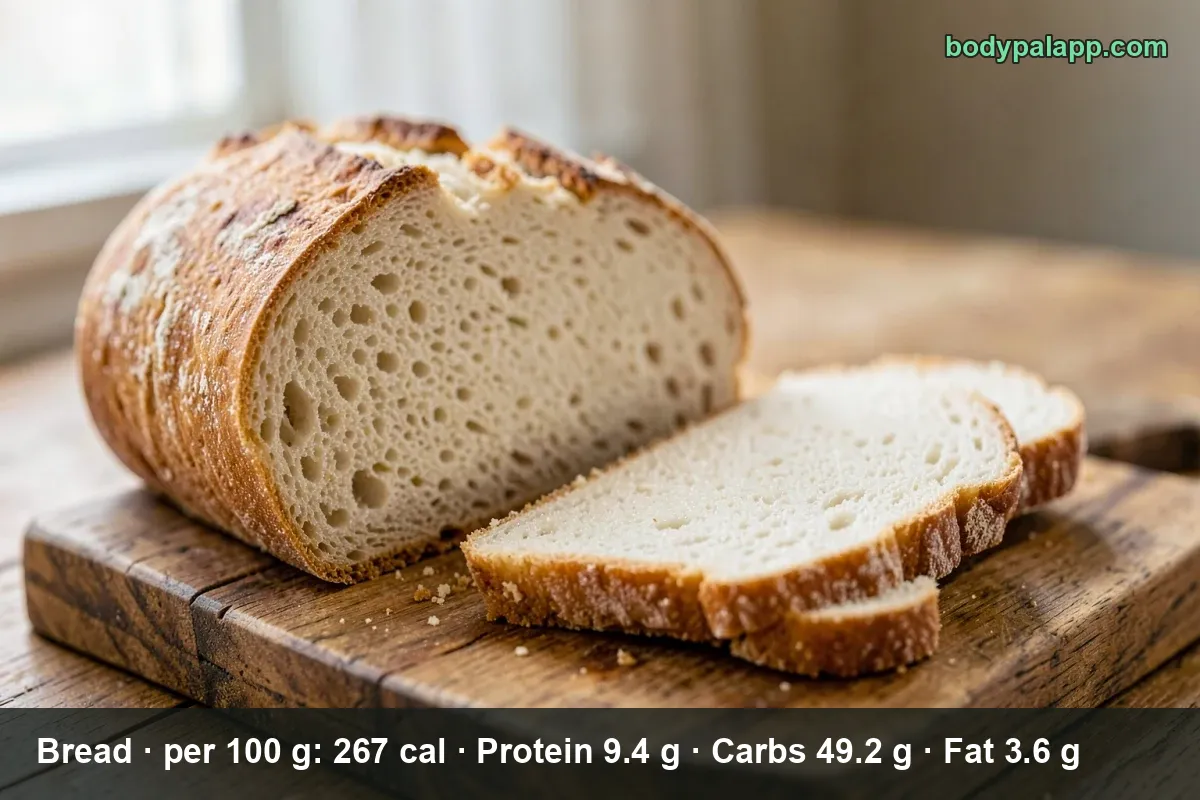
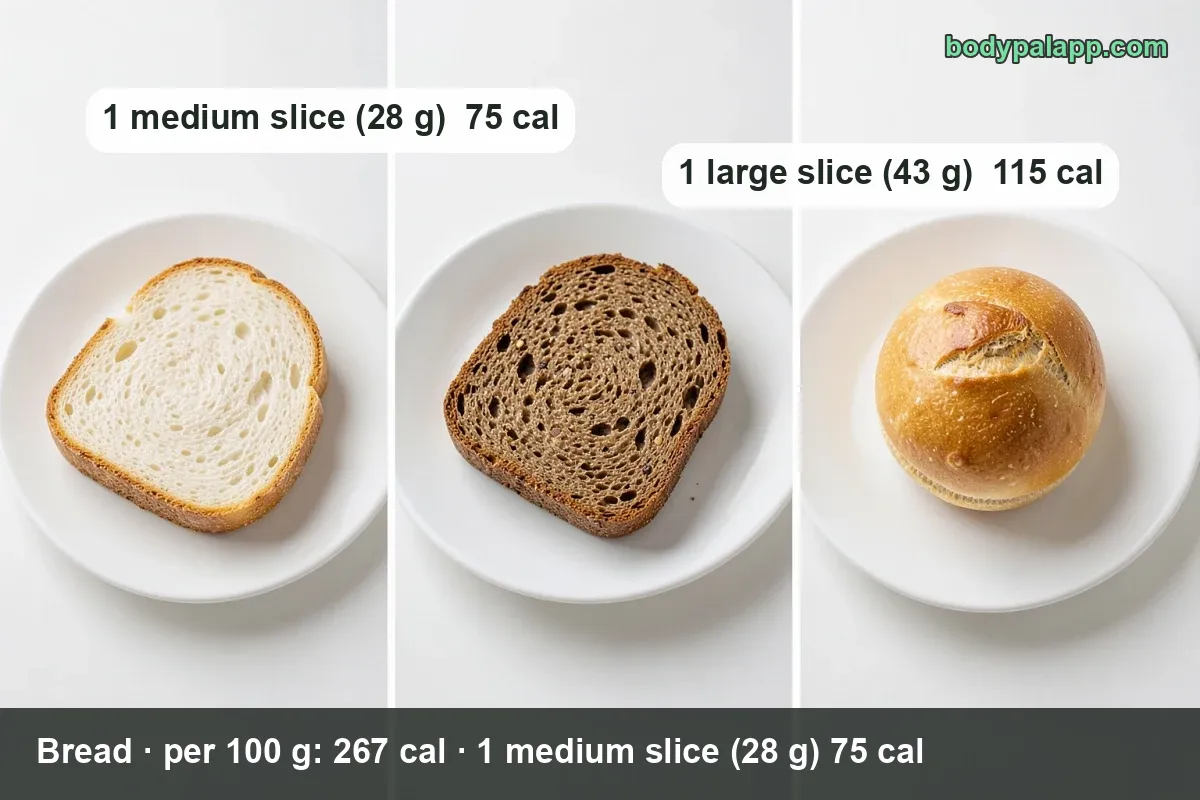
One medium slice of white bread weighs 28 g and carries 75 calories. Per 100 g, bread runs 267 calories, so the calories in bread are decided almost entirely by how thick the slice is cut: a thin slice is 64, a bakery-thick one 115. Same loaf, same flour, a 51-calorie spread.
On this page
- Bread quick facts
- US bread servings from a thin slice to a cup of cubes
- The bread aisle by the ounce
- Sodium is the row that surprises people
- How does bread compare to other loaves
- Most popular bread brands
- FAQ
Bread quick facts
When an American types "bread" into a food log, the thing in the bag is almost always a sliced white loaf. The record that matches it is FNDDS 2707598, "Bread, white", and it is the one used throughout this page. It has a second advantage: USDA attaches real household slice weights to it, thin, medium and thick, which is exactly how bread gets eaten.
There is an analytical twin, SR Legacy 174924, "Bread, white, commercially prepared," at 266 calories per 100 g. One calorie apart. The difference is the method behind the number, not the bread: the survey record is built for portion sizes, the lab record for chemistry.
| Nutrient | Per 100 g | Per 1 medium slice (28 g) | % Daily Value |
|---|---|---|---|
| Calories | 267 | 75 | — |
| Total fat | 3.59 g | 1.0 g | 1% |
| Saturated fat | 0.82 g | 0.2 g | 1% |
| Carbohydrate | 49.2 g | 13.8 g | 5% |
| Dietary fiber | 2.3 g | 0.6 g | 2% |
| Total sugars | 5.34 g | 1.5 g | — |
| Protein | 9.43 g | 2.6 g | 5% |
| Sodium | 450 mg | 126 mg | 5% |
% Daily Value is based on a 2,000-calorie diet.
Verified nutrition data
Numbers on this page come from USDA FoodData Central, the U.S. Department of Agriculture’s food composition database, and from manufacturer labels where a branded product is named. Last verified September 2026. How we verify our data →
Two rows you would see on a bag of bread are missing here on purpose. USDA does not publish added sugars or trans fat for this survey record, so listing either one would mean inventing it. Cholesterol is a clean zero, and a medium slice carries 33 mg of potassium, about 1% of the Daily Value, which is a rounding error next to what a banana or a potato brings.
The Daily Values used in that last column are the FDA's, the same ones printed on the label of the loaf itself.
US bread servings from a thin slice to a cup of cubes
| Serving | Weight | Calories |
|---|---|---|
| 1 thin or small slice | 24 g | 64 kcal |
| 1 medium or regular slice | 28 g | 75 kcal |
| 1 large or thick slice | 43 g | 115 kcal |
| 1 cup, cubes | 40 g | 107 kcal |
| 2 medium slices, a sandwich | 56 g | 150 kcal |
| 1 oz | 28.35 g | 76 kcal |
| Per 100 g | 100 g | 267 kcal |
The first four rows are USDA household portions attached to the record itself, which is why the weights look oddly specific. The sandwich row and the ounce row are our own arithmetic from the USDA 100 g figure, not USDA servings.
That thin-to-thick gap is the single most useful number on this page. A thin slice and a thick slice are both "a slice of bread" in a food diary, and they are 51 calories apart, most of the calories of an entire thin slice. Two thick slices instead of two thin ones adds 102 calories to a sandwich, before anything goes inside it. If you cut your own loaf, weigh the slice once and you will never have to guess again.
Cubes behave differently. A cup of bread cubes for stuffing or croutons weighs only 40 g because most of a measuring cup full of bread is air. It reads 107 calories, less than a cup of most things you would fill a bowl with, right up until oil or butter goes on.
The bread aisle by the ounce
Comparing loaves by the slice is a trap, because slice weights are set by the bakery, not by the flour. By the ounce, the whole aisle collapses into a range of 11 calories.
| Bread | Per 100 g | 1 oz (28.35 g) | Fiber per 100 g | Sodium per 100 g |
|---|---|---|---|---|
| White | 267 kcal | 76 kcal | 2.3 g | 450 mg |
| Whole wheat | 254 kcal | 72 kcal | 6 g | 430 mg |
| Sourdough | 272 kcal | 77 kcal | 2.2 g | 602 mg |
| Multigrain | 265 kcal | 75 kcal | 7.4 g | 360 mg |
| Rye | 259 kcal | 73 kcal | 5.8 g | 570 mg |
| White, toasted | 293 kcal | 83 kcal | 2.5 g | 495 mg |
Whole wheat is the lightest untoasted loaf here at 254 calories per 100 g, and it is 13 calories per 100 g below white. Nobody loses weight on a 13-calorie gap. What it does bring is 6 g of fiber per 100 g against 2.3 g in white, and multigrain goes further at 7.4 g. An ounce of multigrain delivers 2.1 g of fiber, 7% of the Daily Value, against 2% from the same weight of white. MyPlate's guidance on grains asks for at least half of your grains to be whole, and this table is the cheapest way to meet it: the swap costs nothing in calories.
Toasted white looks alarming at 293 calories per 100 g. It is not. Toasting drives off water and nothing else, so the same bread concentrates into fewer grams. The slice you drop into the toaster comes out lighter than it went in, which means the calories sitting on your plate are still about 75. The 100 g column moved; the slice did not.
Sourdough, the loaf most often treated as the healthy choice at a restaurant, is the densest untoasted bread in the table at 272 calories per 100 g and the saltiest at 602 mg. Rye is the middle of the pack on calories, 259, with 5.8 g of fiber, which puts it behind multigrain and whole wheat on fiber per calorie.
Store brands play the same game with slice size. Nature's Own 100% Whole Wheat labels a 25 g slice at 50 calories while Great Value's whole wheat slice weighs 40 g and reads 100; the loaves are 200 and 250 calories per 100 g, and the slice size does the rest. Mestemacher Protein Bread is the outlier, 280 calories per 100 g in a dense 50 g piece worth 140.
Sodium is the row that surprises people
Bread does not taste salty, which is exactly why it slips past people who are tracking sodium. A medium slice carries 126 mg, 5% of the Daily Value. Two slices reach 252 mg, 11%, roughly a tenth of a teaspoon of table salt, and that is the sandwich before the deli meat, the cheese or the mustard.
Compare that to the rows people actually watch. In those same two slices, carbohydrate is 10% of the Daily Value, protein 10%, saturated fat 2%. Sodium still tops them all at 11%, and it comes from the least suspicious ingredient in the kitchen. The Dietary Guidelines for Americans put the ceiling at 2,300 mg a day, and bread is one of the top contributors to the American total simply because of how often it shows up.
If sodium is your constraint, the loaf you choose matters more than the filling. Multigrain at 360 mg per 100 g against sourdough at 602 mg is a 242 mg gap per 100 g, about 137 mg over two ounces, larger than most of the choices you agonize over at the deli counter.
How does bread compare to other loaves
| Bread | Per 100 g | US serving | Calories |
|---|---|---|---|
| White bread | 267 kcal | one medium slice, 28 g | 75 kcal |
| French or Vienna, whole wheat | 239 kcal | one slice, 28 g | 67 kcal |
| Italian, Grecian or Armenian | 259 kcal | one medium slice, 31 g | 80 kcal |
| French or Vienna, toasted | 299 kcal | one medium slice, 59 g | 176 kcal |
Our take: sliced white is the densest of the three untoasted breads here, and the whole wheat French loaf is the lightest, 239 calories per 100 g and 67 in a slice of the same 28 g weight. That toasted French slice at 176 calories is the row worth staring at. It is not heavy because it was toasted; it is heavy because a slice off a French loaf weighs 59 g, more than twice a sandwich slice. When a number looks wrong on a bread label, check the gram weight before you blame the recipe.
Most popular bread brands in the United States
Ranked by how widely each product appears among foods sold in the United States, from the BodyPal food database of over 3.3 million products. Calories are the figures printed on each Nutrition Facts label, checked against USDA FoodData Central.
| Product | Calories (per 100 g) |
|---|---|
| Great Value 100% Whole Wheat Bread | 250 cal |
| Shoppers Value 100% Whole Wheat Bread | 214 cal |
| Great Grains Bakery 100% Whole Wheat Bread | 256 cal |
| Mestemacher Protein Bread | 280 cal |
| Nature's Own 100% Whole Wheat Bread | 200 cal |
| Sara Lee Honey Wheat Bread | 269 cal |
Brand popularity: BodyPal food database. Nutrition: manufacturer labels / USDA FoodData Central.
Bread FAQs
How many calories are in a slice of bread?
A medium slice of white bread is 75 calories at 28 g. A thin slice is 64 calories at 24 g, and a thick bakery slice is 115 at 43 g. The USDA figure behind all three is 267 calories per 100 g, so the weight of the slice decides everything.
How many calories are in 2 slices of bread?
Two medium slices come to 150 calories, our own arithmetic from the USDA 267 calories per 100 g figure applied to 56 g of bread. Those two slices also carry 252 mg of sodium, 11% of the FDA Daily Value, before any filling goes between them.
White bread vs whole wheat bread: which has fewer calories?
Whole wheat is slightly lighter at 254 calories per 100 g against 267 for white, about 72 calories an ounce versus 76. The real difference is fiber: 6 g per 100 g in whole wheat against 2.3 g in white. Calories barely move, fiber nearly triples.
Does toasting bread add calories?
No. White bread reads 293 calories per 100 g toasted against 267 untoasted, but that jump is water leaving the slice, not energy arriving. The slice weighs less coming out of the toaster than it did going in, so the calories on your plate stay at roughly 75.
How many carbs are in a slice of bread?
A medium slice carries 13.8 g of carbohydrate, 5% of the Daily Value, including 1.5 g of total sugars and 0.6 g of fiber. Per 100 g, white bread is 49.2 g of carbohydrate. Sourdough is the highest of the common loaves at 51.88 g per 100 g.
How much protein is in bread?
White bread has 9.43 g of protein per 100 g, or 2.6 g in a medium slice, 5% of the Daily Value. Multigrain is the strongest of the common loaves at 13.36 g per 100 g, about 3.8 g an ounce. Bread is a modest protein source, not a serious one.
How much sodium is in a slice of bread?
A medium slice of white bread has 126 mg of sodium, 5% of the Daily Value. Two slices reach 252 mg, about 11%, roughly a tenth of a teaspoon of table salt. Sourdough is saltier at 602 mg per 100 g, and multigrain is the mildest at 360 mg.
How many calories are in sourdough bread?
Sourdough is 272 calories per 100 g, the densest of the untoasted loaves in this table, or about 77 calories an ounce. That is only 5 calories per 100 g above white bread. Its sodium is the bigger gap: 602 mg per 100 g against 450 mg for white.
Similar foods
- Bread And Butter — 219 cal per thick slice with butter
- Burger Bun — 139 cal per bun
- Hamburger Bun — 139 cal per bun
- Hot Dog Roll — 120 cal per roll
- Chicken Spring Roll — 170 cal per spring roll
- Whole Grain Bread — 69 cal per slice
Count it without the math
Point the camera at the plate and BodyPal counts the slices for you, thick ones included.


How long does it take to burn off bread?
One medium slice (28 g) is 75 kcal. Enter your weight and the amount you ate to see how long it takes you to burn that off:
lb
| Activity | Time to burn 75 kcal |
|---|---|
| Walking, brisk | 15 min |
| Cycling, moderate | 9 min |
| Swimming, moderate | 11 min |
| Jogging | 9 min |
| Weight training, moderate | 17 min |
Times are for a 155 lb adult at a steady pace; change the weight to see yours. The amount is set to the portion in the text (28 g); change it to what you actually ate. BodyPal works this out from your steps automatically.
This table assumes you know your daily total. If you do not, the daily calorie calculator works it out from five numbers.