
How many calories are in a wheat bagel?
A regular wheat bagel weighs 105 g and carries 263 calories. Per 100 g the bread runs 250 calories, so the size of the bagel decides almost everything. The same 105 g brings 51.3 g of carbohydrate, 10.7 g of protein and 4.3 g of fiber, with almost no fat at all.

On this page
- Wheat bagel quick facts
- US servings, from a bagel thin to a large
- Whole wheat, wheat bran and raisin bagels
- Sodium is the row to watch, not fat
- How does a wheat bagel compare?
- Most popular wheat bagel brands
- Wheat bagel FAQs
Wheat bagel quick facts
The numbers here come from the USDA FNDDS record 2707732, "Bagel, wheat". That is the record for the ordinary bagel you pull out of a bag on the counter, not a raisin or a fruit-and-nut version. It was picked over the older SR Legacy entry 167533, which carries identical values but no household portions — the FNDDS edition is the one that sizes a bagel from miniature to large, and sizing is where the calories actually live.
| Nutrient | Per 100 g | Per 1 regular bagel (105 g) | % Daily Value |
|---|---|---|---|
| Calories | 250 | 263 | — |
| Total fat | 1.53 g | 1.6 g | 2% |
| Saturated fat | 0 g | 0 g | 0% |
| Carbohydrate | 48.89 g | 51.3 g | 19% |
| Dietary fiber | 4.1 g | 4.3 g | 15% |
| Total sugars | 6.12 g | 6.4 g | — |
| Protein | 10.2 g | 10.7 g | 21% |
| Sodium | 439 mg | 461 mg | 20% |
% Daily Value is based on a 2,000-calorie diet.
Verified nutrition data
Numbers on this page come from USDA FoodData Central, the U.S. Department of Agriculture’s food composition database, and from manufacturer labels where a branded product is named. Last verified September 2026. How we verify our data →
Two rows you would see on a supermarket wrapper are missing above: added sugars and trans fat. USDA does not publish either for any bagel in this edition, so they stay out rather than get guessed at. Cholesterol is 0 mg, as you would expect from a bread with no egg or dairy in the base recipe, and potassium comes to 173 mg per bagel, about 4% of the Daily Value.
The 6.4 g of total sugars is not sugar somebody spooned in. Bagel dough is malted, and the Daily Value framework does not assign a percentage to total sugars for exactly this reason — only added sugars get one, and that figure is unpublished here.
US servings, from a bagel thin to a large
| Serving | Weight | Calories |
|---|---|---|
| 1 oz | 28 g | 70 kcal |
| One bagel thin | 46 g | 115 kcal |
| One small bagel | 69 g | 173 kcal |
| One regular bagel | 105 g | 263 kcal |
| One large bagel | 131 g | 328 kcal |
| Per 100 g | 100 g | 250 kcal |
Four of those — the thin, the small, the regular and the large — are USDA household portions, so the weights are theirs, not ours. The 1 oz line is our own arithmetic from the USDA 100 g figure, not a USDA serving; it exists because a kitchen scale is the fastest way to settle an argument about bagel size.
The spread is the story. A large bagel is 328 calories against 115 for a bagel thin, a difference of 213 calories from bread that looks broadly the same on a plate. Deli and bakery bagels often run past the 131 g "large" line, and once you are over that weight nothing on this page applies without weighing. When in doubt, weigh one bagel from the bag once, then reuse that number all week.
Whole wheat, wheat bran and raisin bagels
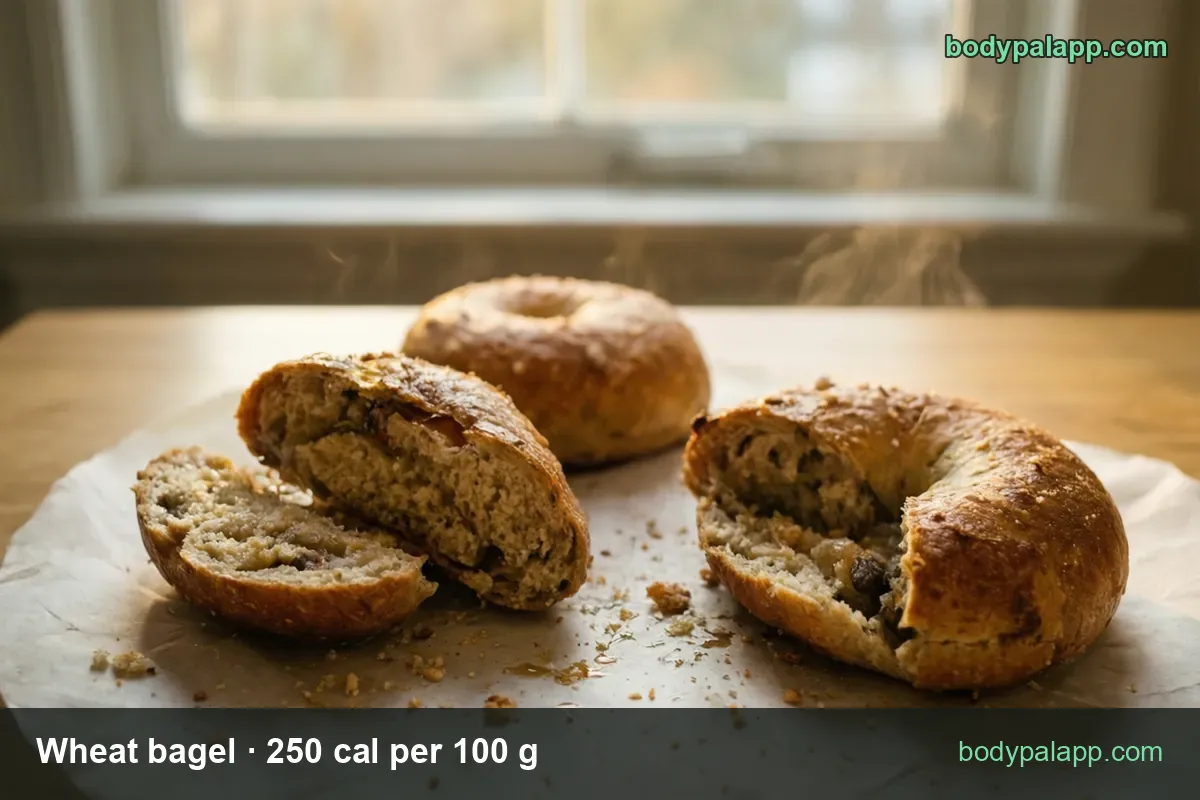
Here is the thing most bagel pages will not tell you: USDA gives the wheat bagel, the whole wheat bagel and the wheat bran bagel exactly the same profile — 250 calories, 4.1 g fiber, 439 mg sodium per 100 g. The words on the bag change; the arithmetic does not. Only dried fruit and nuts move the number.
| Version | Per 100 g | Regular bagel | Calories |
|---|---|---|---|
| Wheat bagel | 250 kcal | 105 g | 263 kcal |
| Whole wheat bagel | 250 kcal | 105 g | 263 kcal |
| Wheat bran bagel | 250 kcal | 105 g | 263 kcal |
| Wheat bagel with raisins | 255 kcal | 105 g | 268 kcal |
| Whole wheat bagel with raisins | 255 kcal | 105 g | 268 kcal |
| Wheat bagel with fruit and nuts | 263 kcal | 105 g | 276 kcal |
| Plain bagel | 264 kcal | 105 g | 277 kcal |
Raisins add 5 calories per 100 g and almost double the total sugars, from 6.12 g to 12.03 g. The fruit-and-nut version is the heaviest of the wheat family at 263 calories per 100 g, because nuts push the fat from 1.53 g up to 2.77 g. Even so, the whole spread across six wheat records is 13 calories per 100 g. Your slice thickness of cream cheese matters more than any of it.
Store brands sit in the same neighborhood. USDA's branded database puts wheat and whole wheat bagels between 244 and 288 calories per 100 g, with a Walmart Bakery wheat bagel labeled at 250 calories for a 99 g bagel and a Lender's 100% whole wheat at 200 for a smaller 81 g one. The lighter label usually means a lighter bagel, not lighter bread.
Sodium is the row to watch, not fat
One regular wheat bagel is 461 mg of sodium — 20% of the 2,300 mg Daily Value — with 0 g of saturated fat. That combination is unusual. Most breakfast foods that cost you a fifth of a sodium day also cost you saturated fat; this one does not. Roughly speaking, 461 mg is what you get from a fifth of a teaspoon of table salt baked into the dough.
Two bagels in a day, which is not a wild amount for anyone who buys a six-pack, is 40% of the sodium Daily Value before butter, cream cheese, lox or a slice of cheddar goes anywhere near them. If you are watching sodium, the bagel is the part of the sandwich to shrink, not the filling.
On the other side of the ledger, 4.3 g of fiber is 15% of the Daily Value from a single piece of bread, and the MyPlate grains guidance asks that at least half your grains be whole. A whole wheat bagel counts toward that half even though its calorie line is identical to the refined-flour wheat version. That is the honest case for buying it: the fiber and the grain category, not a calorie saving.
How does a wheat bagel compare?
| Bagel | Per 100 g | US serving | Calories |
|---|---|---|---|
| Wheat bagel | 250 kcal | one regular, 105 g | 263 kcal |
| Oat bran bagel | 250 kcal | one regular, 105 g | 263 kcal |
| Plain bagel | 264 kcal | one regular, 105 g | 277 kcal |
| Bagel with raisins | 268 kcal | one regular, 105 g | 281 kcal |
Our take: the wheat bagel ties for lightest of the four, ahead of a plain one by only 14 calories and level with oat bran. If you switched to wheat expecting a calorie win, you bought a rounding error. Buy it for the 4.3 g of fiber and the 10.7 g of protein instead, and take the real saving where it exists — in size. Dropping from a large to a regular saves 65 calories, more than four times what the flour swap does, and a bagel thin saves 148.
Most popular wheat bagel brands in the United States
Ranked by how widely each product appears among foods sold in the United States, from the BodyPal food database of over 3.3 million products. Calories are the figures printed on each Nutrition Facts label, checked against USDA FoodData Central.
| Product | Calories (per 100 g) |
|---|---|
| The Bakery (Walmart) Wheat Bagels | 253 cal |
| Alvarado St. Bakery Sprouted Wheat Bagels | 263 cal |
| Lender's 100% Whole Wheat Bagels | 247 cal |
| Crestline Wheat Bagels | 244 cal |
| Thomas' 100% Whole Wheat Bagels | 263 cal |
| Masada Bakery Whole Wheat Bagels | 288 cal |
Brand popularity: BodyPal food database. Nutrition: manufacturer labels / USDA FoodData Central.
Wheat bagel FAQs
How many calories are in a wheat bagel?
One regular wheat bagel weighs 105 g and carries 263 calories, from a USDA figure of 250 calories per 100 g. A small 69 g bagel is 173 calories, a large 131 g one is 328, and a bagel thin at 46 g is just 115. Size drives the number far more than the flour does.
Is a wheat bagel healthier than a plain bagel?
On calories, barely: 263 for a wheat bagel against 277 for a plain one at the same 105 g, a gap of 14. The real difference is 4.3 g of fiber and 10.7 g of protein per bagel, plus the whole grain credit. Choose wheat for the fiber, not for a calorie saving.
How much fiber is in a whole wheat bagel?
USDA lists 4.1 g of fiber per 100 g, so a regular 105 g whole wheat bagel gives 4.3 g, or 15% of the 28 g Daily Value. That is a strong number for a single piece of bread, and the wheat, whole wheat and wheat bran records all carry the same figure.
How many carbs are in a wheat bagel?
A regular 105 g wheat bagel has 51.3 g of carbohydrate, which is 19% of the 275 g Daily Value, scaled from 48.89 g per 100 g. Of that, 6.4 g is total sugars. Half a bagel drops it to about 26 g, and a 46 g bagel thin to roughly 22 g.
How much protein is in a whole wheat bagel?
A regular 105 g bagel has 10.7 g of protein, 21% of the 50 g Daily Value, scaled from 10.2 g per 100 g. USDA gives the whole wheat record the same figure as the plain wheat one. A small 69 g bagel carries about 7 g, and a 46 g bagel thin about 4.7 g.
How many calories in half a wheat bagel?
Half a regular bagel is about 131 calories, which is our own arithmetic from the USDA 105 g bagel rather than a USDA serving. It also halves the carbohydrate to roughly 26 g and the sodium to about 231 mg. Half a bagel plus eggs is a steadier breakfast than a whole one alone.
How much sodium is in a wheat bagel?
A regular 105 g wheat bagel carries 461 mg of sodium, 20% of the 2,300 mg Daily Value, before a single topping. That is close to a fifth of a teaspoon of table salt baked into the dough. Two bagels in one day would put you at 40% from bread alone.
Are wheat bagels good for weight loss?
A wheat bagel is 263 calories, which fits a normal breakfast budget as long as the toppings stay light. The 4.3 g of fiber and 10.7 g of protein help it hold longer than most pastry. If you want the same shape for less, a 46 g bagel thin is 115 calories.
Similar foods
- Pumpkin Pie — 374 cal per regular slice
- Eggo Frozen Toaster Waffles — 117 cal per waffle
- Chicken Salad Croissant — 443 cal per croissant sandwich
- Wheat Bread — 91 cal per medium slice
- Angel Food Cake — 154 cal per slice
- Bread Bun — 148 cal per bun
Count it without the math
Point the camera at the plate and BodyPal counts the bagel for you, topping and all.


How long does it take to burn off a wheat bagel?
One regular bagel (105 g) is 263 kcal. Enter your weight and the amount you ate to see how long it takes you to burn that off:
lb
| Activity | Time to burn 263 kcal |
|---|---|
| Walking, brisk | 53 min |
| Cycling, moderate | 33 min |
| Swimming, moderate | 38 min |
| Jogging | 31 min |
| Weight training, moderate | 58 min |
Times are for a 155 lb adult at a steady pace; change the weight to see yours. The amount is set to the portion in the text (105 g); change it to what you actually ate. BodyPal works this out from your steps automatically.
Want the bigger picture? Calculate your daily calorie needs — your maintenance figure, a target for losing or gaining, and the date you get there.