
How many calories are in a cheese omelet?
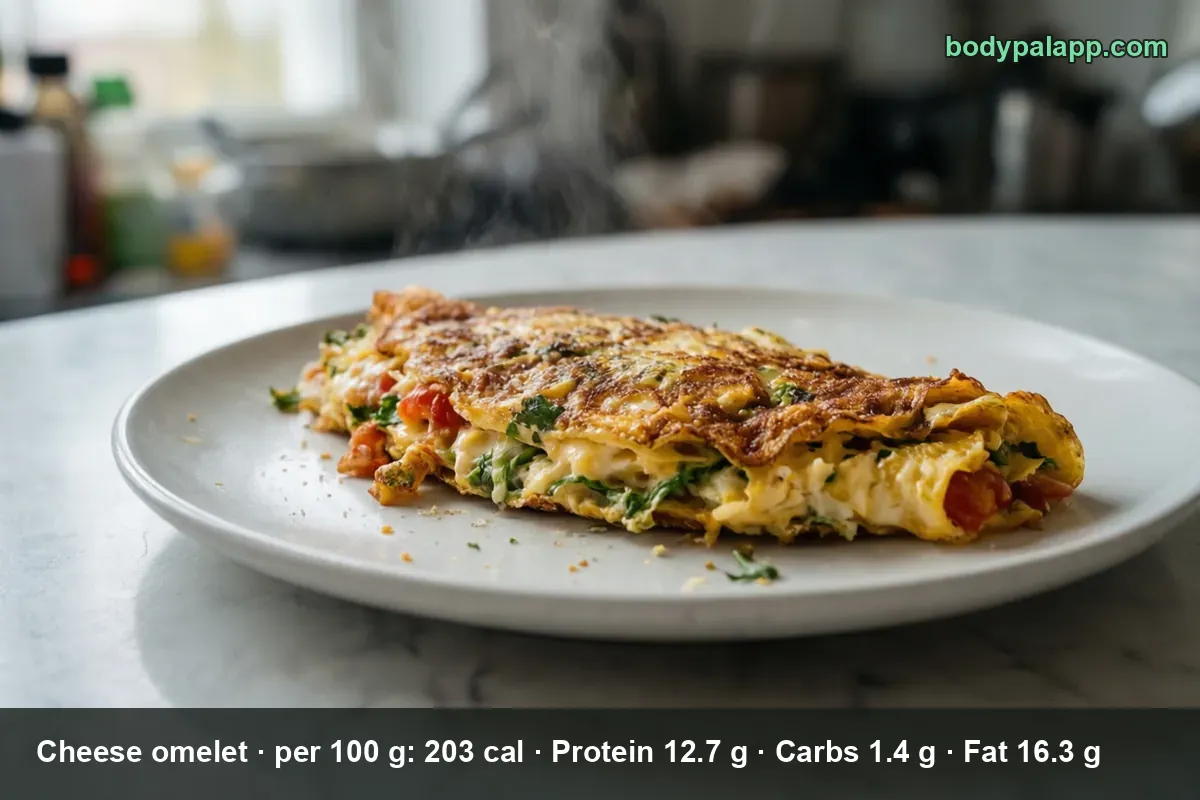
A two-egg cheese omelet cooked in butter weighs about 130 g and carries 264 calories. Per 100 g that same omelet runs 203 calories, and the whole plate carries 16.5 g of protein with almost no carbohydrate. Cook the same eggs and cheese in a dry nonstick pan and the plate drops to 205.
On this page
- Cheese omelet quick facts
- US servings from one ounce to a three egg omelet
- How the fat in the pan changes the count
- Egg white ham and tomato versions
- Cholesterol and saturated fat are the rows to watch
- How does a cheese omelet compare
- Most popular cheese omelet brands
- FAQ
Cheese omelet quick facts
The record that matches an American breakfast is FNDDS 2707209, "Egg omelet or scrambled egg, with cheese, made with butter". That is the omelet a home cook or a diner cook actually makes: eggs beaten with a slice or a handful of cheese, poured into a buttered pan. USDA prices one egg in that preparation at 65 g, so the standard two-egg omelet is 130 g, and that same 130 g is what the database returns when the quantity is not specified.
If your pan never sees butter, oil or spray, you want a different row, and it is covered further down. The numbers below are for the buttered version.
| Nutrient | Per 100 g | Per 1 omelet, 2 eggs (130 g) | % Daily Value |
|---|---|---|---|
| Calories | 203 | 264 | — |
| Total fat | 16.34 g | 21.2 g | 27% |
| Saturated fat | 7.23 g | 9.4 g | 47% |
| Carbohydrate | 1.41 g | 1.8 g | 1% |
| Dietary fiber | 0 g | 0 g | 0% |
| Total sugars | 0.54 g | 0.7 g | — |
| Protein | 12.69 g | 16.5 g | 33% |
| Sodium | 354 mg | 460 mg | 20% |
| Cholesterol | 360 mg | 468 mg | 156% |
| Potassium | 128 mg | 166 mg | 4% |
% Daily Value is based on a 2,000-calorie diet.
Verified nutrition data
Numbers on this page come from USDA FoodData Central, the U.S. Department of Agriculture’s food composition database, and from manufacturer labels where a branded product is named. Last verified September 2026. How we verify our data →
Two rows you would see on a supermarket label are missing here: added sugars and trans fat are not published in this FNDDS release, so they are left out rather than guessed. Nothing in an omelet is sweetened anyway; the 0.7 g of total sugars on the plate is milk sugar from the cheese and the eggs themselves.
The carbohydrate line is the one people misread. At 1.8 g per omelet, a cheese omelet is effectively a zero-carb breakfast, which is why it survives on almost every low-carb menu in the country. Everything it costs you is fat and protein.
US servings from one ounce to a three egg omelet
| Serving | Weight | Calories |
|---|---|---|
| 1 oz | 28 g | 58 kcal |
| 1 egg, in the omelet | 65 g | 132 kcal |
| One omelet, 2 eggs | 130 g | 264 kcal |
| 1 cup, chopped | 135 g | 274 kcal |
| One omelet, 3 eggs, diner size | 195 g | 396 kcal |
| Per 100 g | 100 g | 203 kcal |
The 65 g single egg and the 1-cup measure are USDA household portions. The three-egg omelet at 195 g and the 1 oz line are our own arithmetic from the USDA 100 g figure, not USDA servings, but they are the two most useful numbers on the table: 195 g is what a short-order cook puts on a plate, and 1 oz lets you cost a bite you stole from someone else's breakfast.
Watch the cup. A cup of chopped omelet, 135 g, is barely more than the whole two-egg omelet, 130 g. Log a "cup" expecting half a plate and you have logged the whole omelet: 274 calories against 264. The plate measure and the volume measure land in the same place here, and that is unusual.
How the fat in the pan changes the count
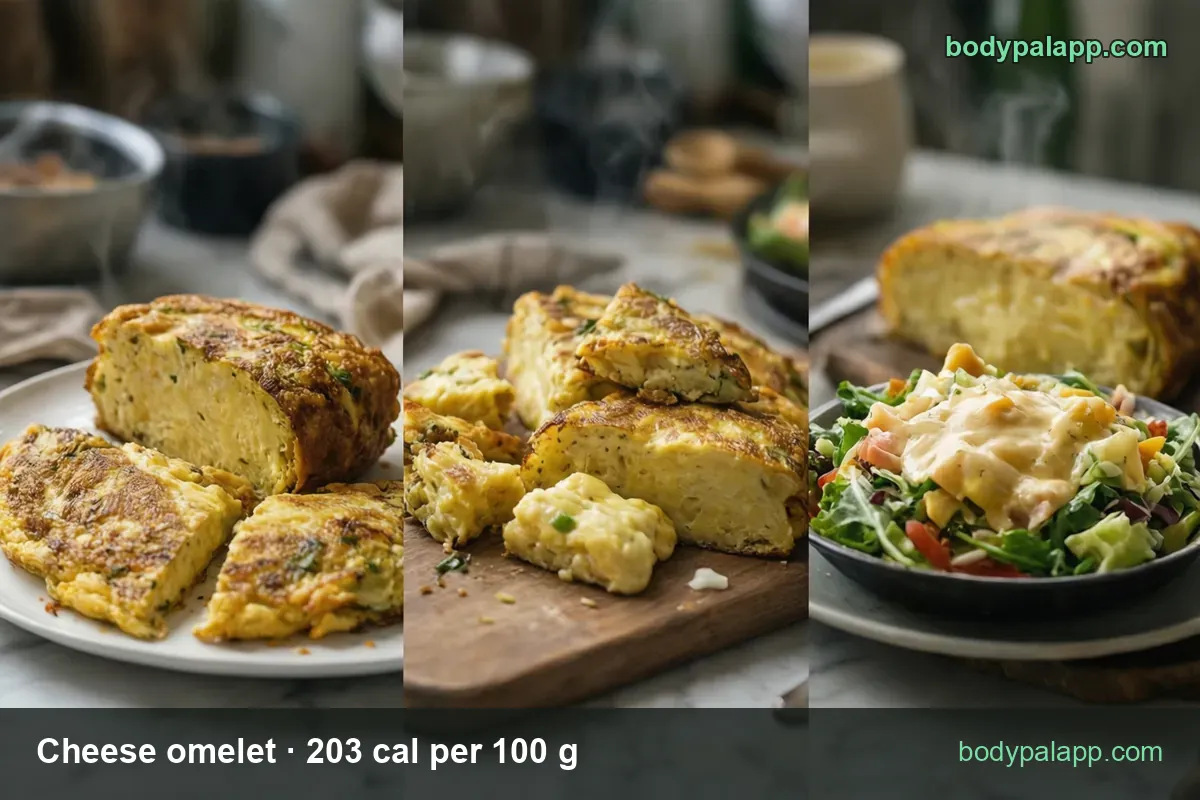
Same eggs, same cheese, four different pans. This is the single biggest lever on a cheese omelet, and no restaurant menu tells you which one you got.
| Version | Per 100 g | Typical omelet | Calories |
|---|---|---|---|
| Made with butter | 203 kcal | 2 eggs, 130 g | 264 kcal |
| Made with oil | 212 kcal | 2 eggs, 130 g | 276 kcal |
| Made with margarine | 194 kcal | 2 eggs, 130 g | 252 kcal |
| Made with cooking spray | 176 kcal | 2 eggs, 130 g | 229 kcal |
| No added fat | 171 kcal | 2 eggs, 120 g | 205 kcal |
The spread from top to bottom is 71 calories on one small breakfast, and the eggs never changed. Oil is the heaviest of the four, slightly above butter per 100 g, because a cook pours it and stops guessing. The margarine and cooking-spray omelets at 130 g are our own arithmetic from the USDA 100 g figures; the no-added-fat omelet comes out lighter partly because it also weighs less, 120 g instead of 130 g, since nothing was added to the pan.
Saturated fat moves further still, and butter leads that column: 7.23 g per 100 g on the plate. Cooking spray leaves 4.9 g. That is a third of the saturated fat gone, and the cheese never changed.
Egg white ham and tomato versions
| Version | Per 100 g | Serving | Calories |
|---|---|---|---|
| Egg white omelet with cheese | 132 kcal | 1 cup, 135 g | 178 kcal |
| Cheese and tomato omelet | 186 kcal | 2 eggs, 130 g | 242 kcal |
| Cheese and meat omelet | 209 kcal | 2 eggs, 130 g | 272 kcal |
The egg white swap is the one that pays. A cup goes from 274 calories to 178, saturated fat from 7.23 g to 3.32 g per 100 g, and protein gives up only 1.4 g per 100 g. If you like the taste of a white omelet, it is the cheapest 96 calories you will ever save at breakfast.
Tomatoes work differently. They do not remove anything; they dilute. Adding them brings the omelet down to 186 calories per 100 g simply because water and vegetable now occupy part of the weight, and you get 0.2 g of fiber that a plain cheese omelet does not have at all. Ham or sausage moves the other way, to 209 per 100 g and 399 mg of sodium, the saltiest row in this whole set. Both of those two-egg servings at 130 g are our own arithmetic from the USDA 100 g figures, not USDA portions.
Frozen omelets are a different animal, because the portion is decided for you. A Jimmy Dean cheddar cheese omelet is 110 calories for a 71 g piece, an Egg-Land's Best Three Cheese omelet is 220 for 111 g, and an Atkins ham and cheese omelet is 210 for 122 g. All three are smaller than the omelet you would make yourself, which is most of why they look lighter. Good & Gather Swiss cheese omelet cups with uncured ham run 379 calories for four pieces, 153 g, so a snack-shaped package can outweigh a real breakfast.
Cholesterol and saturated fat are the rows to watch
Calories are not the interesting part of this food. Cholesterol is. One two-egg cheese omelet carries 468 mg, which is 156% of the 300 mg Daily Value the FDA uses on nutrition labels — a full day and a half in a breakfast that takes four minutes to cook. Two yolks and a hard cheese will do that.
Saturated fat is the second row. At 9.4 g, the omelet is 47% of a day's value before you touch the toast or the bacon next to it. The Dietary Guidelines for Americans put the ceiling at under 10% of daily calories from saturated fat, which is about 22 g on a 2,000-calorie day, so a single omelet spends close to half of that.
Sodium is milder than most breakfasts: 460 mg, or 20% of the day, roughly a fifth of a teaspoon of table salt, and most of it is the cheese rather than added salt. The protein line is the reason to keep the omelet on the menu at all — 16.5 g, a third of the Daily Value, in a food that costs 264 calories. MyPlate counts eggs in the protein group for exactly this reason.
If cholesterol or saturated fat is something you are told to watch, the fix is not to skip breakfast. It is to move down one row in the table above: cooking spray instead of butter, or egg whites instead of whole eggs.
How does a cheese omelet compare
| Omelet | Per 100 g | US serving | Calories |
|---|---|---|---|
| Cheese omelet, made with butter | 203 kcal | 1 cup, 135 g | 274 kcal |
| Egg white omelet with cheese and meat | 141 kcal | 1 cup, 135 g | 190 kcal |
| Egg white omelet with cheese | 132 kcal | 1 cup, 135 g | 178 kcal |
| Egg substitute omelet with cheese | 128 kcal | 1 cup cooked, 135 g | 173 kcal |
Our take: the whole-egg cheese omelet is the only one of these four above 200 calories per 100 g, and it is 62 calories heavier per 100 g than the next one down even after that one adds meat. For fat loss, the egg white omelet with cheese is the pick — 178 calories a cup, protein almost intact at 11.27 g per 100 g. For staying full to lunch, take the whole-egg omelet and pay the 274; the fat is what keeps you from raiding the kitchen at ten. The egg substitute version is the lightest of the group at 128 calories per 100 g, but it is a swap you make for the cholesterol, not for the 5 calories it saves over egg whites.
Most popular cheese omelet brands in the United States
Ranked by how widely each product appears among foods sold in the United States, from the BodyPal food database of over 3.3 million products. Calories are the figures printed on each Nutrition Facts label, checked against USDA FoodData Central.
| Product | Calories (per 100 g) |
|---|---|
| Egg-Land's Best Three Cheese Omelets | 198 cal |
| Egg-Land's Best Ham & Cheese Omelets | 171 cal |
| Egg-Land's Best Sausage & Cheese Omelets | 207 cal |
| Jimmy Dean Cheddar Cheese Omelet | 155 cal |
| Atkins Ham & Cheese Omelet | 172 cal |
| Good & Gather Swiss Cheese Omelet Cups with Uncured Ham | 248 cal |
Brand popularity: BodyPal food database. Nutrition: manufacturer labels / USDA FoodData Central.
Cheese omelet FAQs
How many calories are in a 2-egg cheese omelet?
264 calories, for a 130 g omelet made from two eggs, cheese and butter. That is 203 calories per 100 g. The same omelet gives you 16.5 g of protein and 1.8 g of carbohydrate, so nearly every calorie comes from fat and protein.
How many calories in a cheese omelette made with butter?
264 calories for two eggs, 396 for the three-egg diner version at 195 g. Butter is what separates those numbers from a dry-pan omelet: the USDA butter record runs 203 calories per 100 g against 171 for the same eggs and cheese with no added fat.
Is a cheese omelet good for weight loss?
At 264 calories with 16.5 g of protein, a two-egg cheese omelet fits most breakfast budgets, but the fat is doing the work: 21.2 g, or 27% of a day. If you want the protein for fewer calories, the egg white version with cheese is 178 per cup.
How much protein is in a cheese omelet?
16.5 g in a two-egg omelet, which is 33% of the 50 g Daily Value, or 12.69 g per 100 g. A three-egg omelet at 195 g carries about 24.7 g. Egg whites with cheese hold nearly all of it, 11.27 g per 100 g.
How many calories in an egg white cheese omelet?
178 calories for a 1-cup serving of 135 g, at 132 calories per 100 g. That is 96 fewer than the same cup of whole-egg cheese omelet, which is 274. Protein barely moves, 11.27 g against 12.69 g per 100 g, and saturated fat drops from 7.23 g to 3.32 g.
Does cooking spray lower omelet calories?
Yes, by about 35 calories on a two-egg omelet: 229 instead of 264. USDA lists the cooking-spray version at 176 calories per 100 g, close to the 171 of a dry pan, while butter pushes it to 203. Spray also cuts saturated fat from 7.23 g to 4.9 g per 100 g.
How many calories in a ham and cheese omelet?
About 272 calories for a 130 g two-egg omelet, from the USDA record for cheese and meat at 209 calories per 100 g; the 130 g weight is our arithmetic, not a USDA serving. Frozen versions are smaller: Egg-Land's Best Ham and Cheese is 190 calories for a 111 g omelet.
How much cholesterol is in a cheese omelet?
468 mg in a two-egg cheese omelet, which is 156% of the 300 mg Daily Value, or 360 mg per 100 g. Almost all of it comes from the yolks. An egg white omelet with cheese is the usual swap when that number matters.
Similar foods
- Omelet — 305 cal for 3-egg omelet
- Crepe — 179 cal per crepe
- Egg — 72 cal per large egg
- Pancake — 423 cal for 3 medium pancakes
- Toast with butter — 100 cal per slice with butter
- Fish Cake — 180 cal per cake or patty
Count it without the math
Point the camera at the plate and BodyPal counts the omelet for you, butter and all.


How long does it take to burn off cheese omelet?
One 2-egg omelet (130 g) is 264 kcal. Enter your weight and the amount you ate to see how long it takes you to burn that off:
lb
| Activity | Time to burn 264 kcal |
|---|---|
| Walking, brisk | 53 min |
| Cycling, moderate | 33 min |
| Swimming, moderate | 38 min |
| Jogging | 31 min |
| Weight training, moderate | 59 min |
Times are for a 155 lb adult at a steady pace; change the weight to see yours. The amount is set to the portion in the text (130 g); change it to what you actually ate. BodyPal works this out from your steps automatically.
Want the bigger picture? Calculate your daily calorie needs — your maintenance figure, a target for losing or gaining, and the date you get there.