
How many calories are in chicken and pasta?
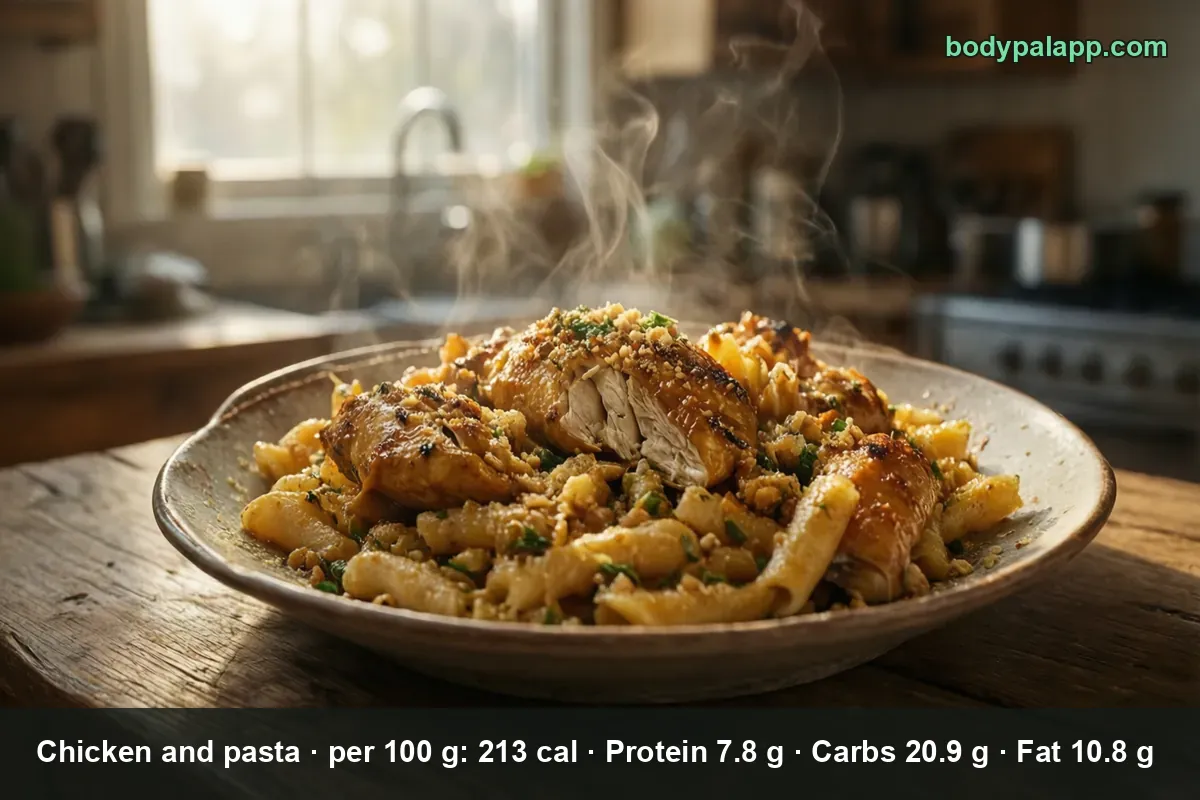
A 1-cup (204 g) serving of chicken and pasta carries 435 calories, and per 100 g the same dish runs 213 calories. That cup is a real lunch portion: 16.0 g of protein, 42.7 g of carbohydrate and 21.9 g of fat. Swap the dressing for broth and the number falls by almost half per gram.
On this page
- Chicken and pasta quick facts
- US servings, from one ounce to a full cup
- Chicken and pasta stew, the brothy version
- Chicken parmesan without the pasta
- Protein is the strong row, sodium is the one to watch
- How does chicken and pasta compare?
- Most popular chicken and pasta brands
- FAQ
Chicken and pasta quick facts
"Chicken and pasta" covers a lot of plates, but the one people actually build at home and scoop from a deli case is pasta tossed with chicken pieces and a dressing or sauce. The record that matches it is FNDDS 2708946, "Macaroni or pasta salad with chicken", filed under pasta mixed dishes. It is the only USDA entry in that category that puts the chicken and the noodles in the same bowl, sauce included, which is why it anchors this page instead of a plain cooked-pasta line.
Two things follow from that choice. The dressing is counted, so the fat number is honest rather than the fat of dry noodles. And the serving is a cup, the household measure USDA itself publishes for the food.
| Nutrient | Per 100 g | Per 1 cup (204 g) | % Daily Value |
|---|---|---|---|
| Calories | 213 | 435 | — |
| Total fat | 10.75 g | 21.9 g | 28% |
| Saturated fat | 1.79 g | 3.7 g | 18% |
| Carbohydrate | 20.94 g | 42.7 g | 16% |
| Dietary fiber | 1.2 g | 2.4 g | 9% |
| Total sugars | 1.57 g | 3.2 g | — |
| Protein | 7.82 g | 16.0 g | 32% |
| Sodium | 225 mg | 459 mg | 20% |
% Daily Value is based on a 2,000-calorie diet.
Verified nutrition data
Numbers on this page come from USDA FoodData Central, the U.S. Department of Agriculture’s food composition database, and from manufacturer labels where a branded product is named. Last verified September 2026. How we verify our data →
There is no added sugars row and no trans fat row on this page because this FNDDS release does not publish either for the record, and a blank is more useful than a guess. Cholesterol comes to 45 mg per cup, 15% of the Daily Value, and potassium to 171 mg, only 4% — a mixed dish built on refined noodles is never going to be a potassium food. Total sugars sit at 3.2 g per cup, and almost all of that rides in with the dressing rather than the pasta.
US servings, from one ounce to a full cup
| Serving | Weight | Calories |
|---|---|---|
| 1 oz | 28 g | 60 kcal |
| 1/2 cup, side scoop | 102 g | 217 kcal |
| Quantity not specified (USDA) | 136 g | 290 kcal |
| 1 cup, lunch portion | 204 g | 435 kcal |
| Per 100 g | 100 g | 213 kcal |
Only two of those rows are USDA's own portions: the 1-cup measure at 204 g and the odd-sounding "quantity not specified" code at 136 g, which USDA uses when a survey respondent said "some pasta salad" and nothing more. The half cup and the ounce are our own arithmetic from the USDA 100 g figure, not USDA servings.
The cup is where the trouble starts. An ounce sounds like a portion and lands at 60 calories, but nobody eats a wet mixed dish by the ounce — the cup people actually spoon out is roughly seven ounces, and that is 435 calories before anything else on the plate. Halve it into a side scoop and you are at 217, which is why the same food shows up in one food diary as a snack and in another as most of a lunch.
Chicken and pasta stew, the brothy version
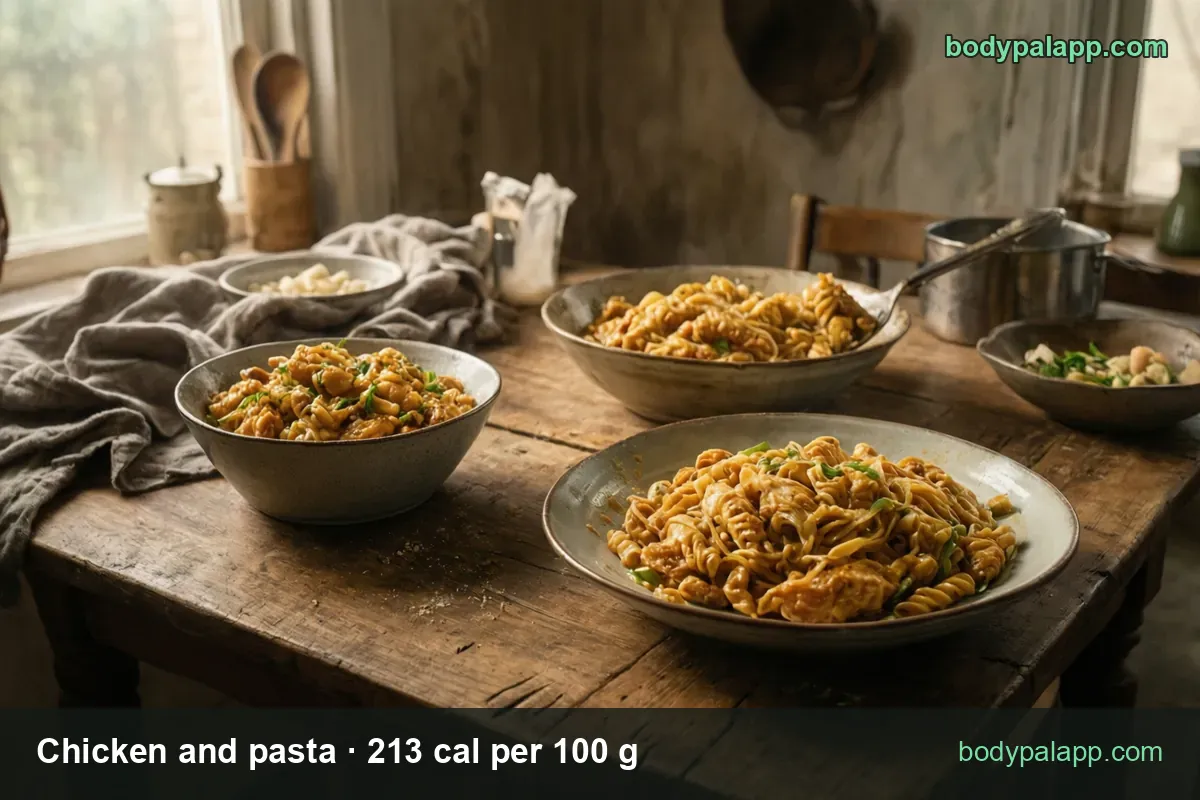
Same chicken, same noodles, different liquid. Chicken stew with pasta is 108 calories per 100 g, and a 1-cup (255 g) bowl comes to 275 calories. That is 160 calories under the dressed version despite the bigger bowl, because broth weighs as much as sauce and brings almost nothing with it.
The fat row explains all of it: 2.49 g per 100 g in the stew against 10.75 g in the pasta salad, more than four times the fat for the same base ingredients. Protein moves the other way — 10.24 g per 100 g in the stew, higher than the 7.82 g here, since the broth dilutes carbs and fat but the chicken stays.
| Version | Per 100 g | Typical serving | Calories |
|---|---|---|---|
| Chicken and pasta with dressing | 213 kcal | 1 cup (204 g) | 435 kcal |
| Chicken and pasta stew, brothy | 108 kcal | 1 cup (255 g) | 275 kcal |
| Grilled chicken alfredo, packaged | 200 kcal | 1 cup (165 g) | 330 kcal |
| Buffalo-style chicken pasta bake | 162 kcal | 1 cup (228 g) | 369 kcal |
| Mediterranean-style chicken pasta, frozen | 101 kcal | 1 package (227 g) | 229 kcal |
Store-bought trays land lower than you would expect, and the reason is portion size rather than lighter cooking: a frozen Mediterranean-style chicken pasta package is 229 calories because it holds 227 g at 101 calories per 100 g, while a deli-style alfredo tub is 200 calories per 100 g and only looks modest because the tub holds 165 g.
Chicken parmesan without the pasta
Type "chicken and pasta" into a restaurant menu and you get chicken parmesan, which USDA files as a separate food — breaded chicken without the pasta underneath it. Those records are worth knowing precisely because the pasta is missing from the number.
| Restaurant dish | Per 100 g | Serving | Calories |
|---|---|---|---|
| Italian restaurant chicken parmesan, no pasta | 204 kcal | 1 serving (301 g) | 614 kcal |
| Olive Garden chicken parmigiana, no pasta | 211 kcal | 1 serving (304 g) | 641 kcal |
| Carrabba's chicken parmesan, no cavatappi pasta | 206 kcal | 1 serving (339 g) | 698 kcal |
All three sit within seven calories per 100 g of each other, and within nine of the 213 in the home-style dish at the top of this page. The gap is entirely weight: a restaurant plates 301 to 339 g of breaded chicken, so the total runs 614 to 698 calories before a single noodle is served alongside. If you log a restaurant chicken parm and then log pasta separately, you are logging it correctly.
Protein is the strong row, sodium is the one to watch
A cup delivers 16.0 g of protein, 32% of the Daily Value, against 20% of the Daily Value for sodium. That ratio is better than most casseroles manage, and it is the argument for keeping chicken in the pasta rather than eating the pasta alone. The Daily Values used here are FDA's, set against a 2,000-calorie day.
Sodium is still the row to read. 459 mg in a cup is about a fifth of a teaspoon of table salt, fine on its own, less fine when the same meal brings bread and a dressing. For comparison, restaurant chicken parmesan is 536 mg of sodium in every 100 g — more than double the 225 mg here, per gram, and served in far bigger portions.
Saturated fat is the quiet win: 3.7 g per cup, 18% of the Daily Value, low for a dish that carries 21.9 g of total fat. Most of that fat is coming from oil-based dressing rather than cheese or cream. If you want the protein to do more work per calorie, MyPlate's protein foods guidance and the Dietary Guidelines both point the same direction: more chicken, less of the sauce that carries it.
How does chicken and pasta compare?
| Dish | Per 100 g | US serving | Calories |
|---|---|---|---|
| Chicken and pasta with dressing | 213 kcal | 1 cup (204 g) | 435 kcal |
| Chicken and pasta stew | 108 kcal | 1 cup (255 g) | 275 kcal |
| Chicken parmesan, no pasta | 204 kcal | 1 serving (301 g) | 614 kcal |
| Chicken with rice and vegetables, frozen meal | 111 kcal | 1 meal, 8.5 oz (241 g) | 268 kcal |
Our take: the dressed pasta is the densest of these four per 100 g, yet it is not the biggest number on the table — the restaurant chicken parmesan beats the cup by 179 calories simply by being plated at 301 g. For everyday eating, the two brothy or frozen options at 108 and 111 calories per 100 g are the ones that leave room in the day. For a filling meal that still counts as one meal, the cup at 435 with 16.0 g of protein is a fair trade. What moves the number is the liquid and the plate size, not whether there is chicken in it.
Most popular chicken and pasta brands in the United States
Ranked by how widely each product appears among foods sold in the United States, from the BodyPal food database of over 3.3 million products. Calories are the figures printed on each Nutrition Facts label, checked against USDA FoodData Central.
| Product | Calories (per 100 g) |
|---|---|
| Michelina's Mediterranean-Style Chicken Pasta | 101 cal |
| Kevin's Natural Foods Paleo Primavera Chicken Pasta | 111 cal |
| Reser's Buffalo Style Chicken Pasta Bake | 162 cal |
| Signature Cafe Lemon & Herb Chicken Pasta | 100 cal |
| Two Chefs Grilled White Chicken Pasta Alfredo | 200 cal |
| Freshly Crafted Penne Rose with Chicken Pasta | 152 cal |
Brand popularity: BodyPal food database. Nutrition: manufacturer labels / USDA FoodData Central.
Chicken and pasta FAQs
How many calories are in chicken and pasta?
435 calories for a 1-cup (204 g) serving of pasta with chicken in a dressing, which works out to 213 calories per 100 g. A half-cup side is 217. The fat in the sauce does most of the work here, at 21.9 g per cup.
How much protein is in chicken and pasta?
16.0 g of protein in a 1-cup (204 g) serving, or 32% of the Daily Value. That is 7.82 g per 100 g, less than the chicken alone would give you, because the pasta and the dressing carry most of the weight. A brothy chicken pasta stew is denser in protein per gram.
Is chicken and pasta good for weight loss?
A half cup at 217 calories fits most plans, while a full cup at 435 is a whole lunch. If you are watching calories, the brothy stew version is the better pick at 108 calories per 100 g against 213 here. Same ingredients, half the density, because broth replaces the dressing.
How many calories in chicken pasta salad?
435 calories per cup (204 g) — chicken pasta salad is the exact USDA record behind this page, at 213 calories per 100 g. Served cold as a deli scoop it is usually smaller: a half-cup scoop of 102 g comes to 217 calories, our own arithmetic from the USDA 100 g figure.
How many calories in creamy chicken pasta?
Around 330 calories for a 1-cup (165 g) tub of grilled chicken alfredo, which is 200 calories per 100 g and close to the 213 of the USDA dressed pasta salad. A buffalo-style chicken pasta bake runs 162 calories per 100 g, or 369 calories for a 228 g cup.
How many calories in chicken pasta per ounce?
60 calories per ounce (28 g), our own arithmetic from the USDA 100 g figure of 213 rather than a USDA serving. Ounces are a poor fit for a wet mixed dish: most people eat roughly seven ounces at a sitting, and that is the 435-calorie cup.
Does chicken pasta have a lot of sodium?
459 mg of sodium in a cup, 20% of the 2,300 mg Daily Value, or about a fifth of a teaspoon of table salt. That is moderate for a mixed dish. Restaurant chicken parmesan is the heavier option at 536 mg per 100 g, before any pasta is served with it.
How many calories in frozen chicken pasta meals?
Between 229 and 268 calories for a single frozen tray. A Mediterranean-style chicken pasta package of 227 g is 229 calories at 101 per 100 g, and a frozen chicken with rice and vegetable meal of 241 g is 268 calories. Portion control, not lighter cooking, explains the gap.
Similar foods
- Mac And Cheese — 513 cal per cup
- Prosciutto — 55 cal for 3 thin slices
- Baba ganoush — 110 cal for 1/4 cup
- Maple Syrup — 216 cal for 1/4 cup
- Penne pasta — 169 cal per cup
- Pasta — 168 cal per cup penne
Count it without the math
Point the camera at the bowl and BodyPal counts the chicken, the pasta and the sauce together.


How long does it take to burn off 435 kcal of chicken and pasta?
A 1-cup (204 g) serving is 435 kcal. Enter your weight and the amount you ate to see how long it takes you to burn that off:
lb
| Activity | Time to burn 435 kcal |
|---|---|
| Walking, brisk | 1 hr 27 min |
| Cycling, moderate | 54 min |
| Swimming, moderate | 1 hr 2 min |
| Jogging | 51 min |
| Weight training, moderate | 1 hr 37 min |
Times are for a 155 lb adult at a steady pace; change the weight to see yours. The amount is set to the portion in the text (204 g); change it to what you actually ate. BodyPal works this out from your steps automatically.
This table assumes you know your daily total. If you do not, the daily calorie calculator works it out from five numbers.