
How many calories are in jello?
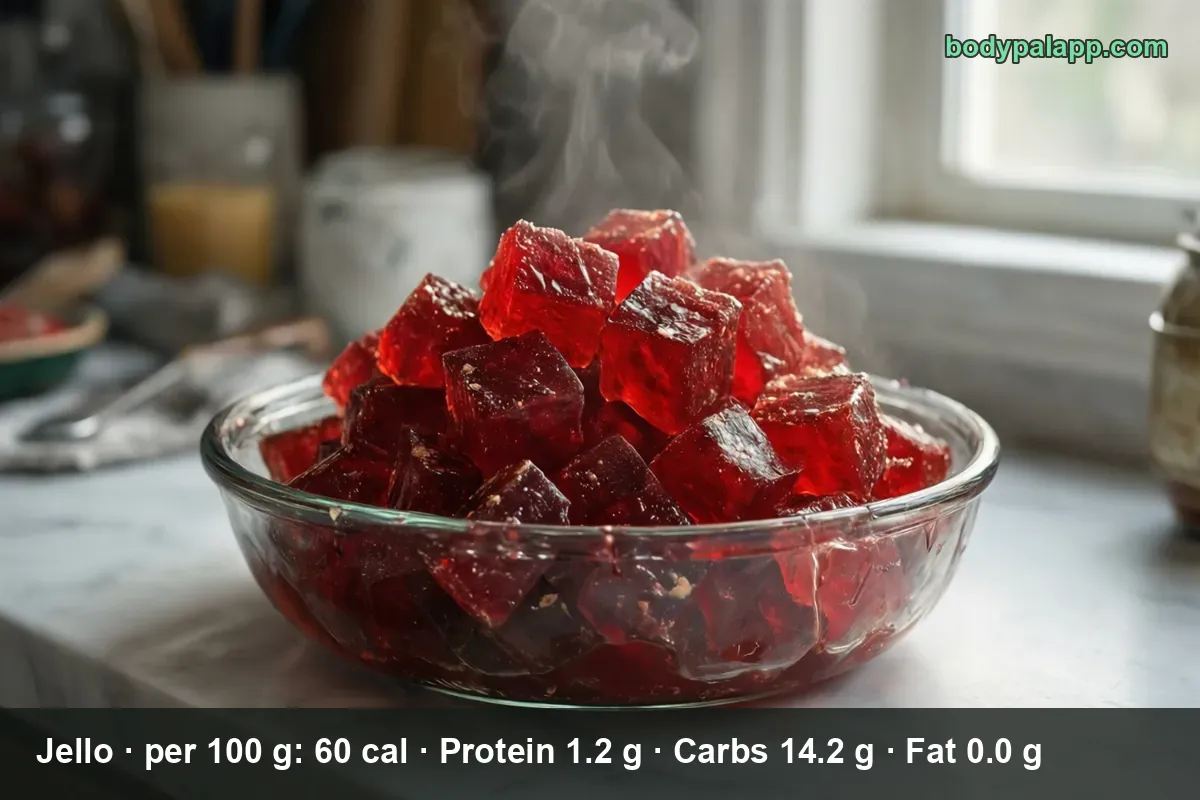
A full cup of set gelatin dessert weighs 240 g and holds 144 calories. Per 100 g the wobbling stuff is 60 calories, which puts it among the lightest desserts anyone actually eats by the bowl. There is no fat in it, no fiber either, and 32.4 g of the cup is sugar.
On this page
- Jello quick facts
- US servings, from one cube to a full cup
- Sugar-free jello
- Jello with fruit
- Jello powder before the water goes in
- Sodium outranks protein in the bowl
- How does jello compare?
- Most popular jello brands
- FAQ
Jello quick facts
The number people want is for the dessert sitting in the fridge, already set, so the row on this page is FNDDS 2710310, "Gelatin dessert". That is powder plus water, chilled until it holds a shape. It is also the only record that comes with the household measures Americans actually use for it, from a cubic-inch jiggler up to a full cup. Its values match SR Legacy 169596, "Gelatin desserts, dry mix, prepared with water", digit for digit, so there is nothing to reconcile between the two databases.
| Nutrient | Per 100 g | Per 1 cup (240 g) | % Daily Value |
|---|---|---|---|
| Calories | 60 | 144 | — |
| Total fat | 0 g | 0 g | 0% |
| Saturated fat | 0 g | 0 g | 0% |
| Carbohydrate | 14.19 g | 34.1 g | 12% |
| Dietary fiber | 0 g | 0 g | 0% |
| Total sugars | 13.49 g | 32.4 g | — |
| Protein | 1.22 g | 2.9 g | 6% |
| Sodium | 75 mg | 180 mg | 8% |
% Daily Value is based on a 2,000-calorie diet.
Verified nutrition data
Numbers on this page come from USDA FoodData Central, the U.S. Department of Agriculture’s food composition database, and from manufacturer labels where a branded product is named. Last verified September 2026. How we verify our data →
Two rows you would see on a JELL-O box are missing here: added sugars and trans fat. USDA does not publish either value for this record, so they are left out rather than guessed. Cholesterol is 0 mg, as you would expect from a food with no fat, and potassium is 1 mg per 100 g — 2 mg in the whole cup, which rounds to nothing against the FDA Daily Value of 4,700 mg.
US servings, from one cube to a full cup
| Serving | Weight | Calories |
|---|---|---|
| One cube, 1 cubic inch | 17 g | 10 kcal |
| 1 oz | 28.4 g | 17 kcal |
| One snack-size container | 95 g | 57 kcal |
| 1/2 cup | 120 g | 72 kcal |
| 1 cup | 240 g | 144 kcal |
| Per 100 g | 100 g | 60 kcal |
The cup and the cubic-inch cube are USDA household measures for this record. The 1 oz line and the half cup are our own arithmetic from the USDA 100 g figure, not USDA servings.
Here is a trap worth knowing about. FNDDS puts a cup of set gelatin at 240 g, so half a cup is 120 g and 72 calories. The SR Legacy version of the same food uses its own half-cup measure of 135 g, which comes to 81 calories. Same dessert, same database family, nine calories apart because one measure is scaled and the other was weighed. If you log a half cup and the app gives you 81 instead of 72, that is why — neither figure is wrong.
The cubes are the other place people misjudge. A single one-inch jiggler is 10 calories, so a plate of six is 60 — the same as 100 g of the bowl version, which is roughly what six cubes weigh. Cutting it into shapes does not change anything except how fast it goes.
Sugar-free jello
| Version | Per 100 g | Typical serving | Calories |
|---|---|---|---|
| Jello, prepared | 60 | 1 cup (240 g) | 144 kcal |
| Sugar-free jello | 20 | 1 cup (240 g) | 48 kcal |
| Sugar-free jello with fruit | 22 | 1 cup (240 g) | 53 kcal |
| Jello with fruit | 56 | 1 cup (240 g) | 134 kcal |
| Jello from mix, SR half cup | 60 | 1/2 cup (135 g) | 81 kcal |
| Dry gelatin mix, unprepared | 381 | 1 package, 3 oz (85 g) | 324 kcal |
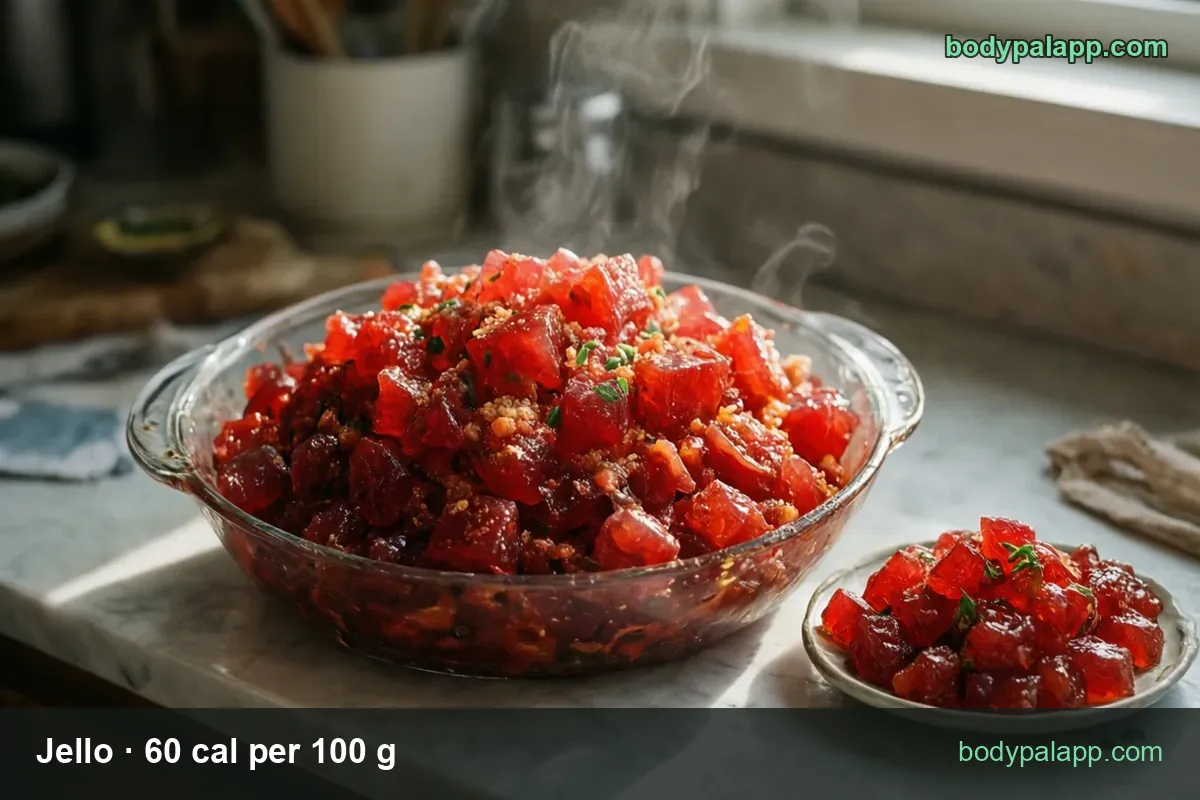
Swapping sweetener for sugar takes a cup of jello from 144 calories down to 48. That is the single biggest lever on this page — a two-thirds cut, and it happens because the sugar was doing almost all the work. Sugar-free gelatin dessert lists 0 g of total sugars and 4.22 g of carbohydrate per 100 g, against 13.49 g of sugars in the regular version.
Sodium moves in the opposite direction from what you might expect: the sugar-free record runs 48 mg per 100 g versus 75 mg in the standard one, so the lighter bowl is also the lower-sodium one. Protein barely changes, 0.83 g against 1.22 g per 100 g. Neither number is a reason to pick one.
Jello with fruit
Stirring canned or fresh fruit into the mold gives you FNDDS 2710311, gelatin dessert with fruit, at 56 calories per 100 g and 134 per cup. That is ten calories less than plain jello for the same cup, not more, because the fruit is mostly water and it displaces sweetened gel. You also pick up fiber, which plain jello has none of: 0.2 g per 100 g, which is 0.5 g in a cup, or 2% of the Daily Value.
Do it with sugar-free mix and the cup lands at 53 calories, with 1.13 g of sugars per 100 g that come from the fruit rather than the packet. If someone wants a dessert that includes actual produce and still stays under 60 calories, that is the version.
Jello powder before the water goes in
The gap between the box and the bowl is the number that surprises people most. SR Legacy 168775, dry gelatin dessert mix, is 381 calories per 100 g. A 3 oz package of it — 85 g of powder, our own arithmetic from that 100 g figure — is 324 calories, and it makes four half-cup servings once you add two cups of water.
So the powder is more than six times as concentrated as the finished dessert. Water is about eight-ninths of what ends up in the bowl, and water has no calories, which is the whole reason jello is a light dessert at all. The dry mix also carries 466 mg of sodium per 100 g and 86.04 g of sugars.
None of that changes what you log, as long as you log the prepared dessert. It matters if you are eyeballing the box: 324 calories divided into four servings is 81 each, which lines up with the SR half-cup figure above.
Brand mixes sit in the same range. USDA's branded records put Kool-Aid gelatin dessert powders at 364 calories per 100 g and Jell-O's own strawberry and orange mixes at 409, all with a 22 g quarter-package label serving of 80 to 90 calories that makes half a cup. Ready-to-eat gelatin from the refrigerated case, like Yoder's rainbow, comes in at 67 calories per 100 g — close to the generic 60, because it is already mixed with water.
Sodium outranks protein in the bowl
Gelatin is protein, so a fair number of people assume jello counts toward the day's protein. It does not. A cup gives 2.9 g, which is 6% of the 50 g Daily Value, and the amino acid profile of gelatin is incomplete regardless. Meanwhile that same cup carries 180 mg of sodium, or 8% of the Daily Value — about a thirteenth of a teaspoon of table salt. Sodium is the higher percentage of the two, in a dessert nobody thinks of as salty.
The bigger line is sugar: 32.4 g in a cup, out of 34.1 g of total carbohydrate. Essentially the entire carbohydrate load is sugar. USDA does not break out added sugars for this record, so there is no honest way to score the cup against the added-sugars target in the Dietary Guidelines — the only figure available is total sugars, and the two are not interchangeable. What you can say without any guesswork is that the sugar-free version removes the sugars entirely and still tastes like jello.
How does jello compare?
| Gelatin dish | Per 100 g | US serving | Calories |
|---|---|---|---|
| Jello, prepared | 60 kcal | 1 cup, 240 g | 144 kcal |
| Gelatin dessert with fruit | 56 kcal | 1 cup, 240 g | 134 kcal |
| Gelatin dessert, sugar free | 20 kcal | 1 cup, 240 g | 48 kcal |
| Gelatin salad with vegetables | 61 kcal | 1 cup, 240 g | 146 kcal |
The 240 g cup is the household measure from the main record; we applied it to the three neighbors from the same FNDDS group, so the serving column is our own arithmetic for those rows.
Our take: for weight loss, sugar-free is the pick and it is not close — 48 calories a cup is the lowest per gram of the four, and you can have a big bowl of it for the price of a few crackers. For anything else, jello is a weak choice. It brings no fiber, no meaningful protein, and 32.4 g of sugar in a cup, so it fills a dessert craving and nothing more. If you want the bowl to do a little work, stir fruit into the sugar-free mix: 53 calories a cup, plus the same 0.2 g of fiber per 100 g.
Most popular jello brands in the United States
Ranked by how widely each product appears among foods sold in the United States, from the BodyPal food database of over 3.3 million products. Calories are the figures printed on each Nutrition Facts label, checked against USDA FoodData Central.
| Product | Calories (per 100 g) |
|---|---|
| Kool-Aid Grape Gelatin Dessert | 364 cal |
| Kool-Aid Cherry Gelatin Dessert | 364 cal |
| Kool-Aid Strawberry Gelatin Dessert | 364 cal |
| Yoder's Rainbow Gelatin Dessert | 67 cal |
| Jell-O Gelatin Dessert Strawberry | 409 cal |
| Jell-O Gelatin Dessert Orange | 409 cal |
Brand popularity: BodyPal food database. Nutrition: manufacturer labels / USDA FoodData Central.
Jello FAQs
How many calories are in a cup of jello?
A 1-cup serving of prepared gelatin dessert weighs 240 g and carries 144 calories, at 60 calories per 100 g. Almost all of it is sugar: 32.4 g out of 34.1 g of total carbohydrate. There is no fat and no fiber in the bowl at all.
How many calories in a single jello cup?
A snack-size container holds about 95 g, which works out to 57 calories at the USDA rate of 60 per 100 g. That is a bit less than a half cup, which is 120 g and 72 calories. A sugar-free container of the same size is roughly 19 calories.
Is sugar-free jello zero calories?
No, sugar-free gelatin dessert is 20 calories per 100 g, so a full cup is 48 calories and a half cup is 24. It does list 0 g of total sugars, and its carbohydrate drops to 4.22 g per 100 g against 14.19 g in the regular version.
How many calories in jello powder before you add water?
Dry gelatin dessert mix is 381 calories per 100 g, so a 3 oz package of 85 g is about 324 calories. That package makes four half-cup servings, roughly 81 calories each once the water is in. The powder is more than six times as concentrated as the finished dessert.
Does jello have any protein?
A cup gives 2.9 g of protein, which is 6% of the Daily Value — technically gelatin, but not a protein source worth counting. Per 100 g that is 1.22 g. Sugar-free gelatin is slightly lower at 0.83 g per 100 g, so neither version moves your daily total much.
How much sugar is in a serving of jello?
A 1-cup serving has 32.4 g of total sugars, out of 34.1 g of total carbohydrate — practically the entire carb load. Per 100 g that is 13.49 g. USDA does not publish an added-sugars figure for this record, so only total sugars can be quoted here.
Is jello a good dessert for weight loss?
At 144 calories a cup it is lighter than most desserts, and the sugar-free version at 48 calories a cup is lighter still. Neither brings fiber or useful protein, so it will not hold off hunger. If you are watching calories, sugar-free is the better pick by 96 per cup.
How many calories in jello with fruit?
Gelatin dessert with fruit is 56 calories per 100 g, so a cup is 134 calories — ten fewer than plain jello, because the fruit displaces sweetened gel. It also brings 0.2 g of fiber per 100 g. Made with sugar-free mix, the same cup drops to 53 calories.
Similar foods
- Ceviche — 158 cal per cup
- Clementine — 35 cal per clementine
- Tom yum soup — 191 cal per bowl
- Pomegranate — 72 cal for 1/2 cup arils
- Clam Chowder — 237 cal per cup
- Chinese Chicken and Broccoli — 206 cal per cup
Count it without the math
Point the camera at the bowl and BodyPal counts the jello for you, cubes and all.


How long does it take to burn off jello?
A 1-cup (240 g) serving is 144 kcal. Enter your weight and the amount you ate to see how long it takes you to burn that off:
lb
| Activity | Time to burn 144 kcal |
|---|---|
| Walking, brisk | 29 min |
| Cycling, moderate | 18 min |
| Swimming, moderate | 21 min |
| Jogging | 17 min |
| Weight training, moderate | 32 min |
Times are for a 155 lb adult at a steady pace; change the weight to see yours. The amount is set to the portion in the text (240 g); change it to what you actually ate. BodyPal works this out from your steps automatically.
One food is easy to picture; a whole day is harder. See how many calories you need a day and what a deficit actually looks like.