
How many calories are in pad see ew?
A 1-cup serving of pad see ew weighs 152 g and carries 155 calories. Per 100 g the dish runs 102 calories, which is low for a plate of stir-fried noodles — the wide rice noodles hold more water and vegetables than oil. The catch is the portion, because a restaurant plate is rarely one cup.
On this page
- Pad see ew quick facts
- US servings, from one ounce to a restaurant plate
- Meatless, packaged and no-noodle versions
- Protein is the row that surprises people
- How does pad see ew compare?
- Most popular pad see ew brands
- Pad see ew FAQs
Pad see ew quick facts
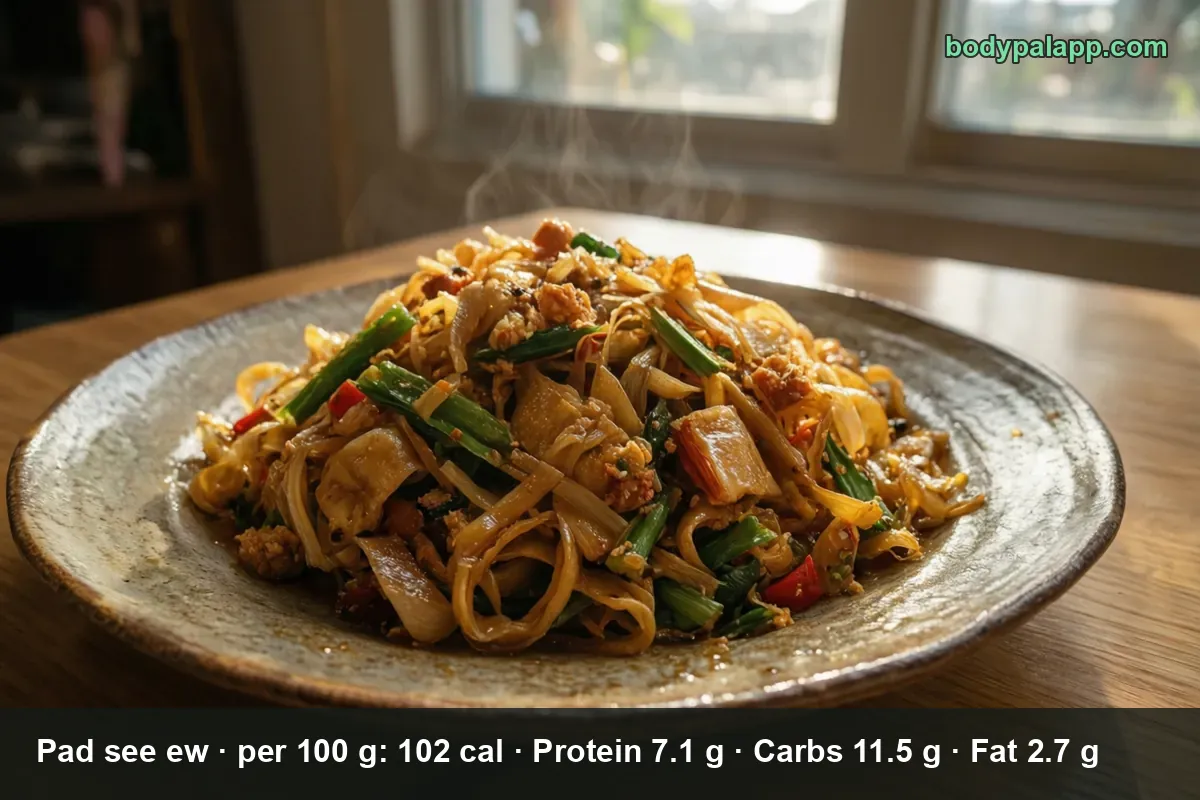
USDA FoodData Central has no entry filed under the Thai name. The closest match by construction is FNDDS 2708796, "Chow fun noodles with meat and vegetables" — wide rice noodles (sen yai, sold in Chinese markets as chow fun) stir-fried with meat and a green vegetable in a soy-based sauce. That is the plate in the photo above, and it is the plate a person is holding when they look this up.
Packaged pad see ew products exist in the USDA Branded database, but they are noodles and sauce in a pouch rather than a finished dish, so they belong further down the page instead of in the headline number.
| Nutrient | Per 100 g | Per 1 cup (152 g) | % Daily Value |
|---|---|---|---|
| Calories | 102 | 155 | — |
| Total fat | 2.74 g | 4.2 g | 5% |
| Saturated fat | 0.85 g | 1.3 g | 6% |
| Carbohydrate | 11.51 g | 17.5 g | 6% |
| Dietary fiber | 0.9 g | 1.4 g | 5% |
| Total sugars | 1.1 g | 1.7 g | — |
| Protein | 7.09 g | 10.8 g | 22% |
| Sodium | 162 mg | 246 mg | 11% |
% Daily Value is based on a 2,000-calorie diet.
Verified nutrition data
Numbers on this page come from USDA FoodData Central, the U.S. Department of Agriculture’s food composition database, and from manufacturer labels where a branded product is named. Last verified September 2026. How we verify our data →
Two rows you will not see here: added sugars and trans fat. The FNDDS 2021-2023 release does not publish either value for this dish, so leaving them out beats guessing. Cholesterol is 17 mg per 100 g, or 26 mg a cup (9% DV), and potassium is 145 mg per 100 g, 220 mg a cup (5% DV). Daily Values follow the FDA nutrition label reference amounts.
US servings, from one ounce to a restaurant plate
| Serving | Weight | Calories |
|---|---|---|
| 1 oz | 28.4 g | 29 kcal |
| 1 cup | 152 g | 155 kcal |
| 1.5 cups | 228 g | 233 kcal |
| 2 cups | 304 g | 310 kcal |
| 1 restaurant plate, about 3 cups | 456 g | 465 kcal |
| Per 100 g | 100 g | 102 kcal |
Only the 1-cup line is a USDA household measure. The ounce, the 1.5-cup, 2-cup and restaurant-plate lines are our own arithmetic from the USDA 100 g figure, not USDA servings.
That distinction matters more here than on most pages. Search results love to quote "155 calories," and it is correct — for a cup. A takeout container from a Thai restaurant usually holds close to three of those cups. Scaled the same way, that plate carries about 32 g of protein, roughly 52 g of carbohydrate and about 739 mg of sodium, which is 32% of a day's Daily Value in one meal.
If you eat pad see ew as a full dinner, plan on the 400-500 calorie range rather than the 150 range. If it is one dish shared across a table, a cup or a cup and a half is realistic.
Meatless, packaged and no-noodle versions
| Version | Per 100 g | Typical serving | Calories |
|---|---|---|---|
| Pad see ew with meat and vegetables (main) | 102 kcal | 1 cup, 152 g | 155 kcal |
| Meatless chow fun with vegetables | 74 kcal | 1 cup, 152 g | 113 kcal |
| Restaurant vegetable chow mein, no noodles | 43 kcal | 1 cup, 195 g | 84 kcal |
| Nona Lim Pad See Ew Rice Noodles (pack) | 181 kcal | 5.5 oz, 156 g | 282 kcal |
| Nona Lim Pad See Ew Stir-Fry Starter | 156 kcal | 7.4 oz, 211 g | 329 kcal |
| Thai Kitchen Thai-Style Rice Noodles & Chicken | 113 kcal | 1 bowl, 283 g | 320 kcal |
Drop the meat and a cup falls to 113 calories, 42 fewer, using FNDDS 2708797. Something else moves in the opposite direction: sodium rises from 162 mg to 189 mg per 100 g, because the sauce is doing the flavor work that the meat used to do. The meatless plate is lighter, not saltier-safe.
The packaged rows read high on purpose. Nona Lim's rice noodles are 181 calories per 100 g, close to double the cooked dish, because a pouch of noodles has no vegetables and no braising liquid diluting it — almost every gram is starch. The Thai Kitchen chicken bowl at 113 calories per 100 g sits much nearer the restaurant plate, since it is a finished meal with sauce and vegetables in the weight. Read a package label per gram, not per pouch, before comparing it with anything on this page.
USDA also lists pork chow mein or chop suey with no noodles at 98 calories per 100 g (FNDDS 2706771). We are not costing a serving for it: the portion file publishes no gram weight for its cup, so any calorie figure would be invented.
Protein is the row that surprises people
Noodle dishes have a reputation as pure starch, and this one breaks it. A cup delivers 10.8 g of protein — 22% of the Daily Value from a 155-calorie serving. Per 100 g the dish holds 7.09 g of protein against 11.51 g of carbohydrate, a ratio closer to a stir-fry than to a bowl of pasta.
The meat is the whole reason. The meatless chow fun record carries 1.56 g of protein per 100 g, about four and a half times less. If you are ordering with protein in mind, the meat version is the pick and it is not close; MyPlate's protein foods guidance puts most adults around 5 to 6.5 ounce-equivalents a day, and a restaurant plate of this covers a large slice of that.
Saturated fat stays quiet at 1.3 g a cup, 6% of the Daily Value, which is unusual for a wok dish. Sodium is the row to watch instead: 246 mg a cup, about a tenth of a teaspoon of table salt, is modest, but the restaurant chow mein record runs 344 mg per 100 g, more than double the 162 mg here. Restaurant sauce volume, not the noodles, drives that gap. The Dietary Guidelines for Americans put the ceiling at 2,300 mg a day.
How does pad see ew compare?
| Dish | Per 100 g | US serving | Calories |
|---|---|---|---|
| Pad see ew (chow fun with meat and vegetables) | 102 kcal | 1 cup, 152 g | 155 kcal |
| Meatless chow fun with vegetables | 74 kcal | 1 cup, 152 g | 113 kcal |
| Restaurant vegetable chow mein, no meat or noodles | 43 kcal | 1 cup, 195 g | 84 kcal |
| Pork chow mein or chop suey, no noodles | 98 kcal | 1 cup, weight not published | — |
Our take: for weight loss, the no-noodle vegetable chow mein is the lightest thing on this table at 43 calories per 100 g, and it is the only version lighter than the meatless noodles. For staying full, take the main record. A cup of pad see ew and a cup of the meatless version are 42 calories apart, which is nothing, while the protein gap between them is enormous. Paying 42 calories for roughly four times the protein is the easiest trade on this page.
Most popular pad see ew brands in the United States
Ranked by how widely each product appears among foods sold in the United States, from the BodyPal food database of over 3.3 million products. Calories are the figures printed on each Nutrition Facts label, checked against USDA FoodData Central.
| Product | Calories (per 100 g) |
|---|---|
| Nona Lim Pad See Ew Rice Noodles | 181 cal |
| Nona Lim Pad See Ew Stir-Fry Starter | 156 cal |
| Thai Kitchen Thai-Style Rice Noodles & Chicken | 113 cal |
Brand popularity: BodyPal food database. Nutrition: manufacturer labels / USDA FoodData Central.
Pad see ew FAQs
How many calories are in pad see ew?
A 1-cup serving is 155 calories, based on the USDA record for chow fun noodles with meat and vegetables at 102 calories per 100 g. Most restaurant portions are bigger than a cup, so the number on your plate is usually two or three times that.
How many calories in one plate of pad see ew from a restaurant?
A restaurant plate is roughly 3 cups, about 456 g, which works out to 465 calories — our own scaling from the USDA 100 g figure, not a USDA serving. That plate also carries about 32 g of protein and about 739 mg of sodium.
How much protein is in pad see ew?
A 1-cup serving has 10.8 g of protein, 22% of the Daily Value. That is high for a noodle dish, and the meat is the reason: the meatless chow fun record holds only 1.56 g per 100 g against 7.09 g here. A full plate scales to about 32 g.
How many carbs are in pad see ew?
A cup has 17.5 g of carbohydrate, 6% of the Daily Value, from 11.51 g per 100 g. Wide rice noodles sound heavy, but they are cooked and sauced, so much of the weight is water. A 3-cup restaurant plate scales to about 52 g of carbs.
How much sodium is in pad see ew?
A 1-cup serving has 246 mg of sodium, 11% of the Daily Value, or roughly a tenth of a teaspoon of table salt. The USDA record for restaurant vegetable chow mein is far saltier at 344 mg per 100 g, more than double the 162 mg here.
Is pad see ew healthy?
At 102 calories per 100 g with 7.09 g of protein, the USDA record is lighter than most stir-fried noodle dishes and stronger on protein. Portion size decides the rest: one cup is 155 calories, a restaurant plate about 465. If you are watching sodium, ask for less sauce.
How many calories in vegetarian pad see ew?
The meatless chow fun record is 74 calories per 100 g, so a 1-cup serving is 113 calories, 42 fewer than the version with meat. Protein drops hard, from 7.09 g to 1.56 g per 100 g, and sodium is actually higher at 189 mg per 100 g.
How many calories in pad see ew with chicken?
A packaged Thai-style rice noodle and chicken bowl in USDA Branded is 113 calories per 100 g, or 320 calories for the 283 g bowl. A restaurant chicken version sits closer to the main record on this page, 102 calories per 100 g and 155 a cup.
Similar foods
- Pork And Beans — 273 cal per cup
- Turkey deli meat — 89 cal for 3 slices
- Chicken Tikka Masala — 257 cal per cup
- Chinese Chicken and Broccoli — 206 cal per cup
- Tuna steak — 185 cal per steak, 6 oz
- Clam Chowder — 237 cal per cup
Count it without the math
Point the camera at the plate and BodyPal counts the noodles for you, sauce and all.


How long does it take to burn off pad see ew?
A 1-cup (152 g) serving is 155 kcal. Enter your weight and the amount you ate to see how long it takes you to burn that off:
lb
| Activity | Time to burn 155 kcal |
|---|---|
| Walking, brisk | 31 min |
| Cycling, moderate | 19 min |
| Swimming, moderate | 22 min |
| Jogging | 18 min |
| Weight training, moderate | 34 min |
Times are for a 155 lb adult at a steady pace; change the weight to see yours. The amount is set to the portion in the text (152 g); change it to what you actually ate. BodyPal works this out from your steps automatically.
One food is easy to picture; a whole day is harder. See how many calories you need a day and what a deficit actually looks like.