
How many calories are in pepperoni pizza?
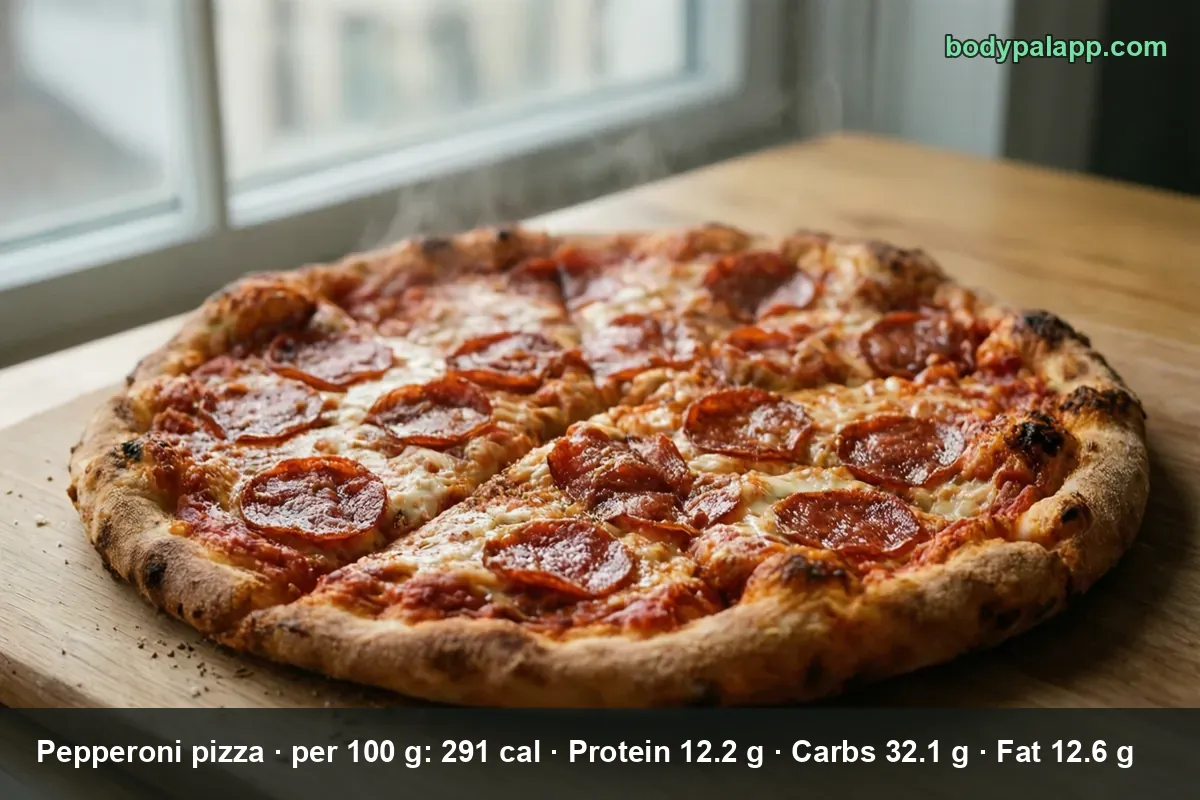
One slice of a 14-inch hand-tossed pepperoni pizza weighs 110 g and carries 320 calories. Per 100 g the same pizza runs 291 calories. Two slices, which is how most people actually eat it, come to 640. The pepperoni matters less here than the crust underneath it, and the sodium matters more than either one.
On this page
- Pepperoni pizza quick facts
- US servings from one ounce to the whole pie
- Crust moves the number more than the pepperoni
- Sodium is the row that runs out first
- How does pepperoni pizza compare?
- Most popular pepperoni pizza brands
- FAQ
Pepperoni pizza quick facts
The record on this page is SR Legacy 172052, "PIZZA HUT 14 inch Pepperoni Pizza, Hand-Tossed Crust". It was chosen for a simple reason: a regular hand-tossed slice off a large pie is the pepperoni pizza an American is most likely to be holding, and USDA gives it a real household portion of one slice rather than a bare 100 g figure. At 291 calories per 100 g it also sits in the middle of the eight USDA records in the database, which span 238 to 333.
One thing to know up front: every restaurant record for this food is a chain recipe. A pizza from the corner shop or one built at home can land anywhere in that same 238-to-333 band, and the crust is what decides where.
| Nutrient | Per 100 g | Per 1 slice (110 g) | % Daily Value |
|---|---|---|---|
| Calories | 291 | 320 | — |
| Total fat | 12.63 g | 13.9 g | 18% |
| Saturated fat | 5.4 g | 5.9 g | 30% |
| Carbohydrate | 32.11 g | 35.3 g | 13% |
| Dietary fiber | 2.6 g | 2.9 g | 10% |
| Total sugars | 2.82 g | 3.1 g | — |
| Protein | 12.23 g | 13.5 g | 27% |
| Sodium | 759 mg | 835 mg | 36% |
% Daily Value is based on a 2,000-calorie diet.
Verified nutrition data
Numbers on this page come from USDA FoodData Central, the U.S. Department of Agriculture’s food composition database, and from manufacturer labels where a branded product is named. Last verified September 2026. How we verify our data →
There is no added sugars row above, because the SR Legacy release does not measure added sugars for this dish, and a guessed number is worse than a missing one. Two rows that did survive and are worth a glance: cholesterol at 29 mg a slice (10% DV) and potassium at 228 mg (5% DV). Trans fat is small but not zero, 0.26 g per 100 g, which works out to roughly 0.3 g in a slice.
The saturated fat line is the one that catches people. A single slice is 30% of the FDA Daily Value for saturated fat, so two slices put you at 59% before anything else on the table counts.
US servings from one ounce to the whole pie
| Serving | Weight | Calories |
|---|---|---|
| 1 oz | 28 g | 81 kcal |
| 1 slice, large hand-tossed | 110 g | 320 kcal |
| 2 slices | 220 g | 640 kcal |
| Half a 14-inch pizza | 442 g | 1285 kcal |
| One whole 14-inch pizza | 883 g | 2570 kcal |
| Per 100 g | 100 g | 291 kcal |
The 110 g slice and the 883 g whole pie are USDA's own portions for this record. The one-ounce line, the two-slice line and the half-pizza line are our own arithmetic from the USDA 100 g figure, not USDA servings, so treat them as clean math rather than a measured plate.
Two practical notes. First, a 14-inch pie divides into eight slices at about 110 g each, which is exactly why the slice and the whole-pizza numbers line up. Second, weight beats geometry every time: a "slice" from a 12-inch pizza is closer to 96 g, and that alone shaves 30 to 50 calories off before the recipe changes at all.
If you are eyeballing a box at a party, count slices and multiply by 320. It is the fastest honest estimate you can make without a scale.
Crust moves the number more than the pepperoni
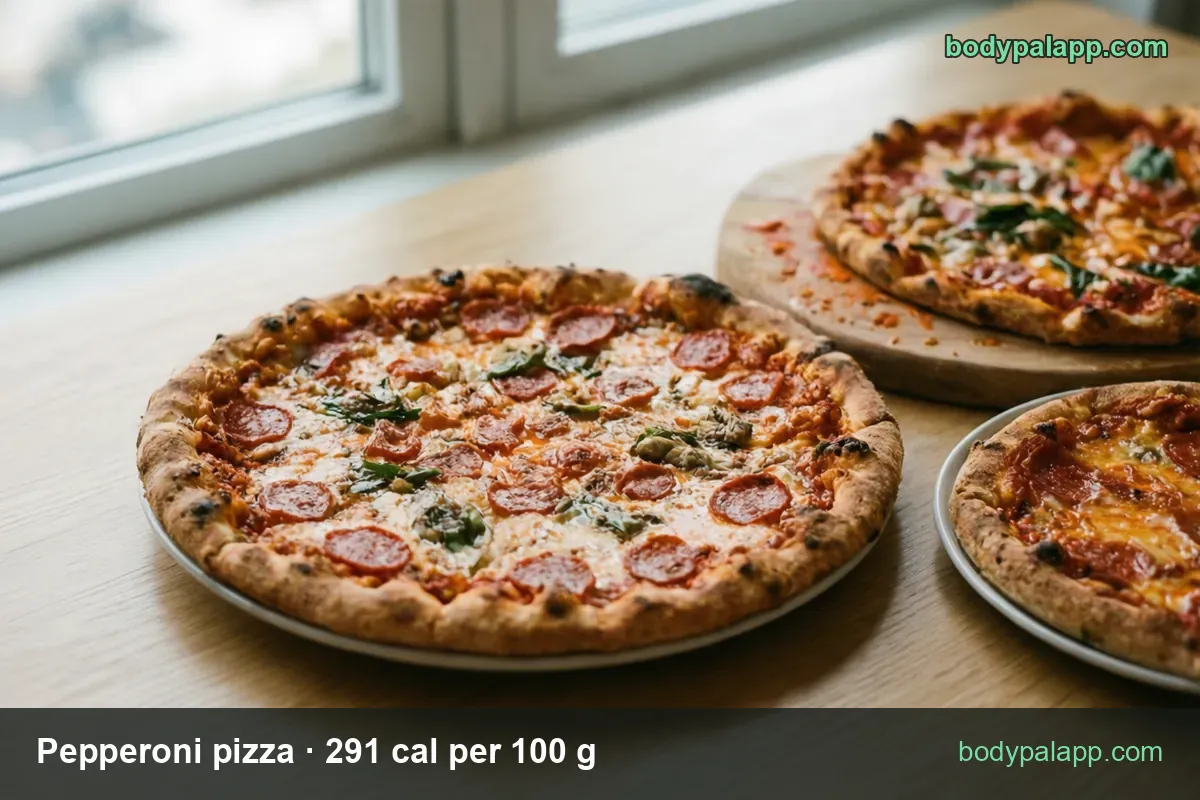
Same topping, six different builds, six different answers.
| Version | Per 100 g | Typical slice | Calories |
|---|---|---|---|
| 14-inch hand-tossed (this page) | 291 kcal | 1 slice (110 g) | 320 kcal |
| 14-inch pan crust | 291 kcal | 1 slice (113 g) | 329 kcal |
| 12-inch pan crust | 298 kcal | 1 slice (96 g) | 286 kcal |
| 12-inch hand-tossed | 280 kcal | 1 slice (96 g) | 269 kcal |
| Papa John's original crust, 14-inch | 275 kcal | 1 slice (123 g) | 338 kcal |
| Domino's crunchy thin crust, 14-inch | 328 kcal | 1 slice (79 g) | 259 kcal |
Read that table twice, because it contains the single most useful fact on this page. The thin-crust record is the densest pizza in the table at 328 calories per 100 g, and it still gives you the lightest slice at 259 calories. Less dough means the cheese and pepperoni make up more of every gram, but the slice itself weighs only 79 g. Thin crust saves you calories only if you eat the same number of slices you would have eaten otherwise.
The opposite trap sits one row above it. Papa John's original crust is the lowest-density pepperoni record here at 275 calories per 100 g, yet its 123 g slice is the biggest number in the table at 338 calories. A generous slice of a mild pizza beats a small slice of a rich one.
Pan crust barely moves the needle per gram. The 14-inch pan record is also 291 calories per 100 g, identical to hand-tossed: the pan base is oilier but denser, and the two effects cancel. It only costs more because the slice weighs 113 g instead of 110 g.
Frozen and foodservice pizza runs lighter than any of the chains. USDA's whole-grain school pepperoni pizza lands at 238 calories per 100 g with 4.1 g of fiber, the most in the set, because the cheese is cut with a blend and the crust carries whole grain. Supermarket boxes tell a similar story on the label: store-brand and regional frozen pepperoni pizzas sit between roughly 204 and 264 calories per 100 g, with a labeled serving landing between 260 and 350 calories.
Sodium is the row that runs out first
Most people watch the fat on a pizza. The number that actually runs out first is sodium.
One slice is 835 mg, 36% of the 2,300 mg Daily Value, or about a third of a teaspoon of table salt. Two slices reach 1,670 mg — 73% of the day — while the same two slices are 11.9 g of saturated fat, or 59%. Sodium hits the ceiling first, and it is not close. The Dietary Guidelines for Americans put the 2,300 mg limit on the same footing as the saturated fat limit, so if you only have room to steer one number at dinner, steer this one.
Spread across the seven chain records, sodium is also where the recipes differ most. The thin 'n crispy build is 967 mg per 100 g, the deep-dish record just 492 mg — roughly half the salt for the same food. That is a far bigger spread than the calories, which vary by less than 100 per 100 g across all seven.
The protein line is the pleasant surprise. A slice delivers 13.5 g, 27% of the Daily Value, and two slices bring 27 g. Pair them with a salad instead of a third slice and you have a lunch that holds up, which is roughly the plate balance MyPlate is describing anyway.
How does pepperoni pizza compare?
| Pizza | Per 100 g | US serving | Calories |
|---|---|---|---|
| Pepperoni, hand-tossed 14-inch | 291 kcal | 1 slice (110 g) | 320 kcal |
| Pepperoni, crunchy thin crust | 328 kcal | 1 slice (79 g) | 259 kcal |
| Sausage, pan crust | 287 kcal | 1 slice | — |
| Cheese, thin crust | 295 kcal | 1 slice | — |
Two cells are blank on purpose: USDA does not publish a slice weight for the sausage pan record or the cheese thin-crust record, so there is no honest way to give a per-slice number for them.
Our take: pepperoni is not the villain the menu makes it out to be. A cheese pizza on thin crust is 295 calories per 100 g, more than a pepperoni pizza on original crust at 275 — the crust and the cheese load decide the density, and the pepperoni just adds salt and a little fat on top. If you want the lighter plate, order the thinner crust and keep the slice count the same, or take the bigger crust and stop one slice earlier. Swapping the topping is the one change that will barely move your day.
Most popular pepperoni pizza brands in the United States
Ranked by how widely each product appears among foods sold in the United States, from the BodyPal food database of over 3.3 million products. Calories are the figures printed on each Nutrition Facts label, checked against USDA FoodData Central.
| Product | Calories (per 100 g) |
|---|---|
| Ellio's Pepperoni Pizza | 217 cal |
| Davis Bros. Pizza Pepperoni Pizza | 264 cal |
| Brew Pub Pepperoni Pizza | 261 cal |
| Orv's Pepperoni Pizza | 234 cal |
| Chanticlear Pepperoni Pizza | 231 cal |
| Mama Bosso Pepperoni Pizza | 204 cal |
Brand popularity: BodyPal food database. Nutrition: manufacturer labels / USDA FoodData Central.
Pepperoni pizza FAQs
How many calories are in one slice of pepperoni pizza?
320 calories in one slice of a 14-inch hand-tossed pepperoni pizza, based on a 110 g slice at 291 calories per 100 g. That slice also carries 13.5 g of protein, 13.9 g of fat and 835 mg of sodium. Thinner slices weigh less and land lower; pan slices weigh more and land higher.
How many calories in a whole 14-inch pepperoni pizza?
2,570 calories for a whole 14-inch hand-tossed pie, which weighs about 883 g and cuts into eight slices of roughly 110 g each. It also carries about 6,702 mg of sodium, nearly three times the daily value. Half a pizza is 1,285 calories, and two slices is 640.
Is thin crust pepperoni pizza lower in calories?
Per slice, yes: a crunchy thin-crust slice is 259 calories against 320 for hand-tossed, because the slice weighs only 79 g. Per 100 g it is the opposite, 328 against 291, since less dough means more topping in every bite. Thin crust wins only if you stop at the same number of slices.
How much protein is in pepperoni pizza?
13.5 g of protein in one 110 g slice, or 12.23 g per 100 g, which is 27% of the 50 g Daily Value. Two slices bring 27 g. Thin-crust records run higher per gram, up to 14.13 g per 100 g, because the topping makes up more of the slice.
How much sodium is in a slice of pepperoni pizza?
835 mg in one 110 g slice, which is 36% of the 2,300 mg Daily Value, or about a third of a teaspoon of table salt. Two slices reach 1,670 mg, 73% of the day. The saltiest record in the set, a thin and crispy build, runs 967 mg per 100 g.
Is pepperoni pizza higher in calories than cheese pizza?
Not always. A cheese pizza on thin crust is 295 calories per 100 g, while a pepperoni pizza on original crust is 275. Pepperoni adds fat and sodium, but crust thickness moves the per-gram number more. Compare slice weights rather than toppings when you log a couple of slices.
How many calories in two slices of pepperoni pizza?
640 calories for two 110 g hand-tossed slices, plus 27 g of protein, 27.8 g of fat and 1,670 mg of sodium. That is 73% of the day's sodium value and 59% of the saturated fat value, at 11.9 g. Two slices is a full lunch rather than a snack.
How many calories in frozen pepperoni pizza?
238 calories per 100 g for USDA's frozen whole-grain school pepperoni pizza, well under the 291 of a hand-tossed chain slice. Store brands scatter wider: frozen pepperoni pizza labels run from about 204 to 264 calories per 100 g, with a labeled serving landing between 260 and 350 calories.
Similar foods
- Cornmeal — 581 cal per cup
- Potato wedges — 138 cal for 3 oz
- Ear of Corn — 99 cal per medium ear
- Sweet Potato — 103 cal per medium, baked
- Papaya salad — 190 cal per plate
- Carrot — 53 cal per cup chopped
Count it without the math
Point the camera at the box and BodyPal counts the slices for you, crust and all.


How long does it take to burn off 320 kcal of pepperoni pizza?
One slice (110 g) is 320 kcal. Enter your weight and the amount you ate to see how long it takes you to burn that off:
lb
| Activity | Time to burn 320 kcal |
|---|---|
| Walking, brisk | 1 hr 4 min |
| Cycling, moderate | 40 min |
| Swimming, moderate | 46 min |
| Jogging | 38 min |
| Weight training, moderate | 1 hr 11 min |
Times are for a 155 lb adult at a steady pace; change the weight to see yours. The amount is set to the portion in the text (110 g); change it to what you actually ate. BodyPal works this out from your steps automatically.
One food is easy to picture; a whole day is harder. See how many calories you need a day and what a deficit actually looks like.