
How many calories are in pozole?
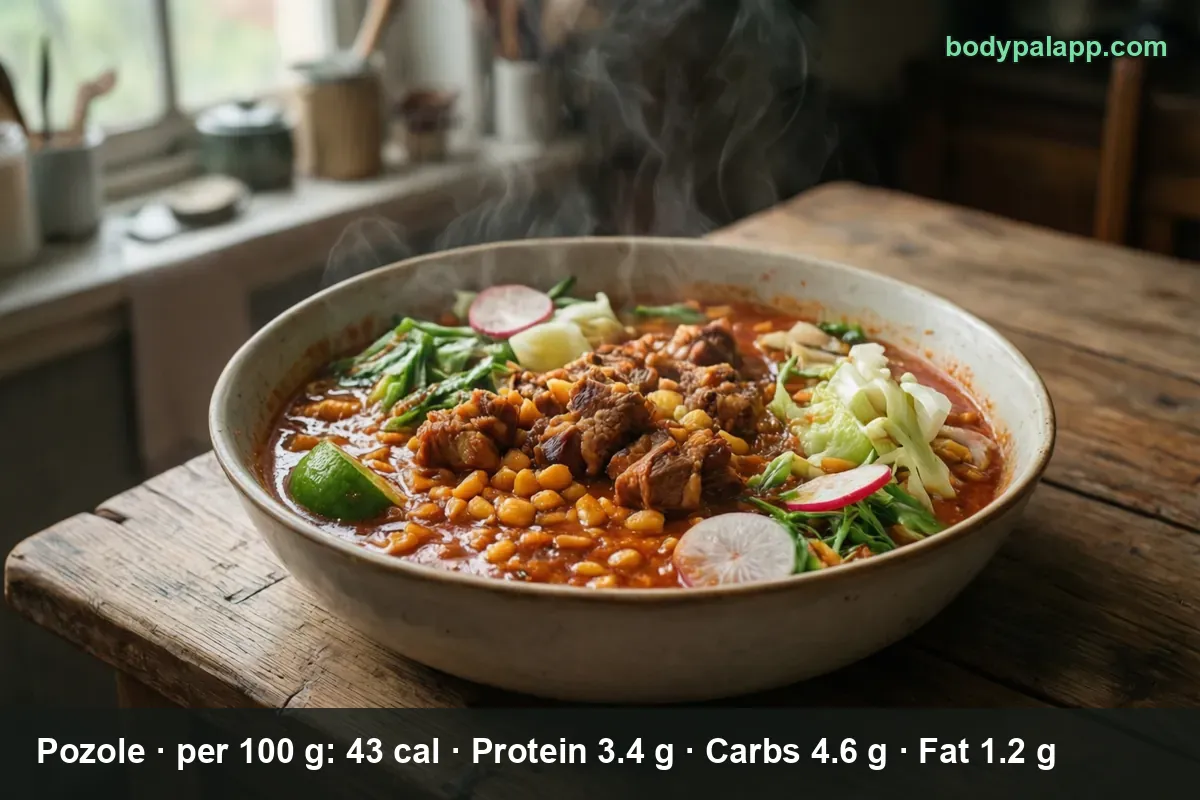
A 1-cup serving of pozole, 245 g of broth, hominy and pork, comes to 105 calories. Per 100 g the stew runs 43 calories, which makes it one of the lightest hot meals you can put in a bowl. The pot is thin. The bowl size is what actually decides your number.
On this page
- Pozole quick facts
- US servings, from one ounce to a two-cup bowl
- Chicken, pork and canned pozole
- Sodium is the row to watch, not calories
- How does pozole compare?
- Most popular pozole brands
- FAQ
Pozole quick facts
The headline figure comes from FNDDS 2707129, "Soup, pozole", the Survey (FNDDS) 2021-2023 record for the finished dish. That is the one worth using, because it describes what a person actually holds: a bowl of hot broth with hominy, meat and whatever went in the pot, not a can of hominy or a spice base you still have to cook. Canned and refrigerated brands are thicker and heavier per gram, so they sit in their own section further down instead of setting the headline figure.
| Nutrient | Per 100 g | Per 1 cup (245 g) | % Daily Value |
|---|---|---|---|
| Calories | 43 | 105 | — |
| Total fat | 1.23 g | 3.0 g | 4% |
| Saturated fat | 0.28 g | 0.7 g | 3% |
| Carbohydrate | 4.59 g | 11.2 g | 4% |
| Dietary fiber | 0.9 g | 2.2 g | 8% |
| Total sugars | 0.98 g | 2.4 g | — |
| Protein | 3.38 g | 8.3 g | 17% |
| Sodium | 248 mg | 608 mg | 26% |
% Daily Value is based on a 2,000-calorie diet.
Verified nutrition data
Numbers on this page come from USDA FoodData Central, the U.S. Department of Agriculture’s food composition database, and from manufacturer labels where a branded product is named. Last verified September 2026. How we verify our data →
Two rows you would see on a package label are missing here: added sugars and trans fat, because this edition of the survey database does not publish either for the dish. Cholesterol comes in at 12 mg per 100 g, or 29 mg a cup, which is 10% of the Daily Value. Potassium is 103 mg per 100 g, 252 mg a cup, 5% DV.
The shape of that table is the whole story of pozole. Almost every hot meal that fills you up for 105 calories is mostly water, and this one is too. What separates it from a plain broth is the 8.3 g of protein and the hominy, which is where the 11.2 g of carbohydrate comes from.
US servings, from one ounce to a two-cup bowl
| Serving | Weight | Calories |
|---|---|---|
| 1 oz | 28.4 g | 12 kcal |
| 1/2 cup, a taster or a side | 122.5 g | 53 kcal |
| 1 cup, the USDA serving | 245 g | 105 kcal |
| 1.5 cups, a typical restaurant bowl | 367.5 g | 158 kcal |
| 2 cups, a large bowl or a second helping | 490 g | 211 kcal |
| Per 100 g | 100 g | 43 kcal |
Only the 1-cup line and the 100 g line come straight from USDA. The half cup, the ounce, the 1.5-cup bowl and the 2-cup bowl are our own arithmetic from the USDA 100 g figure, not USDA servings, scaled at 43 calories per 100 g.
That scaling matters more with pozole than with most foods, because nobody eats a measured cup of it. A cup is a modest amount of soup, roughly what a ladle and a half gives you. A restaurant bowl is closer to 1.5 or 2 cups, and the difference between the number people look up and the number they eat is 105 against 211 calories. Same recipe, same broth, double the count.
If you weigh instead of measure, one ounce of pozole is 12 calories, so a kitchen scale reading of 400 g puts you at about 172 calories. Garnishes are extra and are not in any of these numbers: shredded cabbage and radish barely register, but a handful of tostadas or a spoon of crema will add more than the extra cup of stew would.
Chicken, pork and canned pozole
| Version | Per 100 g | Typical serving | Calories |
|---|---|---|---|
| Pozole, homemade style (USDA reference) | 43 kcal | 1 cup (245 g) | 105 kcal |
| Chicken pozole, Del Real Foods | 53 kcal | 1 cup (245 g) | 130 kcal |
| Pork and hominy pozole, canned (Goya) | 78 kcal | 1 cup (245 g) | 191 kcal |
| Pork and hominy pozole, canned (Juanita's) | 135 kcal | 1 cup (245 g) | 331 kcal |
| Red pozole meal starter (Teasdale) | 77 kcal | 0.5 cup (130 g) | 100 kcal |
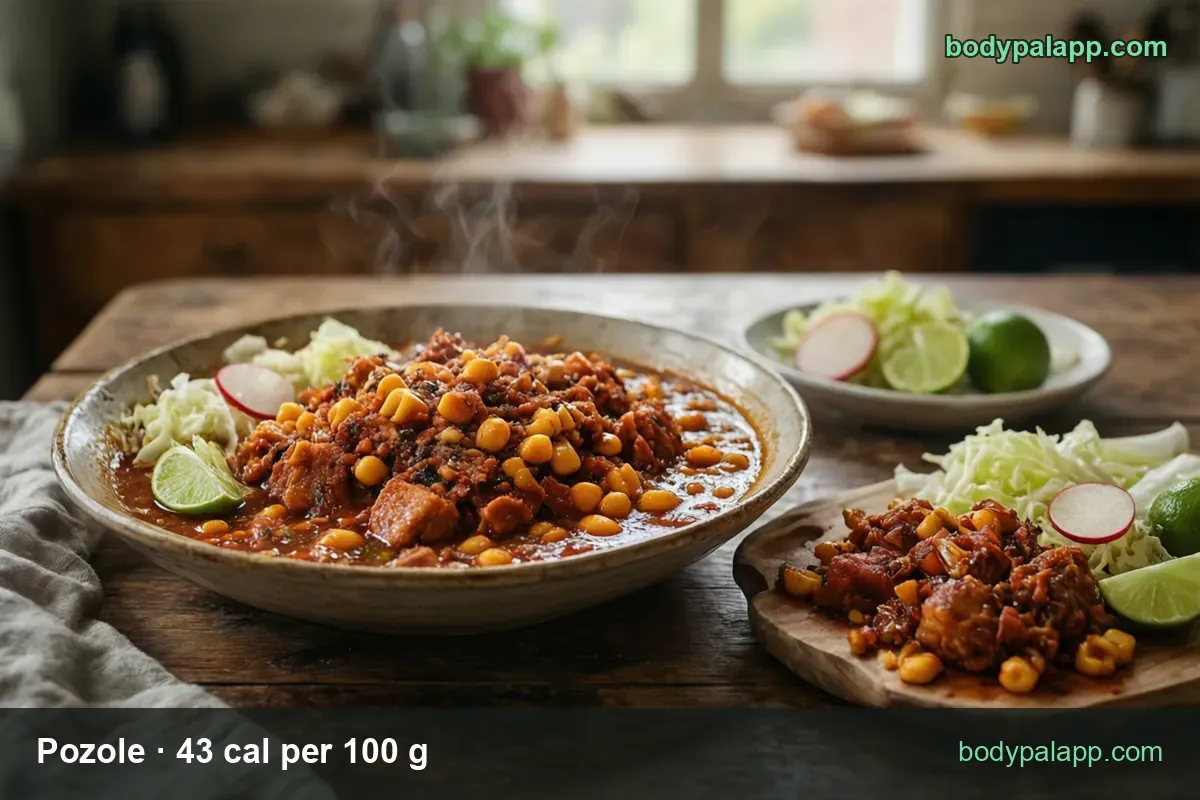
Packaged pozole runs from 53 to 135 calories per 100 g, and the spread is not seasoning. It is how much meat and hominy sits in the can versus how much broth. Juanita's is two and a half times as dense as Del Real's chicken version, and a cup of it carries 331 calories against 105 for the USDA reference bowl, more than triple. If you are logging a can, log the can, not the generic dish.
The color names people search for tell you almost nothing about calories. Rojo, verde and blanco differ in the chile and the garnish, and USDA publishes no separate record for any of them, so the honest answer is that all three land near the reference figure unless the meat changes. Pork shoulder makes a richer pot than chicken breast; that is the variable, not the sauce.
Meal starters are a different animal again. Teasdale's spicy red pozole is sold as a 0.5 cup portion at 100 calories, close to a full cup of the finished dish, because you are meant to add your own meat and stock to it.
Sodium is the row to watch, not calories
One cup of pozole delivers 608 mg of sodium, 26% of the Daily Value. Two cups, which is a normal restaurant serving, is 1,216 mg, or 53% of a day's worth, from a meal that cost you only 211 calories. That is about half a teaspoon of table salt sitting in one bowl. Canned versions push it further; Juanita's runs 392 mg per 100 g, close to 960 mg a cup on its own.
The Dietary Guidelines for Americans put the limit at 2,300 mg of sodium a day for adults. Pozole is the rare dish where you will hit the sodium ceiling long before the calorie one, so if you are watching blood pressure, a smaller bowl with more cabbage and lime on top is the better trade than skipping the meat.
The upside sits two rows above. A cup gives 8.3 g of protein for 105 calories, 17% of the Daily Value, which is unusually efficient for a soup and puts it in useful company with the protein foods group. Fiber is decent too at 2.2 g a cup, 8% DV, courtesy of the hominy.
How does pozole compare?
| Soup | Per 100 g | US serving | Calories |
|---|---|---|---|
| Pozole | 43 kcal | 1 cup, 245 g | 105 kcal |
| Chicken soup | 40 kcal | 1 cup, 245 g | 98 kcal |
| Vegetable soup with meat | 44 kcal | 1 cup, 245 g | 108 kcal |
| Beef soup | 47 kcal | 1 cup, 245 g | 115 kcal |
Our take: on calories these four are effectively the same soup, separated by 17 calories a cup, and only chicken soup is lighter than pozole. The interesting gaps are elsewhere. Beef soup carries 2.05 g of fat per 100 g against 1.23 g here, about two-thirds more, while protein is near-identical across the set, from 3.28 g to 3.44 g per 100 g. Where pozole breaks away is carbohydrate: 4.59 g per 100 g versus 4.04 g in all three neighbors, which is the hominy doing its job and the reason a bowl of this holds you and a bowl of broth does not. For weight loss, pick pozole over the beef version and keep the bowl at one or one and a half cups. For satiety at a fixed calorie budget, pozole wins the group outright.
Most popular pozole brands in the United States
Ranked by how widely each product appears among foods sold in the United States, from the BodyPal food database of over 3.3 million products. Calories are the figures printed on each Nutrition Facts label, checked against USDA FoodData Central.
| Product | Calories (per 100 g) |
|---|---|
| Del Real Foods Chicken Pozole | 53 cal |
| Juanita's Pozole Pork and Hominy Soup | 135 cal |
| Goya Pozole Pork and Hominy Soup | 78 cal |
| Teasdale Easy Prep Spicy Red Pozole | 77 cal |
Brand popularity: BodyPal food database. Nutrition: manufacturer labels / USDA FoodData Central.
Pozole FAQs
How many calories are in a bowl of pozole?
A standard 1-cup bowl is 105 calories, and a large 2-cup restaurant bowl is about 211 calories by our own scaling from the USDA figure of 43 calories per 100 g. Most bowls served in restaurants land between those two, near 158 calories for 1.5 cups. Garnishes and tostadas are extra.
How many calories are in 1 cup of pozole?
One cup, 245 g, is 105 calories in the USDA record for the finished dish. That cup also gives you 8.3 g of protein, 11.2 g of carbohydrate and 3.0 g of fat. Canned brands are denser, so a cup of those can reach 130 to 331 calories instead.
How much protein is in pozole?
A cup holds 8.3 g of protein, which is 17% of the Daily Value, from 3.38 g per 100 g. That is a strong ratio for a soup, since the same cup costs only 105 calories. Pork or chicken shoulder gives more than a broth-heavy pot with a few shreds of meat.
How much sodium is in pozole?
608 mg per cup, 26% of the Daily Value, and 1,216 mg in a 2-cup bowl, which is 53% of a day. Canned versions can be higher: Juanita's runs 392 mg per 100 g, near 960 mg a cup. Sodium, not calories, is the number that limits a second helping.
How many carbs are in pozole?
11.2 g of carbohydrate per cup, 4% of the Daily Value, of which 2.2 g is fiber and 2.4 g is naturally occurring sugars. Per 100 g that is 4.59 g, higher than the 4.04 g in chicken, beef or vegetable soup, and the hominy is the reason for the difference.
Is pozole healthy?
At 105 calories with 8.3 g of protein and 2.2 g of fiber a cup, it is one of the better-balanced hot meals you can log. The catch is 608 mg of sodium per cup, 26% DV. If you are watching sodium, keep the bowl at one cup and load up on cabbage, radish and lime.
Is pozole good for weight loss?
Yes, on the numbers: 105 calories a cup with 8.3 g of protein is hard to beat for a filling meal. Even a 2-cup bowl at 211 calories fits most lunch budgets. The risk is not the stew but what goes on top, since tostadas and crema can outweigh the bowl itself.
How many calories are in canned pozole?
Between 130 and 331 calories a cup depending on the brand. Del Real's chicken pozole is 53 calories per 100 g, Teasdale's red starter 77, Goya 78 and Juanita's 135, which works out to 331 calories per cup. Canned pozole is thicker than the homemade reference, so log the brand.
Similar foods
- Clementine — 35 cal per clementine
- Tom yum soup — 191 cal per bowl
- Ceviche — 158 cal per cup
- Pomegranate — 72 cal for 1/2 cup arils
- Clam Chowder — 237 cal per cup
- Chinese Chicken and Broccoli — 206 cal per cup
Count it without the math
Point the camera at the bowl and BodyPal counts the pozole for you, hominy, meat and all.


How long does it take to burn off pozole?
A 1-cup (245 g) serving is 105 kcal. Enter your weight and the amount you ate to see how long it takes you to burn that off:
lb
| Activity | Time to burn 105 kcal |
|---|---|
| Walking, brisk | 21 min |
| Cycling, moderate | 13 min |
| Swimming, moderate | 15 min |
| Jogging | 12 min |
| Weight training, moderate | 23 min |
Times are for a 155 lb adult at a steady pace; change the weight to see yours. The amount is set to the portion in the text (245 g); change it to what you actually ate. BodyPal works this out from your steps automatically.
One food is easy to picture; a whole day is harder. See how many calories you need a day and what a deficit actually looks like.