
How many calories are in sauerkraut?
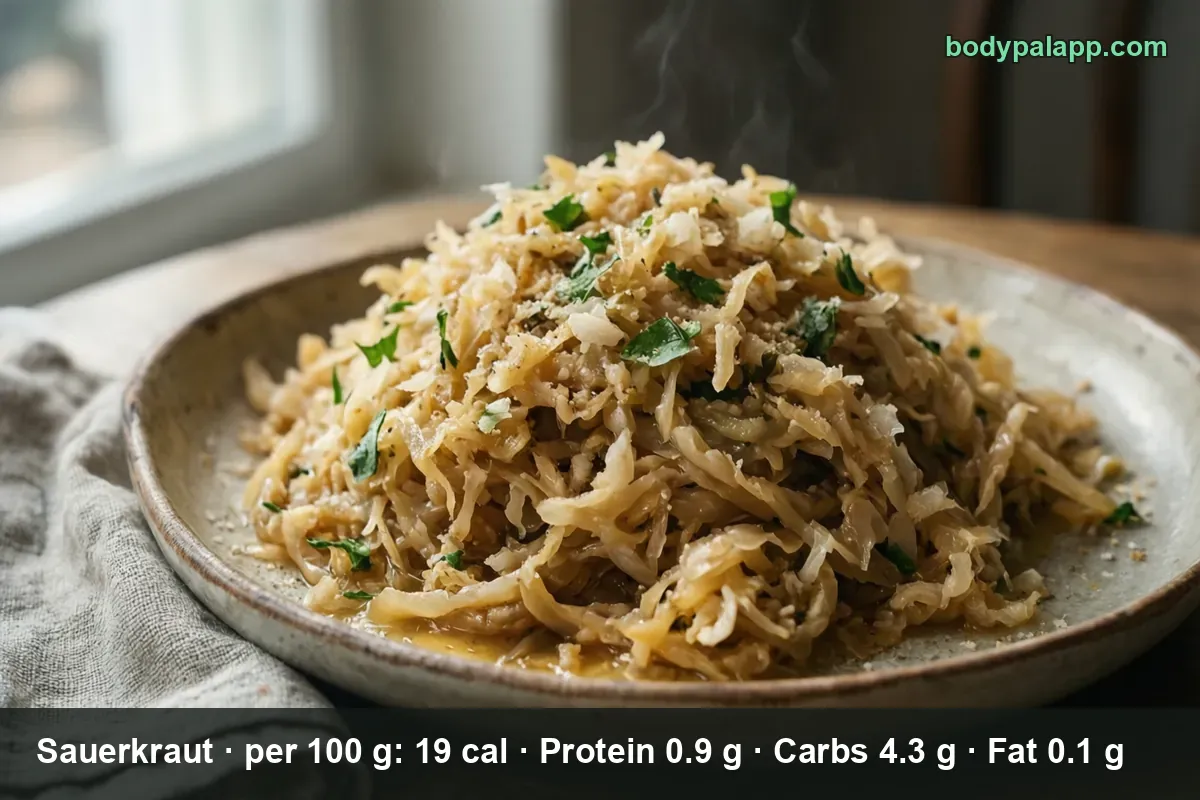
A 1-cup serving of drained canned sauerkraut weighs 142 g and holds 27 calories. Per 100 g it is 19 calories. Nothing about the jar is expensive in calorie terms. The number that actually moves your day is the sodium: 939 mg sits in that same cup, and that is 41% of the Daily Value.
On this page
- Sauerkraut quick facts
- US servings from two tablespoons to a full cup
- Bavarian sauteed and hot dog versions
- Sodium is the row to watch
- How does sauerkraut compare?
- Most popular sauerkraut brands
- Sauerkraut FAQs
Sauerkraut quick facts
The row on this page is SR Legacy 169279, "Sauerkraut, canned, solids and liquids", because that is what people actually have in the fridge: a jar or a can, forked straight onto the plate. The mainstream US labels back it up. Silver Floss and Eden Organic both print 17 calories per 100 g, Vlasic 18, and the USDA record sits at 19. That is agreement, not a coincidence.
The other USDA option, FNDDS 2709982, reads 40 calories per 100 g, and it is not a different kind of cabbage. It is sauerkraut prepared in a pan with fat, the way the platter further down this page looks. The difference is the cooking, not the source.
| Nutrient | Per 100 g | Per 1 cup, drained (142 g) | % Daily Value |
|---|---|---|---|
| Calories | 19 | 27 | — |
| Total fat | 0.14 g | 0.2 g | 0% |
| Saturated fat | 0.03 g | 0.0 g | 0% |
| Carbohydrate | 4.28 g | 6.1 g | 2% |
| Dietary fiber | 2.9 g | 4.1 g | 15% |
| Total sugars | 1.78 g | 2.5 g | — |
| Protein | 0.91 g | 1.3 g | 3% |
| Sodium | 661 mg | 939 mg | 41% |
% Daily Value is based on a 2,000-calorie diet.
Verified nutrition data
Numbers on this page come from USDA FoodData Central, the U.S. Department of Agriculture’s food composition database, and from manufacturer labels where a branded product is named. Last verified September 2026. How we verify our data →
There is no added-sugars row here because USDA does not publish added sugars for this SR Legacy record; the plain brands print 0 g on the label. Cholesterol is 0 mg, as you would expect from shredded cabbage and salt, and the drained cup carries 241 mg of potassium, about 5% of the Daily Value.
US servings from two tablespoons to a full cup
| Serving | Weight | Calories |
|---|---|---|
| 1 oz | 28 g | 5 kcal |
| 2 Tbsp, label serving | 30 g | 6 kcal |
| 1/2 cup, drained | 71 g | 13 kcal |
| 1 cup, drained | 142 g | 27 kcal |
| 1 cup, undrained | 236 g | 45 kcal |
| Per 100 g | 100 g | 19 kcal |
The two cup weights are the USDA household measures for this record, and they are the whole story of the food. A cup with the brine drained off weighs 142 g. The same cup lifted out with its liquid weighs 236 g, because sauerkraut holds brine the way a sponge holds water. That is 45 calories instead of 27, two-thirds more, from the identical jar.
The 1 oz, 2 Tbsp and 1/2 cup lines are our own arithmetic from the USDA 100 g figure, not USDA servings. They are worth having because the brands measure that way: Silver Floss and Vlasic put 1 oz and 1/4 cup on the label, Eden Organic uses 2 tablespoons. At those sizes you are logging single digits, and precision stops mattering.
Bavarian sauteed and hot dog versions
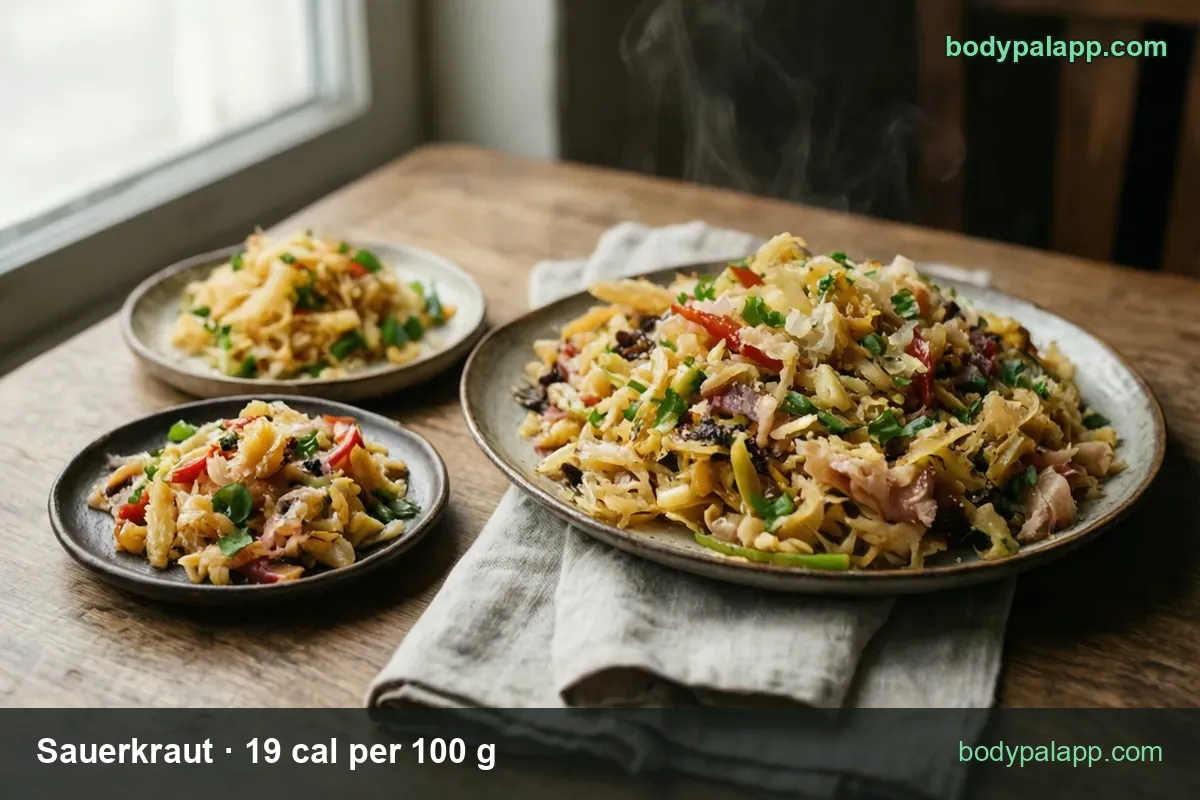
Sauerkraut only becomes a calorie item when something else joins it in the pan or on the bun.
| Version | Per 100 g | Typical serving | Calories |
|---|---|---|---|
| Canned, drained | 19 kcal | 1 cup, 142 g | 27 kcal |
| Canned, undrained | 19 kcal | 1 cup, 236 g | 45 kcal |
| Prepared, sauteed | 40 kcal | 1 cup, 140 g | 56 kcal |
| Bavarian style (Hengstenberg) | 35 kcal | 5 oz, 130 g | 46 kcal |
| Kimchi-style (Eden) | 33 kcal | 2 Tbsp, 30 g | 10 kcal |
| Sauerkraut pierogies (Mrs. T's) | 145 kcal | 4 pieces, 152 g | 220 kcal |
| Frankfurters and sauerkraut | 198 kcal | 1 frankfurter with kraut, 120 g | 238 kcal |
The sauteed record is the useful one to understand. At 40 calories per 100 g it is roughly double the canned figure, and the gap is almost entirely fat: 2.53 g per 100 g against 0.14 g in the jar. Butter, oil or bacon drippings, in other words. A cup of it is 56 calories, which is still a modest side, but the pan is where the arithmetic changes, not the cabbage.
Bavarian styles run higher for a different reason. They are sweetened, so Hengstenberg's record lands at 35 calories per 100 g and 46 for its 5 oz label serving, while plain Silver Floss and Eden sit at 17 and Kuhne's classic jar reaches 38. And then there is the hot dog. USDA's mixed-dish record for frankfurters and sauerkraut is 198 calories per 100 g and 238 for a single one at 120 g, of which 20.8 g is fat. That number belongs to the frankfurter. The kraut on top is a rounding error.
Sodium is the row to watch
Sauerkraut is cabbage preserved in salt, so salt is what you are logging. One drained cup delivers 939 mg of sodium against the FDA Daily Value of 2,300 mg, which is 41% of the day for 27 calories. Put another way, that cup is about two-fifths of a teaspoon of table salt.
| Serving | Weight | Sodium | % DV |
|---|---|---|---|
| 2 Tbsp, label serving | 30 g | 198 mg | 9% |
| 1/2 cup, drained | 71 g | 469 mg | 20% |
| 1 cup, drained | 142 g | 939 mg | 41% |
| 1 cup, undrained | 236 g | 1560 mg | 68% |
That last line is the one nobody expects. Serve a cup with its brine and you are at 1,560 mg, more than two-thirds of the day's sodium, from a food that supplies 45 calories. If you are watching sodium, drain the fork against the side of the jar and stick to half a cup, which is 469 mg and 20%. If you are not, the fiber is the better reason to eat it: 4.1 g in a drained cup, 15% of the 28 g Daily Value, and Americans generally fall short of the fiber target that the Dietary Guidelines set out. Sauerkraut also counts toward the vegetable group in MyPlate, which is more than you can say for most things that live in a jar.
The carbohydrate figure surprises low-carb eaters in the good direction. A cup holds 6.1 g of carbohydrate, but 4.1 g of that is fiber, leaving about 2.0 g of net carbs. Total sugars are 2.5 g, all of it from the cabbage itself.
How does sauerkraut compare?
| Food | Per 100 g | US serving | Calories |
|---|---|---|---|
| Sauerkraut, canned | 19 kcal | 1 cup drained, 142 g | 27 kcal |
| Sauerkraut, prepared | 40 kcal | 1 cup, 140 g | 56 kcal |
| Pickled cauliflower | 41 kcal | 1 cup | — |
| Frankfurters and sauerkraut | 198 kcal | 1 frankfurter with kraut, 120 g | 238 kcal |
The pickled cauliflower row has no serving calories because the USDA index carries no gram weight for its cup measure, and we are not going to invent one.
Our take: canned sauerkraut is the lightest of these four per 100 g at 19 calories, and it is not close. Use it when you want a plate to feel fuller without paying for it, the same job you would give a salad. Keep the calorie ceiling in mind only when it leaves the jar for a hot pan or a bun, where 27 calories turns into 56 or 238. And treat it as a salt item rather than a calorie item: one cup is 41% of the day's sodium, so it is the side you pair with an unsalted main, not with cured meat.
Brand labels sit in a tight band. Silver Floss, its barrel-cured version and Eden Organic all read 17 calories per 100 g, Vlasic 18, while the sweetened Bavarian jars from Hengstenberg and Kuhne run 35 and 38.
Most popular sauerkraut brands in the United States
Ranked by how widely each product appears among foods sold in the United States, from the BodyPal food database of over 3.3 million products. Calories are the figures printed on each Nutrition Facts label, checked against USDA FoodData Central.
| Product | Calories (per 100 g) |
|---|---|
| Hengstenberg Bavarian Style Sauerkraut | 35 cal |
| Silver Floss Shredded Sauerkraut | 17 cal |
| Silver Floss Barrel Cured Shredded Sauerkraut | 17 cal |
| Eden Organic Sauerkraut | 17 cal |
| Kuhne Classic Sauerkraut | 38 cal |
| Vlasic Old Fashioned Sauerkraut | 18 cal |
Brand popularity: BodyPal food database. Nutrition: manufacturer labels / USDA FoodData Central.
Sauerkraut FAQs
How many calories are in 1 cup of sauerkraut?
A 1-cup serving drained weighs 142 g and comes to 27 calories, from the USDA record for canned sauerkraut at 19 calories per 100 g. Leave the brine in and the same cup weighs 236 g and hits 45 calories. Draining is worth 18 calories and a lot of sodium.
How many calories are in 1 tablespoon of sauerkraut?
One tablespoon is about 15 g, so roughly 3 calories, which is our own arithmetic from the USDA 100 g figure rather than a USDA serving. The 2-tablespoon label serving that several brands print, 30 g, works out at 6 calories. At that size sauerkraut is a condiment, not a side dish.
How much sodium is in sauerkraut?
A drained cup carries 939 mg of sodium, 41% of the 2,300 mg Daily Value, from 661 mg per 100 g. Undrained, that cup runs about 1,560 mg, or 68%. The calories stay near 1% of a 2,000-calorie day, so sodium is the number to budget around here, not calories.
How many carbs are in sauerkraut?
A drained cup has 6.1 g of carbohydrate, of which 4.1 g is fiber, leaving about 2.0 g of net carbs. Per 100 g that is 4.28 g total with 2.9 g fiber. Total sugars are 1.78 g per 100 g, 2.5 g in the cup, and all of it comes from the cabbage.
How much fiber is in sauerkraut?
A drained cup gives 4.1 g of fiber, 15% of the 28 g Daily Value, from 2.9 g per 100 g. That is a lot of fiber for 27 calories, and more per calorie than the sauteed version, which carries 2.8 g of fiber for 40 calories per 100 g.
Is sauerkraut good for weight loss?
At 19 calories per 100 g and 27 for a drained cup, sauerkraut is one of the cheapest ways to add volume and 4.1 g of fiber to a plate. The catch is what it rides on. The USDA record for frankfurters with sauerkraut is 238 calories for a 120 g portion.
Does rinsing sauerkraut lower the sodium?
A drained 142 g cup still carries 939 mg of sodium, and USDA publishes no rinsed record, so there is no figure to quote for rinsing. What is measurable is the brine: the 236 g undrained cup runs about 1,560 mg. Draining is the step the data can actually price.
Is Bavarian sauerkraut higher in calories than regular sauerkraut?
Yes, by 16 calories per 100 g: the USDA Branded record for Hengstenberg Bavarian Style reads 35 calories per 100 g against 19 for plain canned sauerkraut, and its 5 oz (130 g) label serving is 46 calories. Bavarian recipes are sweetened, which is where the gap sits. Kuhne's classic jar is 38 per 100 g.
Similar foods
- Beefsteak Tomato — 33 cal per large whole tomato
- Big Tomato — 31 cal per large tomato
- Bok Choy — 23 cal per head
- Campari Tomato — 18 cal per 100 g
- Campari Tomatoes — 16 cal per small whole
- Pumpkin — 49 cal per cup
Count it without the math
Point the camera at the plate and BodyPal counts the sauerkraut for you, brine and all.


How long does it take to burn off sauerkraut?
A 1-cup (142 g) drained serving is 27 kcal. Enter your weight and the amount you ate to see how long it takes you to burn that off:
lb
| Activity | Time to burn 27 kcal |
|---|---|
| Walking, brisk | 5 min |
| Cycling, moderate | 3 min |
| Swimming, moderate | 4 min |
| Jogging | 3 min |
| Weight training, moderate | 6 min |
Times are for a 155 lb adult at a steady pace; change the weight to see yours. The amount is set to the portion in the text (142 g); change it to what you actually ate. BodyPal works this out from your steps automatically.
Burning it off is one side of it. The other is knowing your number: work out how many calories you need a day, with macros and a goal date.