
How many calories are in shrimp pasta?
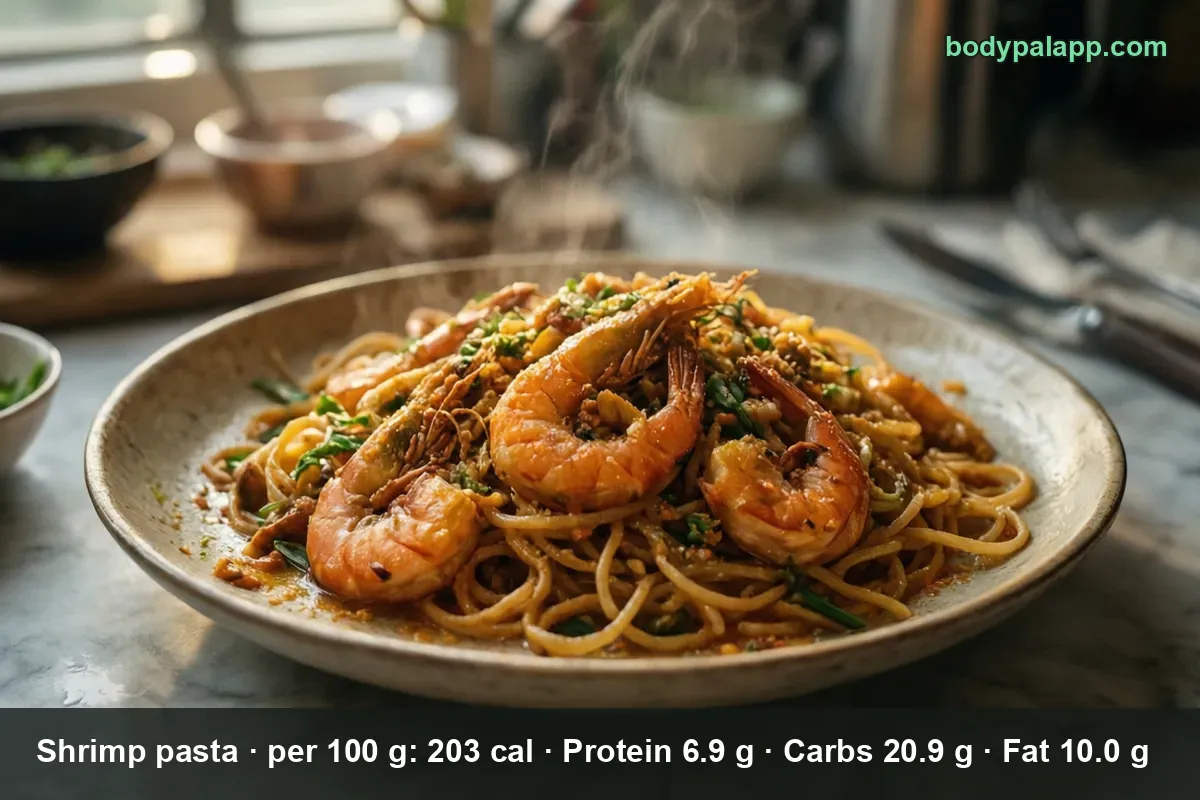
A 1-cup serving of shrimp pasta salad weighs 204 g and carries 414 calories. Per 100 g the same dish runs 203 calories, so the cup is almost exactly double the number most people read first. Half that cup is 207. Fat, not the shrimp, drives the biggest share of that.
On this page
- Shrimp pasta quick facts
- US servings, from a half cup to a cup and a half
- Cold pasta salad, creamy restaurant pasta and the frozen bag
- Cholesterol is the row that spikes
- How does shrimp pasta compare?
- Most popular shrimp pasta brands
- Shrimp pasta FAQs
Shrimp pasta quick facts
The number above comes from FNDDS 2708944, "Macaroni or pasta salad with shrimp". It is the one USDA record that pairs shrimp with pasta and publishes a weight for a household cup, which is what makes a serving number possible instead of a guess. Worth saying plainly: that record is a cold, dressed pasta salad. A hot skillet of garlic shrimp spaghetti is a different preparation, and the restaurant cream-sauce records that cover it have no cup weight in this edition, so they stay in the comparison tables further down rather than in the headline.
The difference between those records is the sauce and the serving temperature, not the source. Everything on this page is the same USDA release.
| Nutrient | Per 100 g | Per 1 cup (204 g) | % Daily Value |
|---|---|---|---|
| Calories | 203 | 414 | — |
| Total fat | 9.99 g | 20.4 g | 26% |
| Saturated fat | 1.58 g | 3.2 g | 16% |
| Carbohydrate | 20.94 g | 42.7 g | 16% |
| Dietary fiber | 1.2 g | 2.4 g | 9% |
| Total sugars | 1.57 g | 3.2 g | — |
| Protein | 6.86 g | 14.0 g | 28% |
| Sodium | 304 mg | 620 mg | 27% |
| Cholesterol | 43 mg | 88 mg | 29% |
| Potassium | 54 mg | 110 mg | 2% |
% Daily Value is based on a 2,000-calorie diet.
Verified nutrition data
Numbers on this page come from USDA FoodData Central, the U.S. Department of Agriculture’s food composition database, and from manufacturer labels where a branded product is named. Last verified September 2026. How we verify our data →
Two rows you would see on a package are missing here on purpose. FNDDS does not publish added sugars or trans fat for mixed dishes, so rather than print a zero we cannot support, those lines are left out. Total sugars carry no Daily Value of their own, which is why that cell is a dash.
US servings, from a half cup to a cup and a half
| Serving | Weight | Calories |
|---|---|---|
| 1 oz | 28 g | 58 kcal |
| 1/2 cup | 102 g | 207 kcal |
| USDA "quantity not specified" portion | 136 g | 276 kcal |
| 1 cup | 204 g | 414 kcal |
| 1 1/2 cups | 306 g | 621 kcal |
| Per 100 g | 100 g | 203 kcal |
Only two of those are USDA household measures: the 1-cup portion at 204 g and the 136 g "quantity not specified" portion, which is what the survey uses when a person reports eating pasta salad without saying how much. The half cup, the cup and a half and the ounce are our own arithmetic from the USDA 100 g figure, not USDA servings.
That 136 g line is the useful one for a deli container you did not measure. It lands at 276 calories, two thirds of a full cup, and it is a better default than rounding down to a half cup because most scooped portions overshoot.
Here is the trap the cup sets. A cup of this dish weighs 204 g, so the number on your plate is roughly twice the per-100 g figure that shows up first in a search. Log "1 cup" thinking in 200-calorie terms and you are short by more than 200 calories.
Cold pasta salad, creamy restaurant pasta and the frozen bag
| Version | Per 100 g | Typical serving | Calories |
|---|---|---|---|
| Shrimp pasta salad, cold and dressed | 203 kcal | 1 cup, 204 g | 414 kcal |
| Creamy seafood pasta, restaurant | 202 kcal | weight not published | — |
| Crab pasta salad | 201 kcal | weight not published | — |
| Cream-sauce pasta, no protein added | 204 kcal | weight not published | — |
| Whole-grain cream-sauce pasta with poultry | 202 kcal | weight not published | — |
| Frozen garlic shrimp pasta, Birds Eye | 121 kcal | 190 g bag serving | 230 kcal |
The gram weights for those four comparison records are blank because FNDDS does not publish a cup weight for them in this edition. We could scale them to 204 g and print a confident number, but that would be inventing a serving size, so the column stays empty.
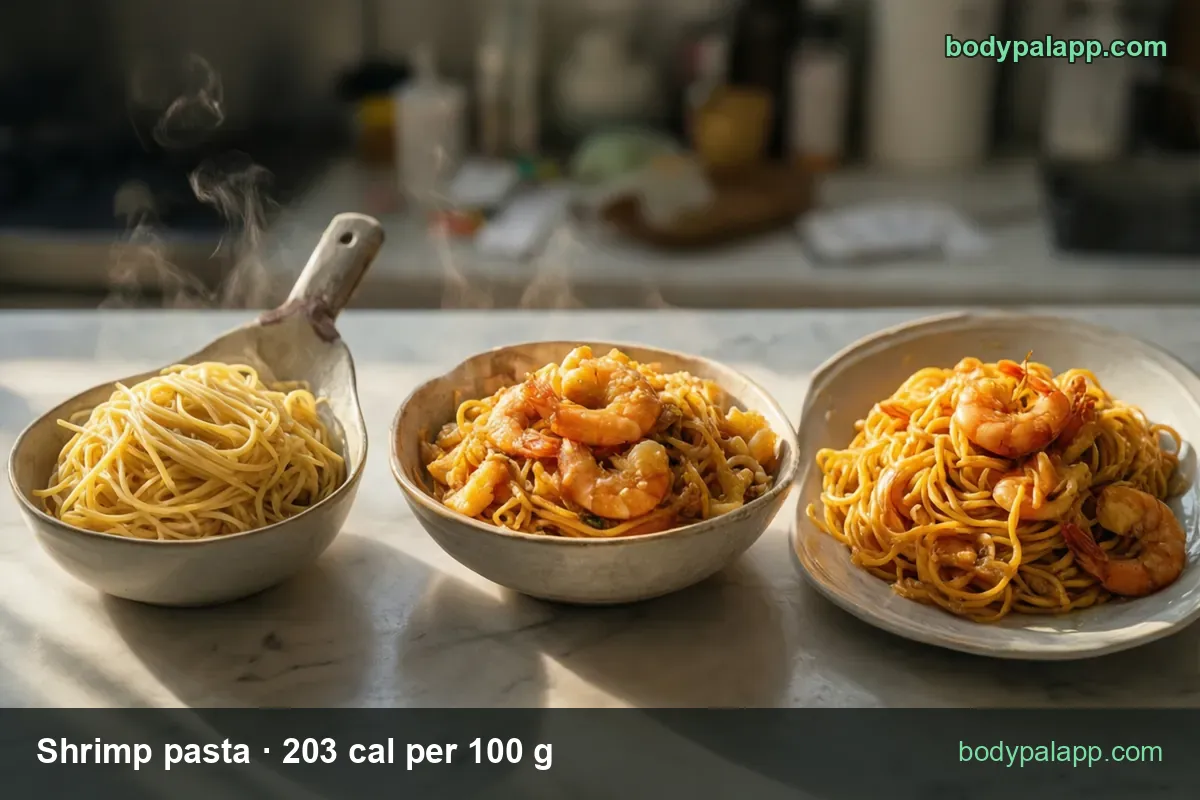
The interesting part is how little the sauce moves the density. Cold pasta salad with shrimp is 203 calories per 100 g. Restaurant seafood pasta in cream sauce is 202. Plain cream-sauce pasta with no protein at all is 204. Every version sits between 201 and 204 calories per 100 g, and the composition is what shifts: the cream-sauce plate carries 12.82 g of fat and 15.66 g of carbohydrate per 100 g, while the cold salad carries 9.99 g of fat and 20.94 g of carbohydrate. More sauce, less pasta, same calories.
Frozen is the real outlier. A skillet-meal bag such as Birds Eye Garlic Shrimp Pasta runs 121 calories per 100 g, about 40 percent lighter per gram than the deli salad, and a 190 g labeled serving is 230 calories. The skillet-meal versions of the same line come in at 116 calories per 100 g, or 220 per 190 g serving. Frozen bags dilute with vegetables and a thin sauce; delis dress the pasta with oil or mayonnaise.
Cholesterol is the row that spikes
Run down the Daily Value column and the largest single percentage is not sodium or fat. It is cholesterol, at 88 mg per cup, 29% of the FDA Daily Value of 300 mg. That comes from the shrimp, which is unusually dense in cholesterol for a lean protein. Current federal guidance does not set a numeric daily cap, but the label still measures against 300 mg, and one cup uses up nearly a third of it.
Second surprise: this is not the lean protein dish it looks like. A cup brings 20.4 g of fat (26% DV) against 14.0 g of protein (28% DV). Those percentages are nearly tied. The shrimp does the protein work, the dressing does the fat work, and by calories the fat side wins outright, since 20.4 g of fat is about 184 calories of the 414.
Sodium sits at 620 mg per cup, 27% DV, roughly a quarter teaspoon of table salt. If you are watching sodium, the frozen bag is the better pick of the two convenient options, and a home version where you salt the pasta water yourself is better than either.
For the seafood side of the ledger, federal advice through MyPlate points most adults toward about 8 ounces of seafood a week. A cup of this dish contains only a modest amount of actual shrimp, so it counts toward that target without filling it.
How does shrimp pasta compare?
| Dish | Per 100 g | Protein per 100 g | Fat per 100 g | US serving |
|---|---|---|---|---|
| Shrimp pasta salad | 203 kcal | 6.86 g | 9.99 g | 1 cup, 204 g — 414 kcal |
| Creamy seafood pasta, restaurant | 202 kcal | 5.4 g | 12.82 g | weight not published |
| Crab pasta salad | 201 kcal | 6.48 g | 9.9 g | weight not published |
| Cream-sauce pasta with meat and vegetables | 203 kcal | 5.65 g | 12.85 g | weight not published |
Our take: picking between these on calories alone is wasted effort, since all four land within 3 calories of each other per 100 g. Pick on protein and portion instead. The shrimp salad carries the most protein per 100 g of the four, at 6.86 g, and it is the only one with a published serving weight, which means it is the only one you can log honestly without guessing. For weight loss, measure a half cup at 207 calories and add extra shrimp on top; for staying full through an afternoon, take the 136 g portion at 276 calories and pair it with something green rather than a second scoop.
Most popular shrimp pasta brands in the United States
Ranked by how widely each product appears among foods sold in the United States, from the BodyPal food database of over 3.3 million products. Calories are the figures printed on each Nutrition Facts label, checked against USDA FoodData Central.
| Product | Calories (per 100 g) |
|---|---|
| Birds Eye Garlic Shrimp Pasta | 121 cal |
| Birds Eye Garlic Shrimp Pasta Skillet Meals | 116 cal |
Brand popularity: BodyPal food database. Nutrition: manufacturer labels / USDA FoodData Central.
Shrimp pasta FAQs
How many calories are in shrimp pasta?
414 calories in a 1-cup serving weighing 204 g, based on the USDA record for macaroni or pasta salad with shrimp. Per 100 g it is 203 calories. A half cup is 207 and a cup and a half is 621. Restaurant cream-sauce versions land at almost the same density per gram.
How many calories in 1 cup of shrimp pasta?
414 calories, because a USDA cup of this dish weighs 204 g and it runs 203 calories per 100 g. That is the trap: the cup is double the per-100 g number people usually see first. A half cup is 207 calories, a cup and a half 621.
How much protein is in shrimp pasta?
14.0 g of protein per cup, which is 28% of the Daily Value, from 6.86 g per 100 g. That is a solid amount, though fat sits right alongside it at 20.4 g and 26% DV. Adding more shrimp rather than more pasta is the cheapest way to raise the protein share.
Is shrimp pasta good for weight loss?
A half cup at 207 calories fits most plans easily; a full cup at 414 is a meal on its own. The dish is 203 calories per 100 g, which is moderate, but the dressing supplies 20.4 g of fat per cup. Measure the portion and the dish works.
Does creamy shrimp pasta have more calories than shrimp pasta salad?
Barely: restaurant pasta with cream sauce and seafood is 202 calories per 100 g against 203 for the cold shrimp pasta salad, a 1-calorie gap. The cream version carries more fat, 12.82 g against 9.99 g, and fewer carbohydrates. Restaurant portion size, not sauce, is what changes the total.
How much sodium is in shrimp pasta?
620 mg per cup, 27% of the 2,300 mg Daily Value, from 304 mg per 100 g. That is roughly a quarter teaspoon of table salt in one serving. A frozen garlic shrimp pasta bag is generally the lighter choice per serving, and a homemade version lets you control it directly.
How many calories in frozen garlic shrimp pasta?
230 calories in a 190 g labeled serving of Birds Eye Garlic Shrimp Pasta, or 121 calories per 100 g. The skillet-meal versions of the line are 116 per 100 g, about 220 per serving. Frozen bags run around 40 percent lighter per gram than deli shrimp pasta salad.
How much cholesterol does shrimp pasta have?
88 mg per cup, 29% of the 300 mg Daily Value, from 43 mg per 100 g. That is the highest percentage on the whole label for this dish, ahead of protein at 28% and sodium at 27%. Shrimp is the reason: it is dense in cholesterol while staying lean in fat itself.
Similar foods
- Prosciutto — 55 cal for 3 thin slices
- Baba ganoush — 110 cal for 1/4 cup
- Mac And Cheese — 513 cal per cup
- Penne pasta — 169 cal per cup
- Pasta — 168 cal per cup penne
- Maple Syrup — 216 cal for 1/4 cup
Count it without the math
Point the camera at the bowl and BodyPal counts the shrimp pasta for you, dressing and all.


How long does it take to burn off shrimp pasta?
A 1-cup (204 g) serving is 414 kcal. Enter your weight and the amount you ate to see how long it takes you to burn that off:
lb
| Activity | Time to burn 414 kcal |
|---|---|
| Walking, brisk | 1 hr 23 min |
| Cycling, moderate | 52 min |
| Swimming, moderate | 59 min |
| Jogging | 49 min |
| Weight training, moderate | 1 hr 32 min |
Times are for a 155 lb adult at a steady pace; change the weight to see yours. The amount is set to the portion in the text (204 g); change it to what you actually ate. BodyPal works this out from your steps automatically.
This table assumes you know your daily total. If you do not, the daily calorie calculator works it out from five numbers.